Intellijel’s latest Metropolix beta firmware update unlocks new sequencing tricks by letting users extract gates and triggers from the sequencer’s mod lanes. In classic Intellijel fashion, the official walkthrough dives deep into connectivity, setup, and real-world patching, showing off not just new firmware options but also the kind of creative modular thinking that makes Metropolix a live-rig classic. Expect demonstrations with a host of familiar modules and a dryly practical look at how these new features want to be used.
9. September 2026
MILES
Intellijel Metropolix: Mod Lane Gates & Trigs in the Wild
Intellijel Atlantix, Intellijel Bifold, Intellijel Flurry, Intellijel Gx Expander, Intellijel Metropolix, Intellijel MultiGrain, Intellijel Plonk, Intellijel Qx Expander, Intellijel Sealegs, Intellijel Swells, Intellijel X-Fade 1U
Mod Lanes Get Trigger Happy
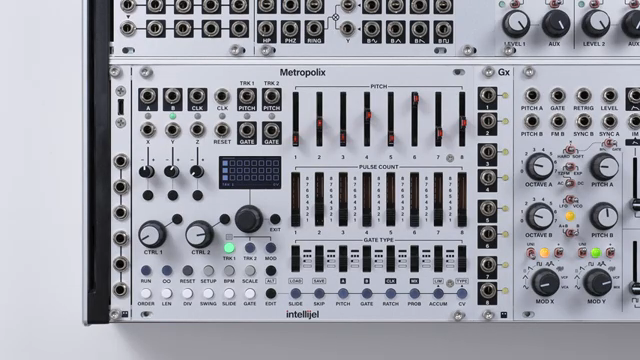
With the 1.6.2.3 beta firmware, Intellijel’s Metropolix sequencer gets a notable upgrade: the ability to derive triggers and gates straight from its eight modulation lanes. This means modulation steps aren’t just for internal parameter wiggling anymore—they’re now directly available as rhythmic or event sources, opening up a new layer of sequencing options.
The video immediately highlights that this isn’t just an incremental tweak, but a rethink of how mod lanes can serve as sources for both triggers and gates. The potential for more complex and interactive patterns is baked right in, especially for those who like to extract more than just CV from their modulation streams.
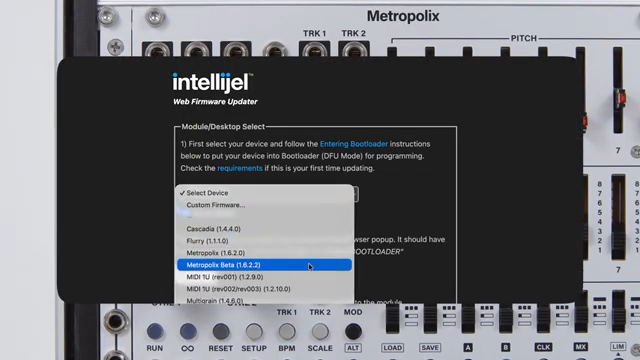
"In this update, we've added the ability to derive gates and triggers from the mod lanes."
© Screenshot/Quote: Intellijel (YouTube)
Routing the New Gates: Options Galore
"These can be output to the A and B outputs on Metropolis, the expander outputs, or to MIDI."
© Screenshot/Quote: Intellijel (YouTube)
Intellijel keeps things flexible by letting users route these mod-derived gates and triggers to various outputs. Whether you want them on the A & B Mod Outputs, via the Gx or Qx Expander, or piped out through MIDI, the firmware supports it all. This versatility is exactly what modular users crave—being able to integrate new sources wherever they fit best in a patch or external setup.
For those with larger rigs or hybrid workflows, this development means Metropolix can now act as a more central rhythmic hub, sending out clocked events and modulation data to anywhere in the system, or even out to MIDI devices. As ever, it’s all about patching freedom.
Hands-On: Assigning and Configuring Outputs
The setup process is classic Intellijel: hold ALT, pick your output (A, B, or MX for expanders), and assign either a mod trig or gate. From there, you select which mod lane acts as the source, making it simple to tie the output to any of the eight available lanes. The workflow is designed for quick assignment but also flexible enough for more complex setups.
MIDI configuration is handled from the setup menu, allowing mod lanes to output fixed notes or CC values, and letting users pick the appropriate MIDI channel. The video walks through these screens step-by-step, showing how easy it is to integrate Metropolix with external gear or DAWs, all without menu-diving overload.
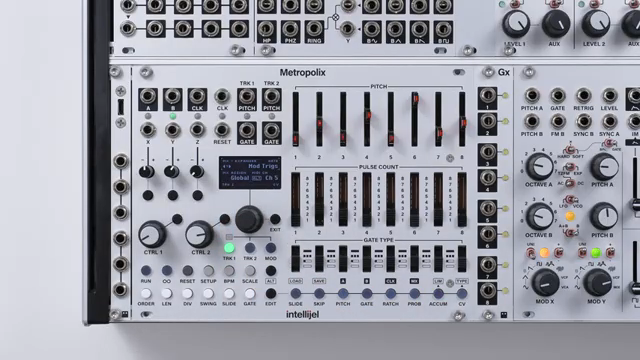
"Each mod lane can output either a fixed MIDI note or a fixed CC value."
© Screenshot/Quote: Intellijel (YouTube)
Patchwork Demo: Triggers in Action
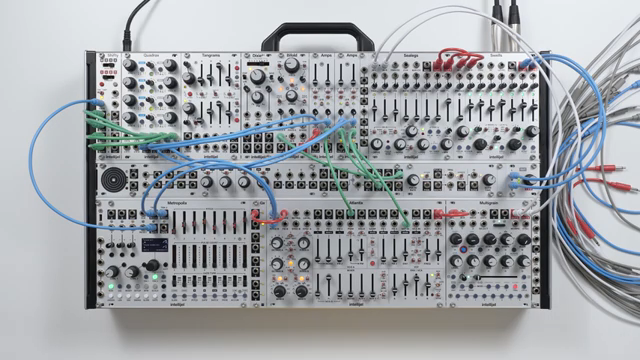
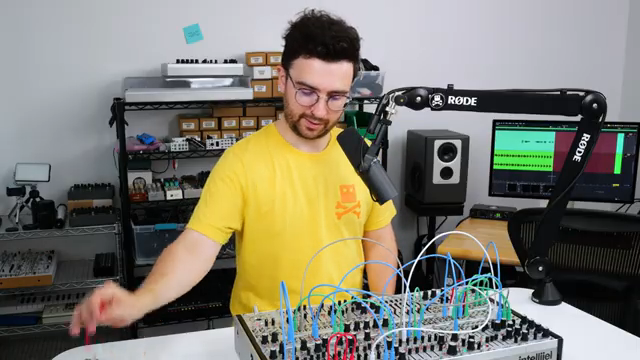
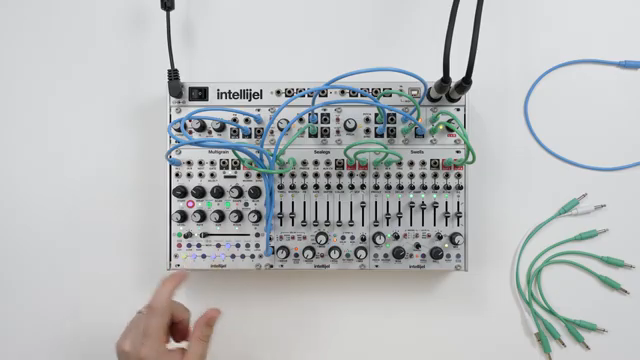
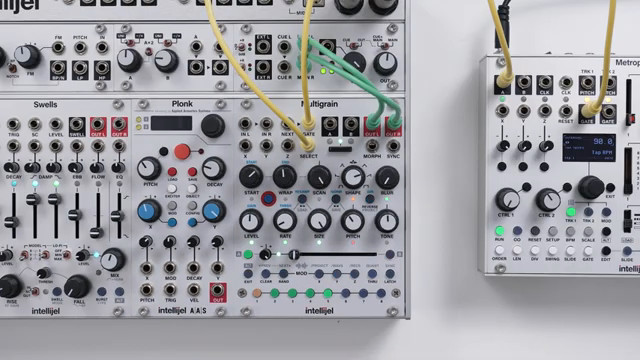
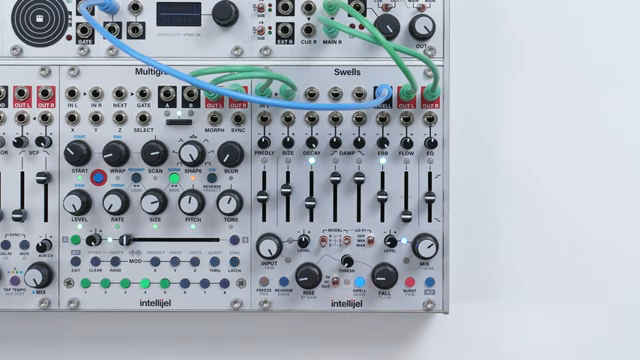
Once the groundwork is laid, the video dives into a sprawling patch demo, showing how these new triggers can drive a host of Intellijel modules. The Metropolix clock is sent out to multiple destinations, including Sealegs, Multigrain, and more, each tailored to show off a different approach: from classic kick sequencing with Atlantix, to using envelopes for both pitch and amplitude modulation.
The patch quickly grows to include Plonk for switched percussion sounds, Flurry for morphing noise textures, and clever use of the Xfade 1U module for dynamic effect routing. Mod lanes are switched between bipolar, unipolar, and gate toggle modes, demonstrating the full range of gate and CV possibilities. Each drum or effect channel gets its own tailored modulation, with careful attention to how step values, gate lengths, and morph controls interact.
By the time the bass line is introduced—passing through Bifold for wavefolding and further envelope trickery—the patch feels dense but coherent, with mod lanes pulling double duty as both rhythmic drivers and modulation sources. The video’s deadpan, systematic patching style is classic Intellijel, focusing on utility and musicality over flash.
Creative Potential: Modulation Meets Sequencing

"This has been coverage of the Metropolis update, which adds these gates and triggers that you can get from the expander, from MIDI, from the A and B outputs."
© Screenshot/Quote: Intellijel (YouTube)
The real win here is the creative potential: mod lanes that once simply shaped parameters can now sequence events, gates, and triggers, freeing up other modules for more musical roles. For users with large, interconnected setups, this makes Metropolix an even more powerful sequencing brain.
Seamless integration of triggers, gates, and modulation means you can push multi-layered patches further—routing events wherever you need, using gates not just for notes, but for effect switching, sample triggering, or even controlling other sequencers. The update feels like a proper expansion of Metropolix’s creative DNA.
This article is also available in German. Read it here: https://synthmagazin.at/intellijel-metropolix-mod-lane-gates-trigs-im-praxiseinsatz/
More articles about these products:
 Intellijel’s Ambient Modular Patch: Morphing Textures with Atlantix, Metropolix & Co.
 Intellijel’s Modular Groovebox: Atlantix at the Heart of a Patchable Beat Machine
 Intellijel’s Cinematic Drone Palette: A Modular Mini-Rig for Epic Soundscapes
 Intellijel Multigrain 1.4: Firmware Tweaks, Choke Tricks and Modular Mayhem
 Intellijel Swells: Modulation, Swell Generator and Envelope Follower Tricks Unveiled
 Josh Lucan’s Leda Transit: Sequenced Dreams and Sonic Nebulae
 Intellijel Swells: A Reverb Odyssey for Modular Patchers
 Josh Lucan’s Sonic Alchemy: Channeling Tangerine Dream’s Nebulae
 Underdog Electronic Music School: Semi-Modular – Your Gateway Drug to Eurorack Mayhem
 Andrew Huang’s 2025 Gear Picks: Grooveboxes, Glitch and Gearhead Gold
 Underdog Electronic Music School: When Sound Falls Apart—Granular Synthesis as Sonic Storytelling
 Intellijel’s Metropolix & Multigrain: Rhythmic Patch Alchemy in Eurorack
Watch on YouTube:
Latest articles
Watch on YouTube:
Visit the channel:
https://www.youtube.com/intellijel
https://www.youtube.com/intellijel
Links from intellijel:
website: https://intellijel.com
forum: https://forum.intellijel.com
instagram: https://instagram.com/intellijel
facebook: https://www.facebook.com/intellijel
Sponsored links:
If you purchase via these links, we may earn a small commission – at no extra cost to you. The link opens an Amazon keyword search, and results may vary depending on availability.
Intellijel Atlantix
🔗 Check price on Amazon
🔗 Check price on Amazon
Intellijel Bifold
🔗 Check price on Amazon
🔗 Check price on Amazon
Intellijel Flurry
🔗 Check price on Amazon
🔗 Check price on Amazon
Intellijel Gx Expander
🔗 Check price on Amazon
🔗 Check price on Amazon
Intellijel Metropolix
🔗 Check price on Amazon
🔗 Check price on Amazon
Intellijel MultiGrain
🔗 Check price on Amazon
🔗 Check price on Amazon
Intellijel Plonk
🔗 Check price on Amazon
🔗 Check price on Amazon
Intellijel Qx Expander
🔗 Check price on Amazon
🔗 Check price on Amazon
Intellijel Sealegs
🔗 Check price on Amazon
🔗 Check price on Amazon
Intellijel Swells
🔗 Check price on Amazon
🔗 Check price on Amazon
Intellijel X-Fade 1U
🔗 Check price on Amazon
🔗 Check price on Amazon