Step into the magnetic fog of Josh Lucan’s compositional world, where sequencer pulses and vintage synths swirl in a cosmic dance inspired by Tangerine Dream. In “Leda Transit,” Lucan doesn’t just reconstruct the past—he bends time, letting classic algorithms and analog textures bloom into new sonic landscapes. Each note is a drifting ghost, each layer a shifting constellation. This is not a tutorial—it’s an invitation to drift inside the machinery, to witness how simple notes can become galaxies of sound. Prepare for a journey where melody is only the beginning, and modulation is the current that carries us deeper.
17. April 2026
LUMINA
Josh Lucan’s Leda Transit: Sequenced Dreams and Sonic Nebulae
Black Corporation Deckard's Dream, Black Corporation Rachael, Expressive E Osmose, Intellijel Metropolix, Moog 10, Soma Pulsar-23, Squarp Hapax, UAD Golden Reverberator, UAD Starlight Delay
Sequencer Ghosts: Channeling Tangerine Dream
Josh Lucan opens the portal with a reverent nod to Tangerine Dream, not merely imitating but distilling their essence into the bones of his own composition. We are invited to witness the unraveling of compositional secrets—how layers of sequencers, each with their own pulse and logic, interlock to create a living, breathing structure. Lucan’s approach is forensic yet poetic, dissecting the machinery behind the magic, seeking the DNA of those iconic, ever-evolving patterns.
This exploration is not nostalgia, but a living experiment. Lucan gathers the spectral algorithms and vintage sounds of his predecessors, spinning them into new forms. The result is a soundscape where each sequence is a thread in a larger tapestry, and every rest or ratchet is a deliberate breath in the narrative. The video itself becomes a meditation on process—on how the ghosts of past music can be summoned and transformed through the machinery of today.

"I'm putting all the concepts that I learned from doing that to the test, and I'm trying them out in my own pieces."
© Screenshot/Quote: Joshlucan3512 (YouTube)
Metropolix and Moog 10: The Pulse of the Machine
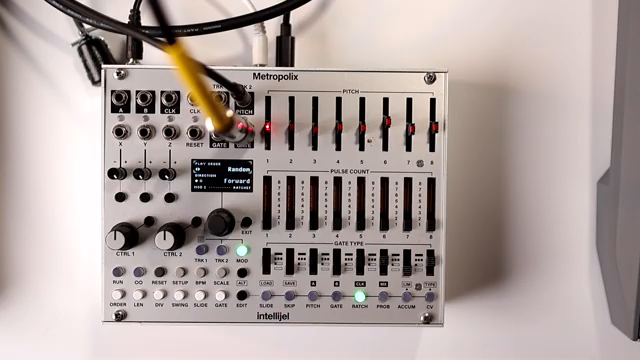
"This ratchet has a chance of one in eight of occurring. It's just whenever this stage gets triggered that we hear that ratchet."
© Screenshot/Quote: Joshlucan3512 (YouTube)
The heart of Lucan’s nebula is the Intellijel Metropolix, its sequencer stages flickering like distant stars. Here, the Moog 10 acts as the vessel, translating voltage into tactile, sawtooth waves—each note a ripple in analog space. Lucan demonstrates how a simple set of pitches, chosen with intent, can be spun into hypnotic patterns, with rests and ratchets adding breath and unpredictability. The main sequence is a backbone, running through the entire piece, a magnetic resonance that draws other elements into its orbit.
Yet, simplicity is only the beginning. The Moog 10’s oscillators, sometimes alone, sometimes paired and drifting apart, create a chorus of shifting overtones. Lucan’s hands shape the sound, phasing oscillators against each other, letting pitch drift and return—a manual chorus, a living modulation. The result is a texture that is both precise and organic, a sonic organism that pulses and mutates as the sequence unfolds. Each tweak is a brushstroke, painting with resonance and decay.
From Simplicity to Sonic Complexity: Modulation and Effects
Lucan reveals the alchemy of transformation: how a handful of notes, when layered with modulation and effects, become a galaxy of sound. Delay and reverb are not just effects—they are the atmosphere in which melodies float, refracting light and shadow. The Lexicon 240, with its Blade Runner decay, and the Cooper Time Cube delay, with its garden-hose eccentricity, are more than tools; they are characters in the story, shaping the emotional space of the track.
Modulation is the secret current beneath the surface. Probability, randomization, and inversion—each is a force that bends the narrative, introducing surprise and subtlety. Lucan’s sequences are never static; chance layers and clock divisions ensure that every repetition is a little different, every loop a new contour. The result is a soundscape that breathes, where simplicity is the seed and complexity is the bloom. This is where the machinery becomes alive, and the listener is swept along in the drift.
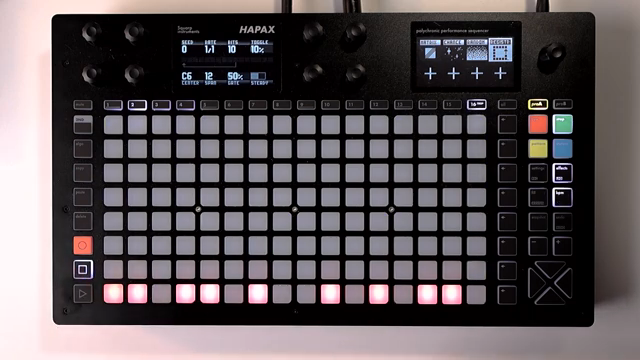
"We've added these layers of complexity to just put slight modifications on that simplicity that is holding together the whole time."
© Screenshot/Quote: Joshlucan3512 (YouTube)
Basslines and Bells: The Architecture of Performance
As the journey unfolds, Lucan’s architecture reveals itself in intricate basslines and shimmering bells. The Hapax and Moog 10 conspire to create bass pulses that anchor the piece, while the Expressive E Osmose brings bell tones that glimmer like dew on a spider’s web. Each track is a layer—sometimes static, sometimes shifting under the influence of chance and live modulation. The bells, in particular, showcase the power of automation and inversion, their patterns folding and unfolding in slow motion, echoing the logic of dreams. To truly feel the interplay of these elements, one must experience the performance itself—the tactile energy, the subtle surprises, the way each note seems to hover between intention and accident.
Past and Future Entwined: The Creative Process Unveiled
In the closing passages, Lucan’s process comes into focus—a fusion of classic inspiration and modern invention. Soft synths and sampled percussion drift in, evoking memories of road trips and cassette tapes, of analog warmth and digital possibility. The project is not just a technical exercise, but a meditation on memory and imagination, on how the tools of yesterday and today can be woven into something new.
Lucan’s style is cinematic, his choices deliberate yet exploratory. The journey from sequencer logic to organic performance is mapped with care, each step an invitation to listen deeper. The real magic, however, lies in the spaces between—the resonance of reverb, the unpredictability of chance, the ghosts of melodies half-remembered. To witness this creative process is to glimpse the future through the lens of the past, and to hear how electronic music can still surprise us, even as it pays homage to its roots.
This article is also available in German. Read it here: https://synthmagazin.at/josh-lucans-leda-transit-sequenzierte-traeume-und-klangnebel/
More articles about these products:
 Whispering Air and Resonance: Martin Stürtzer’s Journey through Modartt Airteq
 Expressive E Osmose Firmware 2.3: DAW Control, Ctrl-e and the Next Level of Expressive Integration
 Intellijel’s Ambient Modular Patch: Morphing Textures with Atlantix, Metropolix & Co.
 AP Mastering vs. the World: Why the MOTU 10pre Eats Other Interfaces for Breakfast
 Intellijel Metropolix: Mod Lane Gates & Trigs in the Wild
 Intellijel’s Modular Groovebox: Atlantix at the Heart of a Patchable Beat Machine
 Resonant Alchemy: Sam Gutman Dives into the Sonic Worlds of Noisy 2.6
 Captain Pikant Breaks Down Gorillaz’s Drum Magic – No Ivy League Needed
 Josh Lucan’s Sonic Alchemy: Channeling Tangerine Dream’s Nebulae
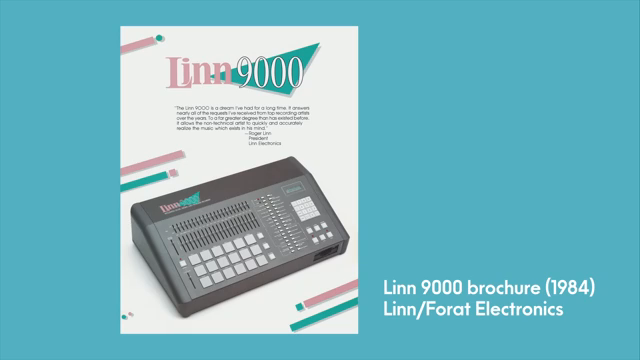 Captain Pikant Spins the Drum Machine Mystery: Dissecting ‘You Spin Me Round’
 Captain Pikant Dismantles Blue Monday: Drum Machine Mayhem and DMX Wizardry
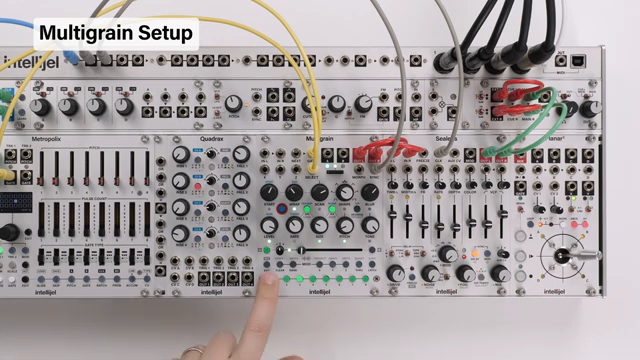 Intellijel’s Metropolix & Multigrain: Rhythmic Patch Alchemy in Eurorack
Watch on YouTube:
Latest articles
Watch on YouTube:
Visit the channel:
https://www.youtube.com/joshlucan3512
https://www.youtube.com/joshlucan3512
Links from joshlucan3512:
Website: https://www.joshlucan.com/
Sponsored links:
If you purchase via these links, we may earn a small commission – at no extra cost to you. The link opens an Amazon keyword search, and results may vary depending on availability.
Black Corporation Deckard's Dream
🔗 Check price on Amazon
🔗 Check price on Amazon
Black Corporation Rachael
🔗 Check price on Amazon
🔗 Check price on Amazon
Expressive E Osmose
🔗 Check price on Amazon
🔗 Check price on Amazon
Intellijel Metropolix
🔗 Check price on Amazon
🔗 Check price on Amazon
Moog 10
🔗 Check price on Amazon
🔗 Check price on Amazon
Soma Pulsar-23
🔗 Check price on Amazon
🔗 Check price on Amazon
Squarp Hapax
🔗 Check price on Amazon
🔗 Check price on Amazon
UAD Golden Reverberator
🔗 Check price on Amazon
🔗 Check price on Amazon
UAD Starlight Delay
🔗 Check price on Amazon
🔗 Check price on Amazon