Modal Electronics returns with a deep dive into the modulation architecture of the ELEMENT One virtual analog synth. This official walkthrough zeroes in on its envelopes, LFOs, and the hands-on matrix, illustrating how joystick, knob, aftertouch, and velocity sources are routed for expressive patch design. We dissect what’s actually shown, focusing on workflow, interface, and the creative potential—plus a few things left for future exploration.
18. September 2026
LYRA
Modal Electronics ELEMENT One: Modulation System Demystified
Meet the ELEMENT One: Digital Powerhouse for Performers
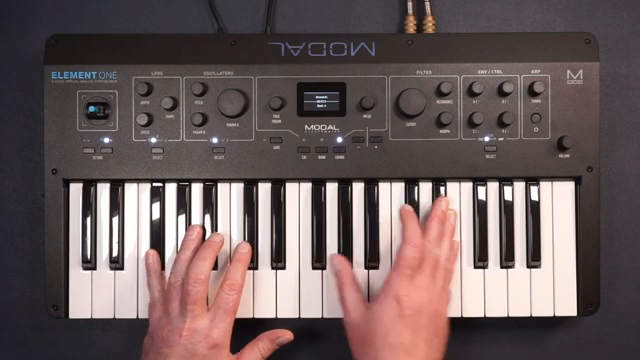
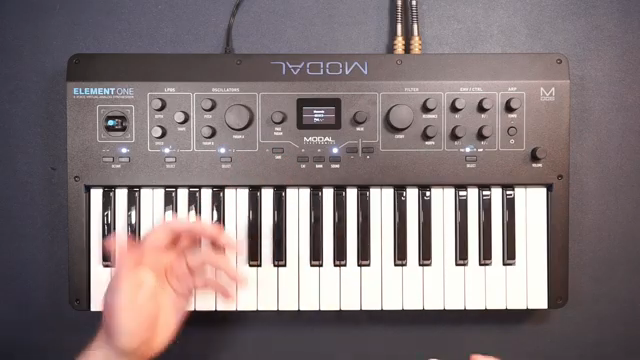
The video opens by situating the ELEMENT One as Modal Electronics’ 8-voice virtual analog synthesizer, designed with an eye toward both intuitive performance and intricate sound design. What stands out immediately is its orientation towards players who demand immediacy—no endless menu-diving, just direct access to sonic shaping tools. The video promises to reveal how modulation breathes life into static patches, setting the tone for a tour of the synth’s expressive depth.
The Modulation Matrix: Envelopes, LFOs, and Creative Slotting
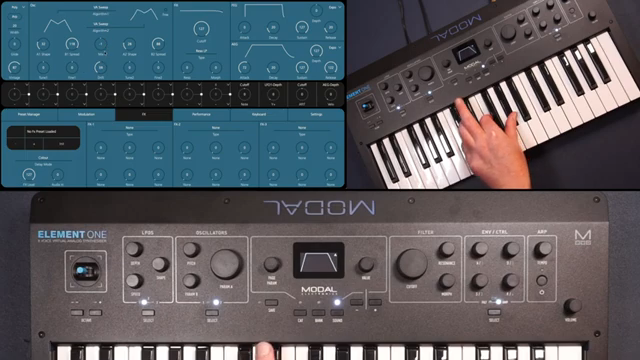
Modal’s approach to modulation is unapologetically robust: three dedicated envelope generators, three LFOs capable of audio-rate action, and an 8-slot modulation matrix form the backbone of the system. The video walks through the clear, visual layout—whether on the synth or the companion app—where sources and destinations are mapped in a way that foregrounds workflow rather than confusion. Users can see modulation slots and pre-assigned common routings at a glance, which helps keep patching transparent and fast.
The presenter demonstrates how each slot can be populated by any of twelve sources—including the MEG (modulation envelope generator), all three LFOs, velocity, aftertouch, joystick axes (X and Y, both positive and negative), and more. Destinations are equally varied, spanning oscillator parameters, filter cutoff, resonance, effects, and beyond. The matrix’s ability to handle bipolar modulation assignments means creative possibilities are wide open, with the ability to push or pull parameters dynamically. This directness is a recurring theme: you see what’s routed, tweak amounts on the fly, and never lose track of your modulation architecture.
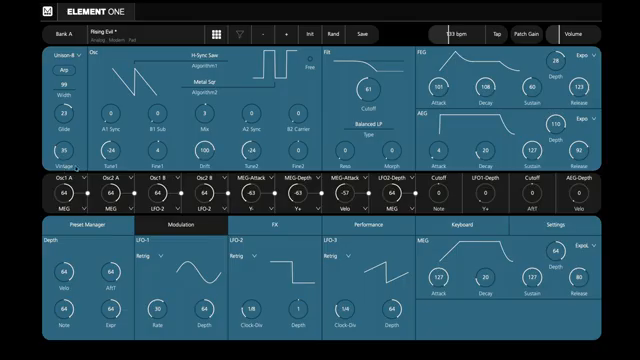
"We can actually go bipolar with these so we can affect things in a negative or in a positive way."
© Screenshot/Quote: Modalelectronics (YouTube)
Joystick and Assignable Knobs: Real-Time Modulation at Your Fingertips
Hands-on performance is central. The video highlights the four-axis joystick as a core macro controller, demonstrating how it can be routed to multiple destinations at once—oscillator sync, mix between algorithms, effects levels, and more. By simply pushing or pulling the joystick, entire swathes of the patch morph in real time, with the system allowing for creative layering of modulation depth and polarity. The assignable controller knobs provide further tactile access, complementing the joystick for nuanced parameter sweeps without menu interruptions.
This section includes instructive patch walkthroughs, showing the immediate sonic results of these assignments. For example, the Y+ axis of the joystick is shown modulating oscillator sync and MEG depth at once, while additional parameters like oscillator ratio and symmetry are stacked for evolving timbral changes. The video underlines that these routings can be done both from hardware and via the companion app, maintaining workflow consistency whether you’re tweaking on the fly or planning a set in the studio.
Aftertouch and Velocity: Expressive Depth for Modern Patches
"Aftertouch can be used to send somewhere as modulation."
© Screenshot/Quote: Modalelectronics (YouTube)
The ELEMENT One’s modulation system gains further expressive power by leveraging aftertouch and velocity as sources. The video demonstrates aftertouch mapped to filter cutoff, allowing the performer to open up harmonics with finger pressure—making timbral shifts as immediate as a keystroke. These routings are not buried: the modulation matrix and common slots make it clear where aftertouch is headed, and the impact is instantly audible.
Velocity is explored as a multi-dimensional modulator, simultaneously controlling oscillator spread, filter cutoff, resonance, and filter morphing in a single patch. Layering these assignments enables intricate, responsive patches that change character with each note or arpeggiated pattern. The presenter also showcases how notes themselves can become modulation sources, with higher keys opening filters further for classic keyboard tracking effects. All of this is handled within an interface that foregrounds clarity and speed—assign, set depth, and hear the results without second-guessing.
Simple, Flexible, and Ready to Explore
Wrapping up, the video emphasizes how approachable the modulation workflow is on ELEMENT One: eight slots, twelve sources, and fifty-five destinations, all ready for experimentation. With so much flexibility, players and designers are encouraged to push boundaries—try cross-modulating LFO rates with envelopes, stack joystick assignments, or cascade velocity into unexpected corners of the synth engine. The takeaway is clear: bringing patches to life is as much about curiosity as it is about architecture, and Modal’s system strikes a balance between power and immediacy.
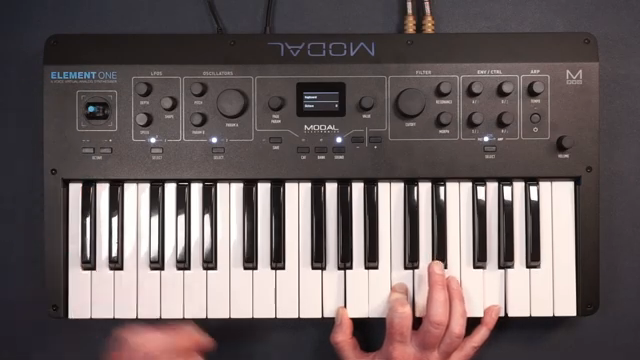
"Modulation on element 1. It couldn't be easier. Anyone could do this."
© Screenshot/Quote: Modalelectronics (YouTube)
This article is also available in German. Read it here: https://synthmagazin.at/modal-electronics-element-one-das-modulationssystem-entschluesselt/
More articles about these products:
Watch on YouTube:
Latest articles
Watch on YouTube:
Visit the channel:
https://www.youtube.com/ModalElectronics
https://www.youtube.com/ModalElectronics
Links from ModalElectronics:
website: https://modalelectronics.com
twitter: https://twitter.com/ModalElectronic
instagram: https://instagram.com/modalelectronics
Sponsored links:
If you purchase via these links, we may earn a small commission – at no extra cost to you. The link opens an Amazon keyword search, and results may vary depending on availability.
Modal Electronics ELEMENT One
🔗 Check price on Amazon
🔗 Check price on Amazon