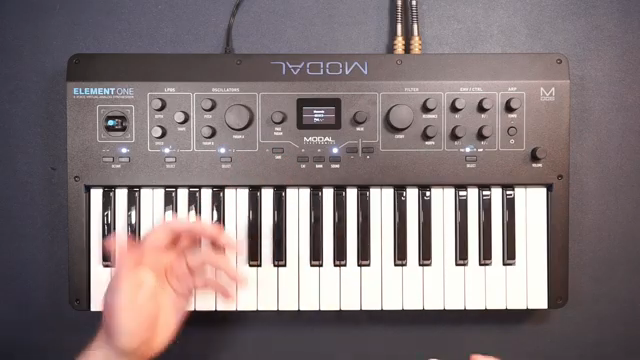
Modal Electronics’ ELEMENT One takes front-panel design seriously, stripping away menu depth so users can focus on music, not navigation. In this official walkthrough, Modal highlights clever hacks and shortcuts that transform the top panel into a command center. From octave resets to hands-on patch saving, category management, and real-time control assignments, the workflow is engineered for immediacy. We explore how these features are demonstrated, what they mean for creative performance, and where the instrument stands as an accessible yet deep synth option.
1. August 2026
LYRA
Modal Electronics ELEMENT One: Top Panel Workflow Unlocked
First Impressions: A Synth Without Menu Anxiety
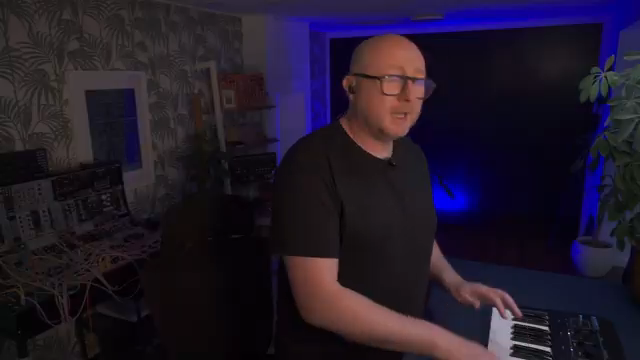
The Modal Electronics ELEMENT One is introduced as a synthesizer that prioritizes immediacy and hands-on interaction. Modal’s design philosophy is clear from the outset: minimize menu diving and maximize front-panel control. The presenter emphasizes that the goal is to keep musicians “in the moment,” giving them access to core functions and creative tweaks without the need to interrupt their workflow.
This ethos is not just about convenience; it shapes the very architecture of the instrument. The top panel serves as the primary interface for both sound design and performance, offering access to everything from pitch bends and LFOs to filters and envelopes. The message is that whether you’re navigating presets or sculpting sounds from scratch, the ELEMENT One wants you to stay focused on the music, not the manual.
"That was one of the key design aspects, was to offer you all of that functionality and control without having to menu dive and allowing you to stay in the moment."
© Screenshot/Quote: Modalelectronics (YouTube)
Octave Jumps, Sustain Tricks & Instant Patch Saving
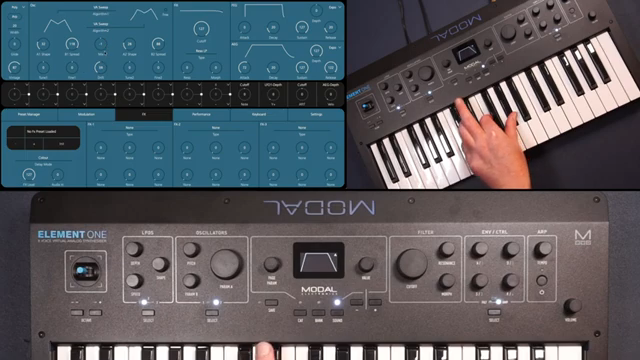
"We can actually implement and activate sustain straight from the front panel while we're playing."
© Screenshot/Quote: Modalelectronics (YouTube)
The video dives into practical shortcuts, starting with octave management. A simple hold of both octave keys resets the instrument to octave one—a small but powerful trick for performers who need to quickly return to a baseline, especially in live contexts. This tactile approach to transposition avoids the friction of menu-based workflows.
Sustain activation is another highlight, providing two modes accessible directly from the front panel. By pressing the LFO and oscillator select buttons together, users enable infinite sustain; holding them longer toggles a latch mode, ideal for switching between layered or replaced chords. For those without a pedal handy, this feature bridges a common performance gap. Patch saving is also streamlined: holding the save button stores your current sound in its slot with minimal interruption—crucial for fast-paced sessions.
Sound Organization & Real-Time Control Assignments
ELEMENT One’s sound browser isn’t just about scrolling presets. Three navigation modes—by category, bank, or type—allow users to rapidly filter and organize sounds. Assigning a patch to multiple categories is a one-button operation, using the page and value parameters to fine-tune placement. This kind of multi-tagging is rare and genuinely useful for those managing large libraries or jumping between genres.
Creating and managing custom banks is equally straightforward. Holding the bank button opens a utility for adding, renaming, or deleting banks, letting users build personal libraries distinct from factory presets. The standout, however, is the control assignment system: four front-panel dials can be reassigned (via a single button hold) to a wide range of destinations—filter, LFO, effects, or even arpeggiator swing. All of this happens without leaving the top panel, supporting both deep sound design and spontaneous performance tweaks.
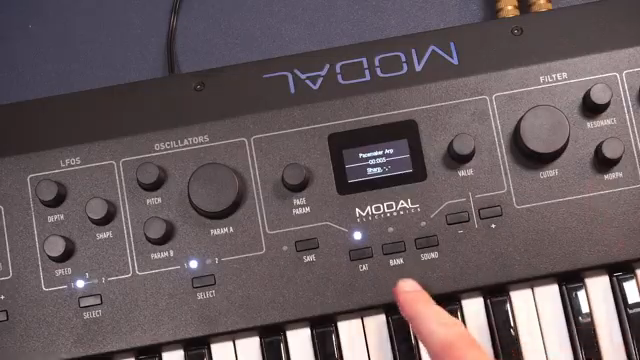
"Category is probably my favorite. It's one of the most powerful ways to find and also assign different sounds into different categories."
© Screenshot/Quote: Modalelectronics (YouTube)
Performance Tweaks: Tempo and Arpeggiator on the Fly
The presenter moves on to tempo and arpeggiator controls, again highlighting Modal’s commitment to immediacy. Tempo can be set with a dedicated knob or by tapping in the desired speed using a select-and-tap combo—ideal for syncing with live bands or shifting moods mid-set. The arpeggiator division is also tweakable from the front panel: holding the arp on/off button and adjusting the tempo allows for instant rhythmic changes, a boon for both studio experiments and live improvisation.
These performance features are not buried under layers of settings—they’re physically accessible and quick to change, reinforcing the instrument’s live-friendly credentials. The overall sense is that ELEMENT One is designed for musicians who want to respond to inspiration in real time, without technical distractions.
Synth For All: Accessible Depth and Creative Encouragement
"This is a synthesizer for everyone. You don't need to know your synthesis inside out in order to use element one."
© Screenshot/Quote: Modalelectronics (YouTube)
Modal closes the video by reinforcing the ELEMENT One’s accessibility. The instrument is explicitly positioned as welcoming to all musicians—drummers, keyboardists, or newcomers to synthesis alike. No advanced knowledge of synthesis is required to unlock deep functionality, thanks to the top panel-centric approach.
This focus on simplicity doesn’t mean sacrificing power. Instead, the ELEMENT One encourages exploration and creativity by making sophisticated features approachable. The design ethos is summed up as “simple, easy and effective,” with Modal promising more content and continued firmware support. The video leaves us with the impression that the ELEMENT One aims to democratize synthesis, inviting a wide range of users to experiment and perform without fear of getting lost in menus.
This article is also available in German. Read it here: https://synthmagazin.at/modal-electronics-element-one-top-panel-workflow-freigeschaltet/
More articles about these products:
Watch on YouTube:
Latest articles
Watch on YouTube:
Visit the channel:
https://www.youtube.com/ModalElectronics
https://www.youtube.com/ModalElectronics
Links from ModalElectronics:
website: https://modalelectronics.com
twitter: https://twitter.com/ModalElectronic
instagram: https://instagram.com/modalelectronics
Sponsored links:
If you purchase via these links, we may earn a small commission – at no extra cost to you. The link opens an Amazon keyword search, and results may vary depending on availability.
Modal Electronics ELEMENT One
🔗 Check price on Amazon
🔗 Check price on Amazon