Modal Electronics dives deep into the creative potential of ELEMENT One, targeting producers who thrive on movement, surprise, and texture. This episode explores how digital architecture and advanced modulation in ELEMENT One transform routine patching into a playground for evolving keys and experimental sound design. Expect a guided tour through oscillator algorithms, LFO-driven morphing, and nuanced filter work, all with a focus on workflow and expressive flexibility. If your idea of synthesis involves more than just presets, this video delivers a compelling case for pushing boundaries.
29. August 2026
LYRA
Modal Electronics ELEMENT One: Unlocking Experimental Keys and Evolving Soundscapes
ELEMENT One as a Playground for Experimental Sound Design
The video opens by positioning ELEMENT One as a tool for those seeking sounds that break from traditional synthesis. Modal Electronics wastes no time establishing their intent: the focus here is on the weird, the rhythmical, and the textural, making clear that this is about more than classic analog emulation or simple subtractive patches. From the outset, the workflow emphasizes experimentation, with the architecture designed to let users quickly move between contrasting timbres and textures.
This approach is anchored in a hands-on, exploratory philosophy. Rather than relying on static waveforms, the presenter encourages a mentality where movement and unpredictability are central. ELEMENT One is thus framed as a synth for those willing to embrace complexity, with its modulation and routing systems providing ample opportunity for sonic exploration.
Modulation Matrix, Oscillators, and Routing: Building Evolving Sounds
The tutorial demonstrates how to leverage ELEMENT One’s dual-oscillator structure for sonic variety, starting by choosing distinctly different oscillator algorithms. The first oscillator is crafted to produce a tight, nasal tone using pulse-width modulation, while the second is selected for a contrasting character. This choice is not arbitrary; it underlines how the synth’s architecture encourages dynamic interaction between sound sources.
Modulation is at the core of the workflow. By assigning LFOs to modulate the mix between oscillators, the video reveals a powerful method for creating evolving textures. Using two LFOs at different rates—one with positive modulation and one with negative—adds complexity and unpredictability to the blend, resulting in intricate, rhythmical crossfades. The integration of effects, such as ping-pong delay, further amplifies the sense of movement, showing how routing and modulation combine to yield fresh, complex outcomes.
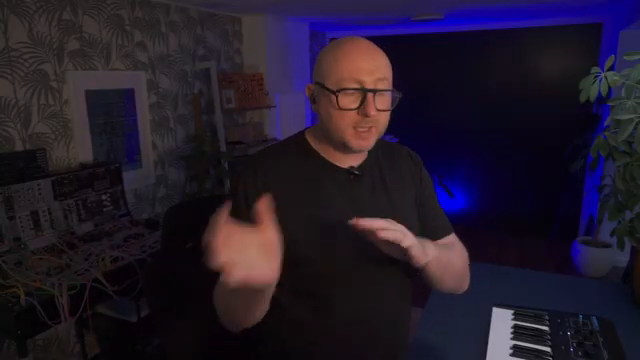
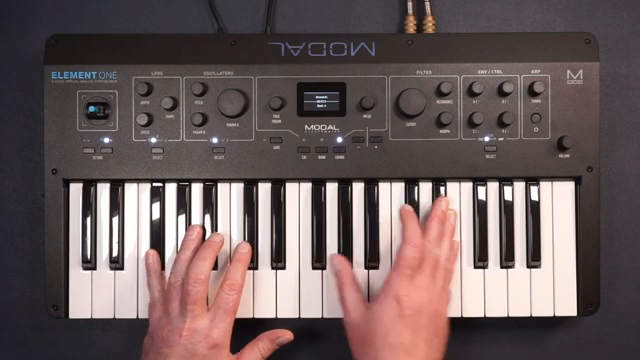
"I want to create rhythms and mix between them and I can do that just using LFO."
© Screenshot/Quote: Modalelectronics (YouTube)
Beyond Presets: FM Bells, Lush Pads, and Sonic Hybrids
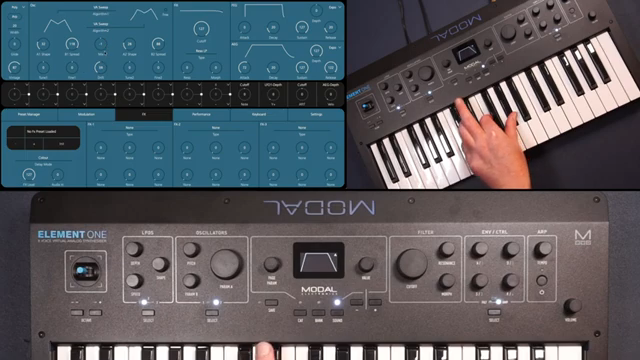
"Almost sounds like we've got an arpeggiator going on but we haven't."
© Screenshot/Quote: Modalelectronics (YouTube)
Modal Electronics pushes the boundaries of what typical synth patches can achieve by exploring hybrid combinations. For instance, the transition from an arpeggiator-like rhythm to more cinematic, evolving pads is achieved not by switching presets, but by creative modulation and layering. The workflow encourages users to experiment with filters, resonance, and oscillator drift, resulting in evolving sounds that change character over time.
The presenter highlights the value of using noise algorithms in oscillators, challenging the assumption that noise is only useful for percussive or special effects. Instead, noise becomes a source of nostalgia and texture when blended with traditional waveforms, creating pads or keys that are both emotive and unpredictable. This underscores the architectural flexibility of ELEMENT One and its suitability for producers who want to push their sound design beyond straightforward synthesis.
Rhythm and Movement: LFOs as Creative Engines
A recurring motif in the video is the use of LFOs to inject rhythm and movement into patches. LFOs are deployed not just for standard vibrato or tremolo, but for modulating mix, pitch, and even reverb parameters, creating sounds that evolve organically. The presenter demonstrates how adjusting LFO rates and directions can result in subtle wobbles or full-on pitch modulation, depending on taste and musical context.
This approach is further enhanced by layering drift and ‘vintage’ effects, which add randomness and character. The workflow remains tactile and immediate, with most parameters accessible directly from the front panel, minimizing menu-diving. The result is a performance-oriented environment where sound design is fluid and rhythmic, rather than static and predictable.
Evoking Emotion: Creative Workflows for Modern Sound Designers
The video closes with a strong message: innovative sound design is about conjuring emotion and resonance, not just technical novelty. By blending drift, noise, and evolving modulation, the presenter crafts keys and pads that evoke nostalgia and cinematic depth. ELEMENT One’s architecture is presented as a toolkit for those who want to create evocative textures that stand out from the mainstream.
This ethos is reflected in the encouragement to experiment and break with tradition. Whether aiming for warmth, unpredictability, or a sense of ‘days gone by,’ the workflow supports music-makers who value emotional impact as much as sonic complexity.
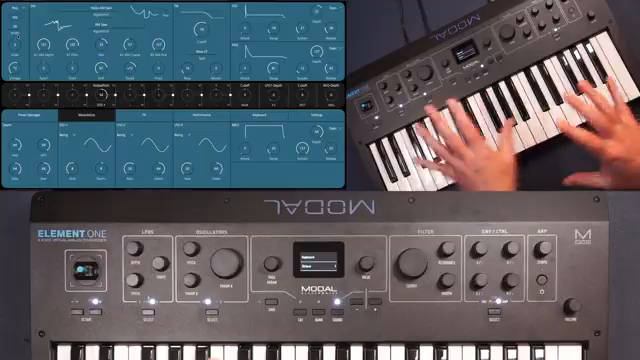
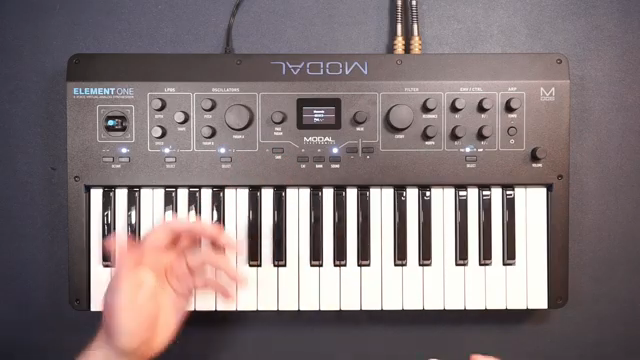
"It can offer this kind of nostalgic sound to it again if we just go all the way over to the second oscillator."
© Screenshot/Quote: Modalelectronics (YouTube)
This article is also available in German. Read it here: https://synthmagazin.at/modal-electronics-element-one-experimentelle-keys-und-sich-entwickelnde-klanglandschaften-freischalten/
More articles about these products:
Watch on YouTube:
Latest articles
Watch on YouTube:
Visit the channel:
https://www.youtube.com/ModalElectronics
https://www.youtube.com/ModalElectronics
Links from ModalElectronics:
website: https://modalelectronics.com
twitter: https://twitter.com/ModalElectronic
instagram: https://instagram.com/modalelectronics
Sponsored links:
If you purchase via these links, we may earn a small commission – at no extra cost to you. The link opens an Amazon keyword search, and results may vary depending on availability.
Modal Electronics ELEMENT One
🔗 Check price on Amazon
🔗 Check price on Amazon