A band doesn’t just change course—it dissolves, reshapes, and breathes anew. In this immersive journey, Daniele Ippolito unspools the magnetic metamorphosis of Yes through ‘90125.’ We drift through shimmering echoes, fractured legacy, and the pulse of new machinery, exploring how a prog rock behemoth slid through the wormhole of pop modernity. This is the tale of risk, reinvention, and the spectral ghosts of sound that haunt every note.
10. October 2026
LUMINA
Nebulae in the Machine: Daniele Ippolito on Yes’ Sonic Rebirth with 90125
Fairlight CMI, Les Paul, Marshall amplifier, Stratocaster, Synclavier
From Fracture to Fusion: Yes Crosses the Event Horizon
The arc of Yes, a band once defined by labyrinthine suites and kaleidoscopic ambition, bent sharply at the release of ‘90125.’ Where once the group painted vast sonic murals, the early ’80s found their universe collapsing in on itself—members departing, creative gravity waning. In these scattered remnants, a new gravity well formed, one not of nostalgia, but of restless necessity.
Daniele Ippolito invites us to witness this threshold: the moment where a prog giant, battered by time, faces extinction or transformation. With crystalline clarity, he sets the stage for ‘90125’ as not merely a next step, but a radical rebirth. Here, legacy is neither anchor nor shield—it’s a fog evaporating under the neon pulse of new intention.
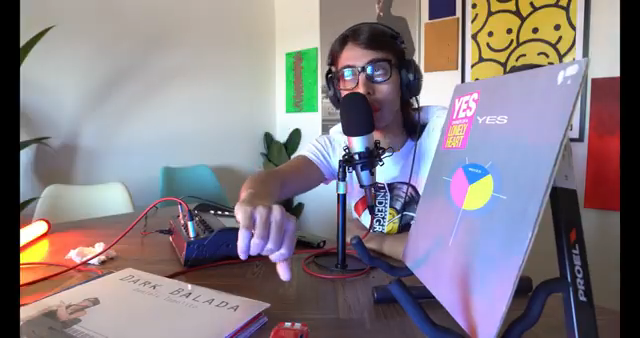
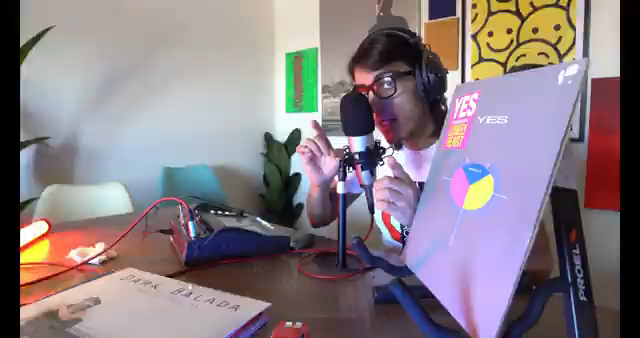
"By the beginning of the 80s, the former band seemed to have reached its limit."
© Screenshot/Quote: Danieleippolito (YouTube)
Rabin’s Arrival: New Currents, Strange Light
"Rabin had completely different sounds, more modern, more American."
© Screenshot/Quote: Danieleippolito (YouTube)
Into this void, Trevor Rabin emerges—a South African architect of modernity, his demos shimmering with American brightness, almost alien to Yes’ old world. His sound flows like a river cut from a glacier, cold and vital, unfamiliar but undeniably magnetic. Rabin’s arrival is less an addition than a quantum disturbance, recoding what Yes could mean.
Ippolito paints Rabin’s influence as a subtle, subversive force, pulling the band toward the magnetic fields of MTV and mainstream radio. At first, they are not Yes, but Cinema—a powerful metaphor for a group unmoored from its own myth, ready to be renamed by its own future.
The Horn Effect: Studio Alchemy and Sonic Ghosts
Enter Trevor Horn—a figure as much alchemist as producer. With a mind for sonic architecture and a heart in the circuitry of the era’s most advanced machines, Horn cracks open the studio and lets in the lightning. Here, the Fairlight CMI and Synclavier become not just tools, but conjurers of sound ghosts and fractured atmospheres, turning production itself into a living, breathing organism.
Ippolito’s narrative glides through these spectral innovations: Horn filling the music with sampled detonations and cut-up pulses, reimagining the role of producer as co-composer. The result is a record where electronic textures and organic performance blur into a nebula, each track haunted by the future.
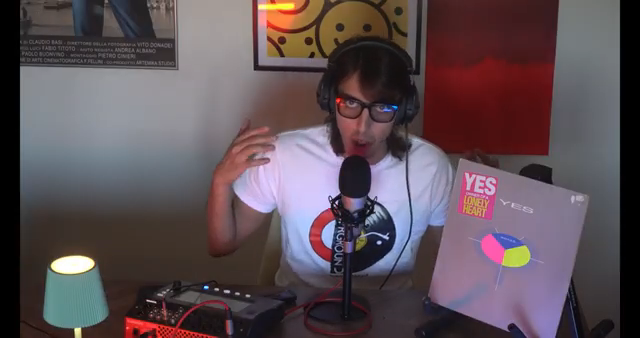
"Horn wanted the production itself to become part of the composition."
© Screenshot/Quote: Danieleippolito (YouTube)
Owner of a Lonely Heart: The Collision of Worlds
In ‘Owner of a Lonely Heart,’ all these currents converge. Rabin’s riff, born in uncertainty and echoing through tiled bathroom haze, becomes a pop monolith. Horn’s studio magic fractures the track—explosions of sampled drums, guitar solos that shatter like glass. The soundscape is a dance of tension: complex yet direct, lush but sharp, a collision of Yes’ intricate DNA with the immediacy of chart-friendly hooks.
Ippolito lingers on the tactile details: the high-tuned snare, the shifting guitars, the moment Anderson’s voice seals the song’s fate. This is not simply music—it’s a kinetic sculpture in motion, a sonic transformation best felt in the flesh of the record itself. Some collisions can only truly be witnessed, not described.
Rebirth and Resonance: Yes Finds Its New Pulse
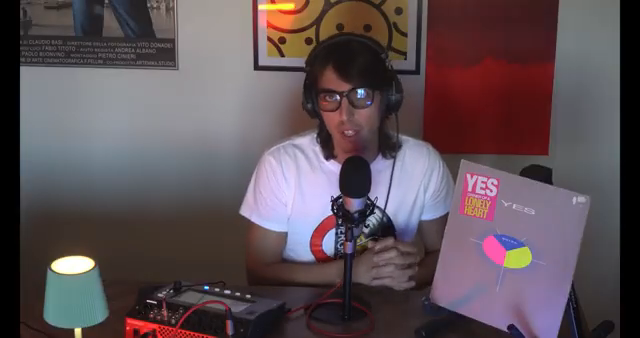
"Technology didn't necessarily have to replace the musicians."
© Screenshot/Quote: Danieleippolito (YouTube)
The risk was immense—a band defined by complexity now reaching for airplay and MTV, risking alienation from its oldest ghosts. Yet, as Ippolito reveals, ‘90125’ does not erase the past; it compresses it, distilling progressive intricacy into the bright plasma of ’80s pop. Songs like ‘Changes’ and ‘City of Love’ serve as secret reliquaries, embedding ancient harmonies within modern shells.
The result? Yes becomes their own paradox—most commercially successful when sounding least like themselves, yet never fully abandoning the pulse that first animated them. Their reinvention is not surrender, but expansion. As Ippolito concludes, ‘90125’ is both exodus and homecoming: a reminder that in music’s cosmos, survival often means letting go and drifting into new orbits.
This article is also available in German. Read it here: https://synthmagazin.at/nebel-im-system-daniele-ippolito-ueber-yes-klangliche-wiedergeburt-mit-90125/
More articles about these products:
 Voltage Labs: When Sound Becomes Liquid—The Emotional Journey of Sampling
 Josh Lucan Peels Back the Sonic Veil: Dissecting Tangerine Dream’s “Exit”
 Doctor Mix’s Sonic Revolution: 7 Synths That Shook the World
 Sonic Alchemy Unveiled with TheCrowHillCo
 Tonepusher’s Industrial Throwback: A Wax Trax! Revival
Watch on YouTube:
Latest articles
Watch on YouTube:
Visit the channel:
https://www.youtube.com/DanieleIppolito
https://www.youtube.com/DanieleIppolito
Links from DanieleIppolito:
Facebook Official Page: https://facebook.com/danieleippolitocomposer
Instagram: https://instagram.com/_danieleippolito
Sponsored links:
If you purchase via these links, we may earn a small commission – at no extra cost to you. The link opens an Amazon keyword search, and results may vary depending on availability.
Fairlight CMI
🔗 Check price on Amazon
🔗 Check price on Amazon
Les Paul
🔗 Check price on Amazon
🔗 Check price on Amazon
Marshall amplifier
🔗 Check price on Amazon
🔗 Check price on Amazon
Stratocaster
🔗 Check price on Amazon
🔗 Check price on Amazon
Synclavier
🔗 Check price on Amazon
🔗 Check price on Amazon