OXI Instruments has built a reputation for designing hardware that serves as the creative nerve center of hybrid electronic setups, and their OXI One MKII sequencer is no exception. In this official walkthrough, the team dives deep into the modulation lanes system, showcasing how it transforms static patterns into living, breathing musical sequences. From hands-on drawing of modulation curves to real-time recording and DAW integration, the video demonstrates how OXI’s approach to modulation is both powerful and accessible. If you’re curious about how digital sequencing architectures can drive expressive, evolving performances—whether you’re working with modular, MIDI synths, or a DAW—this is a must-watch introduction to the OXI One MKII’s modulation workflow.
24. April 2026
LYRA
OXI Instruments OXI One MKII: Modulation Lanes Unleashed
From Static to Dynamic: Modulation Lanes at the Core
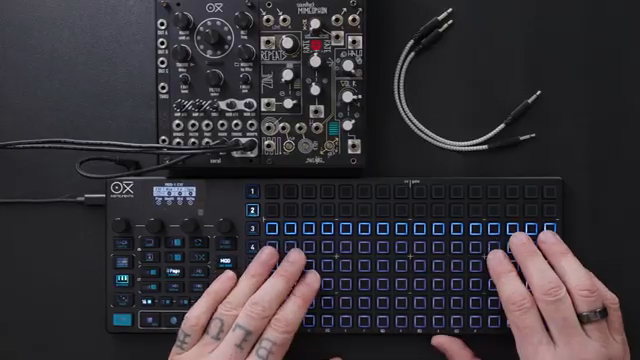
The OXI One MKII is introduced as a sequencer that goes far beyond simply triggering notes—its modulation lanes are designed to breathe life into otherwise static patterns. The video opens by emphasizing how modulation is essential for creating engaging, evolving music, and how OXI’s architecture provides multiple ways to inject movement, from dedicated LFOs to external CV and MIDI CC sources. However, this episode zeroes in on the modulation lanes, which are presented as the primary tool for automating parameters and shaping sonic motion.
Each sequencer on the OXI One MKII offers eight fully independent modulation lanes, each with its own length and time division. This modular approach means users can automate a wide range of parameters—pitch, filter, volume, or even internal sequencer settings—across hardware synths, DAWs, or modular rigs. The video uses the OXI Coral as a sound source, highlighting how deep MIDI implementation and instrument definitions streamline the process of mapping modulation destinations. The workflow is clearly designed for fast, hands-on creativity, with the modulation lanes serving as the backbone for expressive sequencing.
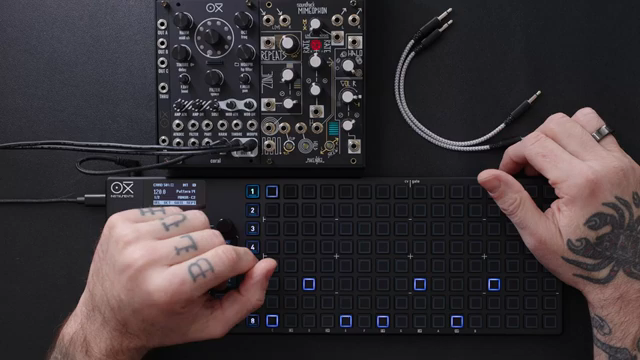
"Modulation is one of the most effective ways to turn a static sequence into something alive and engaging."
© Screenshot/Quote: Oxiinstruments (YouTube)
Drawing, Editing, and Randomizing: Modulation Lane Fundamentals
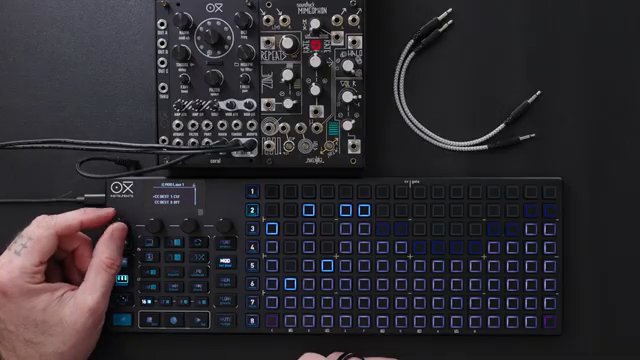
"Each lane can control up to 2 MIDI CCs, but for now we'll keep things simple and use only one."
© Screenshot/Quote: Oxiinstruments (YouTube)
The walkthrough demonstrates the tactile process of selecting, drawing, and editing modulation lanes. Accessing the modulation section is straightforward: a dedicated button reveals all eight lanes and their MIDI destinations, while the encoder is used for lane selection, muting, and global modulation offset. The interface allows users to quickly visualize and manipulate modulation curves, making it easy to experiment and iterate on the fly.
A key feature is the ability to set minimum and maximum values for each lane, which prevents parameters like filter cutoff from dropping out of the audible range or exceeding desired limits. Randomization is also highlighted as a creative tool for injecting controlled unpredictability into sequences. By adding a touch of randomness, users can avoid repetitive patterns and keep their sequences fresh. The video makes it clear that these tools are designed to encourage experimentation without getting bogged down in menu-diving, staying true to OXI’s hands-on ethos.
Independent Lengths, Divisions, and Offsets: Evolving Patterns Made Easy
One of the standout architectural features of the OXI One MKII’s modulation system is the independence of each lane. Users can set unique lengths, time divisions, and offsets per lane, effectively turning each modulation lane into its own sequencer. This decoupling allows for the construction of complex, evolving rhythms and textures that don’t simply repeat with the main sequence, but instead phase and interact in musically interesting ways.
The video walks through practical examples: drawing a modulation curve, shortening its length, and doubling its speed to create polyrhythmic movement. The ability to offset modulation values—both globally and per lane—adds further nuance, with the distinction between destructive (global) and non-destructive (lane) offsets clearly explained. Smoothing between steps is another thoughtful addition, allowing transitions to be either stepped or fluid, depending on the desired effect. This level of control encourages users to sculpt modulation that feels organic and alive.
"Think of each modulation lane as its own sequencer."
© Screenshot/Quote: Oxiinstruments (YouTube)
Creative Workflows: Live Recording and Cross-Platform Control
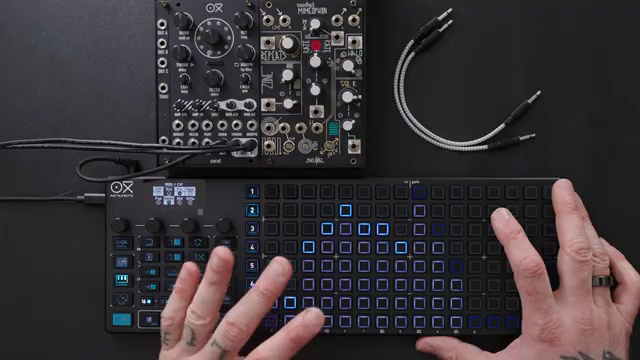
"A great way to add modulation is by recording it live."
© Screenshot/Quote: Oxiinstruments (YouTube)
The video doesn’t just focus on step-by-step editing; it also highlights creative workflows that leverage the modulation lanes for real-time performance and integration. Live recording of modulation is demonstrated, allowing users to capture expressive parameter changes as they play, overwriting previous automation with each new pass. This immediacy makes the OXI One MKII a compelling tool for both studio and live contexts.
Beyond internal modulation, the lanes can be routed to control external hardware via CV (as shown with the Mimeophon module) or software parameters in a DAW like Ableton Live. The process of mapping modulation lanes to DAW controls is shown in detail, reinforcing the OXI’s role as a central hub in hybrid setups. The video also touches on the modulation matrix, hinting at even deeper routing possibilities for those who want to build intricate, interconnected systems. These workflows underscore the flexibility and integration that digital sequencers can offer when thoughtfully designed.
A Gateway to Advanced Modulation: What’s Next for OXI One MKII
While this episode focuses on the foundational aspects of modulation lanes, it’s clear that OXI Instruments has built a system with significant depth. The video repeatedly hints at advanced features—such as LFOs, internal destinations, and more complex routing—that will be covered in future installments. This modular approach to education mirrors the architecture of the instrument itself: start simple, then layer on complexity as users grow more comfortable.
For now, the OXI One MKII’s modulation lanes offer a robust toolkit for anyone looking to add movement and expression to their sequences, whether in a hardware, modular, or DAW-based environment. The promise of deeper modulation sources and advanced integration in upcoming videos is tantalizing, and we’re eager to see how OXI will continue to expand the creative possibilities for digital and hybrid musicians.
More articles about these products:
 OXI Instruments Coral Firmware 3: A Modular Power-User’s Playground
 OXI Instruments: Polyrhythmic Grooves with the OXI One mkII’s Decoupled Velocity and Gate
 OXI Instruments OXI One mkII: Mod Lanes Unleashed
 OXI Instruments E16: Dual MIDI Destinations Demystified
 OXI Instruments: Architectural MIDI Connections with the OXI ONE MKII
 OXI Instruments Reinvents Sequencing: Stochastic Mode on the OXI One MKII
 OXI Instruments OXI One MKII: CV & Gate Wizardry for Modular Setups
 OXI Instruments: Saga Mode on the OXI One MKII – Escaping the Grid with Nigrán 2.0
 OXI Instruments OXI One MKII: Multitrack Mode as the Heart of Hybrid Sequencing
 OXI Instruments OXI One MKII: Multitrack Mode Unleashed
 OXI Instruments OXI One MKII: Pattern Navigation Reimagined
 OXI Instruments OXI One MKII: Architecting Inspiration with the Random Generator
Watch on YouTube:
Latest articles
Watch on YouTube:
https://www.youtube.com/oxiinstruments
Links from oxiinstruments:
Sponsored links:
If you purchase via these links, we may earn a small commission – at no extra cost to you. The link opens an Amazon keyword search, and results may vary depending on availability.
🔗 Check price on Amazon
🔗 Check price on Amazon