OXI Instruments returns with a deep dive into the OXI One MKII’s CV and gate powers, showing how this sequencer flexes in modular environments. This official tutorial lays out the basics—monophonic, drum, and polyphonic patching—while venturing into velocity, envelopes, LFOs, and advanced voice allocation. Whether you’re looking to breathe life into a single oscillator or orchestrate a four-voice polyphonic patch, OXI’s hands-on video packs practical routing tricks and modulation know-how for every modular devotee.

25. June 2026
MILES
OXI Instruments OXI One MKII: CV & Gate Wizardry for Modular Setups
The Modular Brain: OXI One MKII Unpacked
OXI Instruments positions the OXI One MKII as a CV and gate powerhouse for modular synth users, offering eight fully configurable CV and gate outputs. The sequencer’s outputs can be accessed directly from the back panel or through the OXI Pipe, allowing users to keep their systems neatly patched and ready for action. This flexibility is clearly aimed at those who want a reliable, central control unit amidst the chaos of a Eurorack setup.
The video sets out to demonstrate three foundational scenarios: monophonic patching, drum sequencing, and polyphonic voice allocation. OXI’s approach is hands-on, prioritising practical examples over abstract theory. The initial walkthrough gives a quick visual of the CV/gate matrix, where sequencer tracks meet output assignments, making it easy to see how the OXI One can serve as the nerve centre in a modular rig.

"OXI1M2 allows you to control 8 fully configurable CV and gate outputs."
© Screenshot/Quote: Oxiinstruments (YouTube)
Output Modes: Velocity, Envelope, LFO and Beyond
"Envelope generates an ADSR triggered by incoming steps."
© Screenshot/Quote: Oxiinstruments (YouTube)
The OXI One MKII’s CV outputs aren’t limited to pitch—each can be set to deliver velocity, envelope, LFO, or modulation lane signals. The video walks through these modes starting with velocity, which can add expressive dynamics when patched to a synth’s velocity input. One can toggle whether the output is gated or continuously active, adapting to the needs of different modules or patches.
Envelope mode generates an ADSR envelope on incoming steps, with adjustable attack, sustain, and amount. This is ideal for filter sweeps or sidechain-like effects, showing its value as a tool for shaping sonic movement. LFO mode lets users send out either of two internal LFOs, with adjustable rate and offset, perfect for everything from subtle vibrato to more complex modulation. The mod lane output mode is also highlighted, where custom modulation shapes can be drawn and sent via CV, opening the door to intricate, evolving patches.
Patching in Practice: Mono, Drums, and Polyphony
The first practical use case is classic: patching a monophonic voice. CV and gate outputs are quickly assigned to sequencer tracks, and the video demonstrates duplicating pitch data across multiple outputs for layering or parallel voices. Visual feedback on the OXI One’s interface confirms what’s being sent, making troubleshooting and patching more straightforward. Physical patching is shown step by step, from CV and gate out to the target module’s inputs.
For drum sequencing, OXI One’s gate outputs are configured as triggers, each mapped to separate drum voices. The system automatically handles track allocation, but manual override is always possible for bespoke setups. CV outputs can be set to velocity mode, allowing dynamic drum patterns with varying hit strengths. The final segment takes things up a notch with a polyphonic patch: four oscillators (two from each of two modules) are assigned CV and gate outputs, routed through a backend filter and VCA. Voice allocation modes (last recently used, lowest note, unison) are discussed, showing how the sequencer can adapt to classic polyphony challenges in modular environments.

"My drum module accepts CV to modulate amplitude."
© Screenshot/Quote: Oxiinstruments (YouTube)
Integration and Modular Flexibility
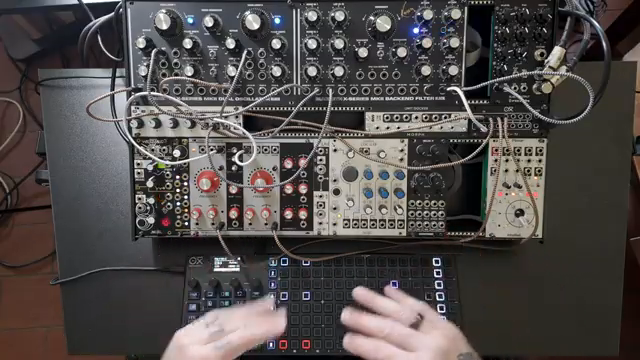
"This was just one example of a complex patching that you can do."
© Screenshot/Quote: Oxiinstruments (YouTube)
The tutorial closes by underscoring the OXI One MKII’s role as a flexible hub for integrating external modules and complex routing. With eight CV and gate outputs, users can construct elaborate modulation systems, tying together envelopes, LFOs, and mod lanes to animate even the most demanding patches. The workflow caters to both quick-start experimentation and methodical, deeply structured sound design. OXI hints at even more advanced techniques to come, positioning the One MKII as a sequencer that grows with a modularist’s ambitions.
This article is also available in German. Read it here: https://synthmagazin.at/oxi-instruments-oxi-one-mkii-cv-gate-zauberei-fuer-modulare-setups/
More articles about these products:
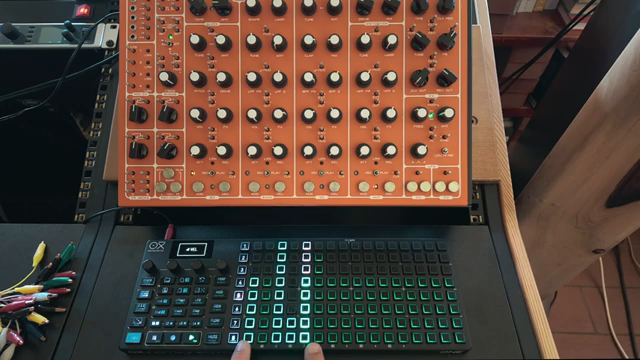 OXI Instruments: Polyrhythmic Grooves with the OXI One mkII’s Decoupled Velocity and Gate
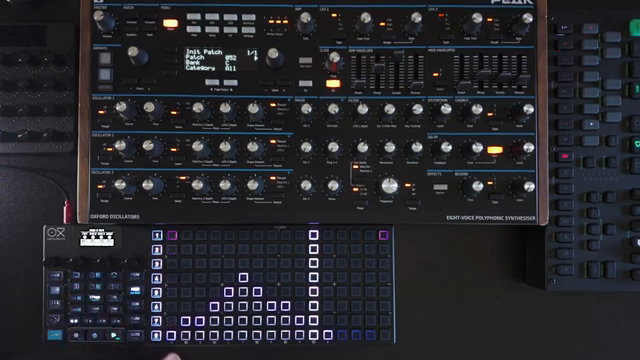 OXI Instruments OXI One mkII: Mod Lanes Unleashed
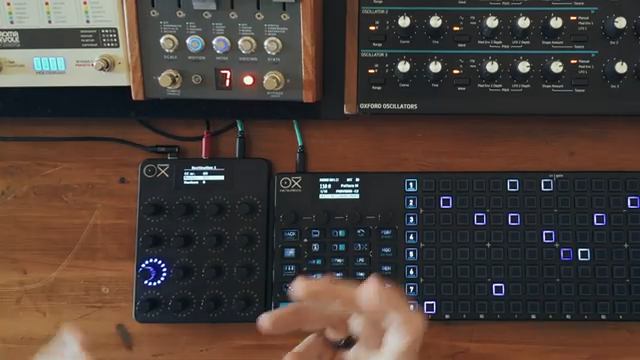 OXI Instruments E16: Dual MIDI Destinations Demystified
 OXI Instruments: Architectural MIDI Connections with the OXI ONE MKII
 OXI Instruments Reinvents Sequencing: Stochastic Mode on the OXI One MKII
 OXI Instruments: Saga Mode on the OXI One MKII – Escaping the Grid with Nigrán 2.0
 OXI Instruments OXI One MKII: Modulation Lanes Unleashed
 OXI Instruments OXI One MKII: Multitrack Mode as the Heart of Hybrid Sequencing
 OXI Instruments OXI One MKII: Multitrack Mode Unleashed
 OXI Instruments OXI One MKII: Pattern Navigation Reimagined
 OXI Instruments OXI One MKII: Architecting Inspiration with the Random Generator
 OXI Instruments OXI One MKII: Accumulators Unleashed
Watch on YouTube:
Latest articles
Watch on YouTube:
Visit the channel:
https://www.youtube.com/oxiinstruments
https://www.youtube.com/oxiinstruments
Links from oxiinstruments:
website: https://oxiinstruments.com
instagram: https://www.instagram.com/oxiinstruments
facebook: https://www.facebook.com/oxiinstruments/
support: https://oxiinstruments.com/support
Sponsored links:
If you purchase via these links, we may earn a small commission – at no extra cost to you. The link opens an Amazon keyword search, and results may vary depending on availability.
OXI ONE MKII
🔗 Check price on Amazon
🔗 Check price on Amazon