In this Playbook episode, OXI Instruments brings modular sequencing tricks front and centre with a technique from Pietro Coquinati. The focus is on mod lanes in the OXI One sequencer—specifically, how manipulating modulation lane lengths and reset functions uncovers new phrasing and groove. The demonstration is practical, hands-on and rooted in rhythmic grounding, showing how a simple chord can be made to pulse, evolve and surprise. For anyone interested in the nuts and bolts of sequencing modulation, this is a prime example of how subtle voltage choreography breathes life into even the most straightforward patches.
23. July 2026
MILES
OXI Instruments: Mod Lanes, Pattern Reset and the Hidden Rhythms Within
Predictable Chaos: Intro to Mod Lanes
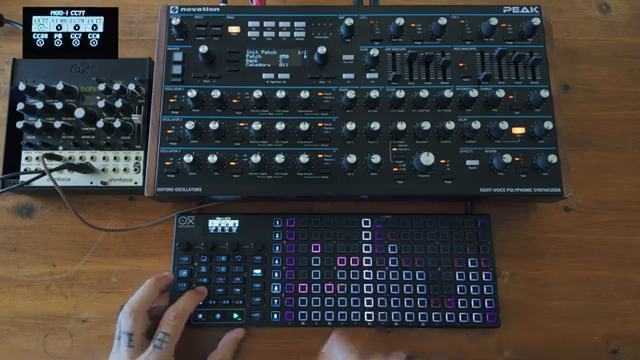
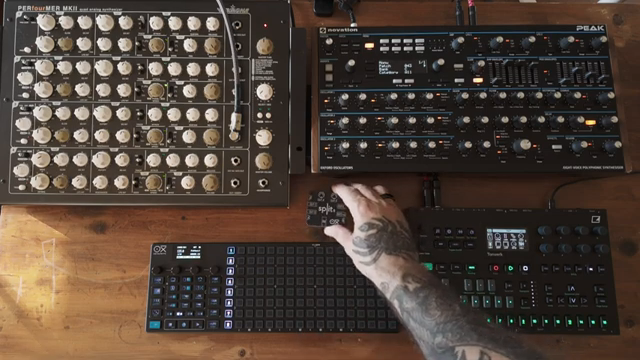
The video kicks off by introducing a technique from Pietro Coquinati, a modular synth artist known for turning straightforward sequences into living, breathing patterns. The OXI team focuses on the OXI One’s modulation lanes, showcasing how they transform static MIDI sequences into evolving rhythmic material. The core concept is to use modulation lanes not just for movement, but for creating organic-feeling changes that still remain musically grounded. By threading modulation through a simple chord pattern and anchoring everything to a four-on-the-floor kick, the demonstration sets the stage for clever, patchable sequencing magic.
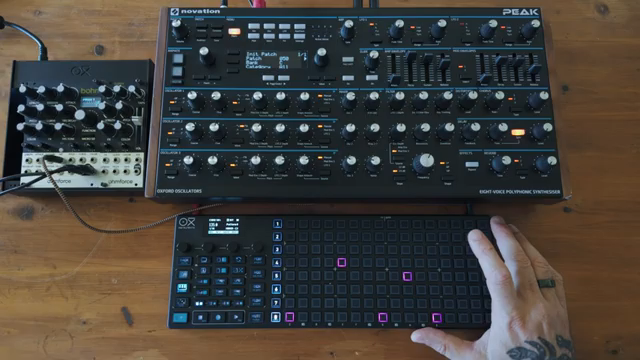
"His trick revolves around using mod lanes as devices to create modulations that feels predictable yet organic, by playing with the relationship between pattern length and pattern reset."
© Screenshot/Quote: Oxiinstruments (YouTube)
Setting Mod Lanes and Reset: The Hands-On Technique
"If I set the length of this modulation lane differently than 16 steps, let's say, for example, seven, basically I'm decoupling the modulation from the pattern itself."
© Screenshot/Quote: Oxiinstruments (YouTube)
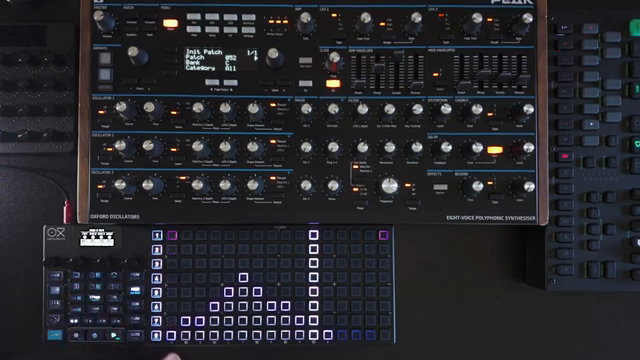
The first key move is mapping a modulation lane to a destination—here, it’s MIDI CC 77, controlling the envelope depth of a filter on a Novation Peak. The OXI One allows the modulation to be drawn by hand, then further shaped using the ‘smoothness’ setting, ranging from ultra-snappy to gently undulating. This hands-on approach mimics classic voltage control but with the tactile immediacy of modern sequencing.
The real trick emerges when the modulation lane’s length is set to something other than the main pattern’s 16 steps—say, seven steps. This decouples the modulation from the main sequence, resulting in modulation that doesn’t simply repeat with each pattern cycle, but instead drifts and evolves. Adding the reset function (set here to one bar) brings the modulation back in sync at regular intervals, letting you dial in just how much unpredictability versus predictability you want in the groove.
New Rhythms from Mod Lengths and Reset: Phrasing Unleashed
By further adjusting the modulation lane length—such as setting it to five steps—the technique yields unexpected phrasing and rhythmic interplay. Each time the modulation loops back, new accents and dynamics are revealed, while the reset function ensures the overall groove remains locked in, no matter how odd the modulation cycle. This delicate balance between exploration and structure is what gives the approach its real-world appeal, allowing experimentation without losing the thread of the track.
Changing the reset interval, for instance to two bars, stretches this interplay further. The demonstration shows how these small tweaks invite new rhythmic ideas to emerge, with the reset acting as a safety net that keeps the modulation from drifting too far off course. It’s a textbook example of how modular sequencing can be both exploratory and musically useful.
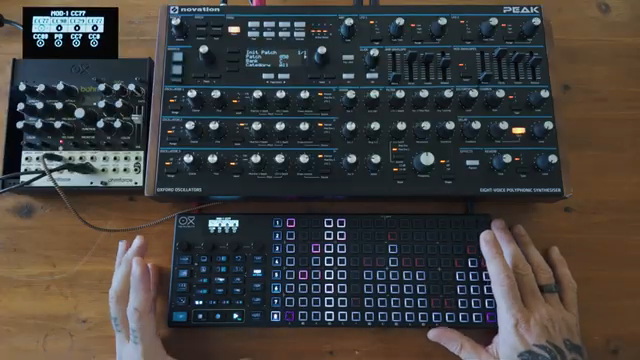
"No matter what I do, I will always feel grounded because the reset function makes them start over again every bar."
© Screenshot/Quote: Oxiinstruments (YouTube)
Layering Mod Lanes: Complex Rhythms from Simple Patches
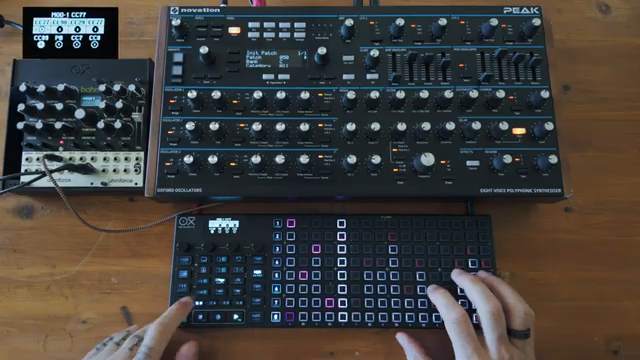
"In this case, I know I have two modulation lanes separated with different lengths and different rhythmical looping values."
© Screenshot/Quote: Oxiinstruments (YouTube)
The technique’s power multiplies when multiple mod lanes are brought into the mix. By assigning another modulation lane to a different parameter (here, CC89 for amp release), and giving each lane its own length and reset value, the OXI One turns a single chord into a rhythmically rich, ever-shifting pattern. The interaction between the lanes creates pulsing, groovy textures that defy the static feel of traditional step sequencing.
Turning the reset on and off for each lane demonstrates how tightly the modulation locks to the groove—or, conversely, how it can drift into more freeform territory when left to run unchecked. The result is a palette of rhythmic tools at your fingertips, all controlled by a few encoders and a keen ear for modulation. For anyone chasing dubby, polyrhythmic or just plain interesting movement in their modular or hybrid setup, this is a technique worth patching into memory.
This article is also available in German. Read it here: https://synthmagazin.at/oxi-instruments-mod-lanes-pattern-reset-und-die-verborgenen-rhythmen-darin/
More articles about these products:
 The Unperson Unleashes Elastic OSC: Plaits Goes Polyphonic and Gets Rowdy
 Summit Stays Supreme: The Midlife Synthesist’s One-Year Verdict
 Starsky Carr’s £15,000 Synth Soup: Analog Royalty, Now in Your Serum
 A Studio of Sonic Memory: synth4ever Journeys through Devin Belanger’s Ambient Sanctuary
 OXI Instruments OXI One mkII: Mod Lanes Unleashed
 S1gns Of L1fe Modular: Modular 101 Without the Fluff
 OXI Instruments E16: Dual MIDI Destinations Demystified
 The Unperson’s 40HP Granular Street Weapon: Small Case, Massive Sound
 Devin Belanger and the Cinematic Synth: Sculpting Sound into Story
 OXI Instruments: Architectural MIDI Connections with the OXI ONE MKII
 Sineway’s First Live Set: Gear Glory and Rookie Regrets
 Novation Peak in SCALER’s Live Rig: Digital Powerhouse at the Heart of Hybrid Performance
Watch on YouTube:
Latest articles
Watch on YouTube:
Visit the channel:
https://www.youtube.com/oxiinstruments
https://www.youtube.com/oxiinstruments
Links from oxiinstruments:
website: https://oxiinstruments.com
instagram: https://www.instagram.com/oxiinstruments
facebook: https://www.facebook.com/oxiinstruments/
support: https://oxiinstruments.com/support
Sponsored links:
If you purchase via these links, we may earn a small commission – at no extra cost to you. The link opens an Amazon keyword search, and results may vary depending on availability.
Novation Peak
🔗 Check price on Amazon
🔗 Check price on Amazon
Oxi One
🔗 Check price on Amazon
🔗 Check price on Amazon