Expressive E returns with the Osmose CE, a MIDI controller that promises to bridge the gap between traditional keyboard familiarity and next-level expressive control. Built on the same gestural keybed as the original Osmose, this instrument is designed to fit seamlessly into modern hybrid workflows, offering per-note expression, deep DAW integration, and a companion software platform with over 900 MPE-ready sounds. In this official overview, Expressive E demonstrates how the Osmose CE can transform both MPE and classic MIDI setups, making nuanced, dynamic performance accessible without menu-diving or complex configuration. We take a closer look at the architecture, workflow, and the expressive possibilities that set this controller apart.
30. April 2026
LYRA
Expressive E’s Osmose CE: A New Blueprint for Expressive MIDI Control
A Controller for the Modern Era
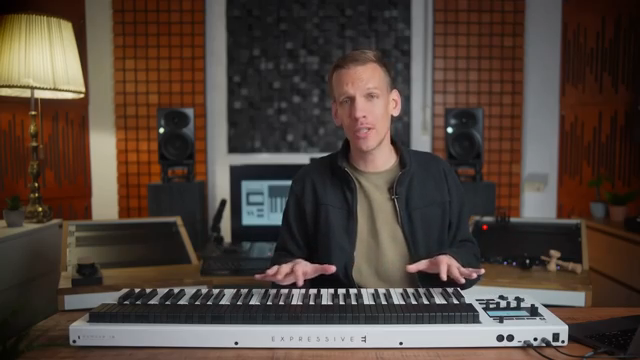
Expressive E introduces the Osmose CE as a next-generation MIDI controller, aiming to redefine how musicians interact with their digital instruments. The video opens with a clear statement of intent: to provide an expressive playing experience that feels both familiar and groundbreaking. The Osmose CE is positioned not just as a keyboard, but as a complete ecosystem designed to make every interaction fluid and genuinely usable.
What stands out is the dual nature of the device. While it serves as a classic MIDI keyboard, it also unlocks advanced expressive capabilities, thanks to its gestural keybed. Expressive E emphasizes that this is not merely an incremental update but a rethinking of what a MIDI controller can be in a modern workflow. The focus is on integrating expressive control into everyday music-making, whether in the studio or on stage.
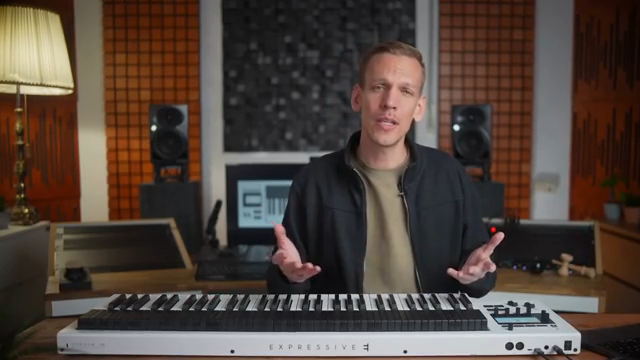
"Osmos CE was designed as a complete ecosystem where every interaction feels fluid and is genuinely usable."
© Screenshot/Quote: Expressivee (YouTube)
The Keybed: Beyond Black and White
"The moment you begin exploring each key and hearing how the sound responds, you realize just how much more control it gives you."
© Screenshot/Quote: Expressivee (YouTube)
At the heart of the Osmose CE lies its advanced keybed, which sets it apart from conventional controllers. The video demonstrates how the familiar piano layout serves as an entry point, but the real innovation comes from the keybed’s ability to sense and translate nuanced gestures. Each key responds to pressure, allowing for dynamic note triggering and continuous tonal shaping.
Aftertouch is implemented as a second vertical dimension, offering several millimeters of travel for further modulation. This is not just a token feature; the aftertouch is deep and designed for real-time, expressive performance. Side-to-side movement on the keys enables intuitive pitch bends and vibrato, bringing techniques usually reserved for string or wind instruments into keyboard playing.
Crucially, all these gestures are processed independently for each note, leveraging MPE (MIDI Polyphonic Expression). This per-note control is what allows the Osmose CE to deliver a playing experience that feels alive and uniquely responsive, far beyond what traditional MIDI keyboards offer.
Ctrl-e: The Expressive Sound Platform
The Osmose CE’s companion software, Ctrl-e, is presented as the central hub for expressive sound exploration. Developed in collaboration with leading plugin makers, Ctrl-e offers over 900 MPE-ready presets, each tailored to the unique capabilities of the Osmose keybed. The video showcases a range of these sounds, highlighting how they respond to the nuanced gestures available on the controller.
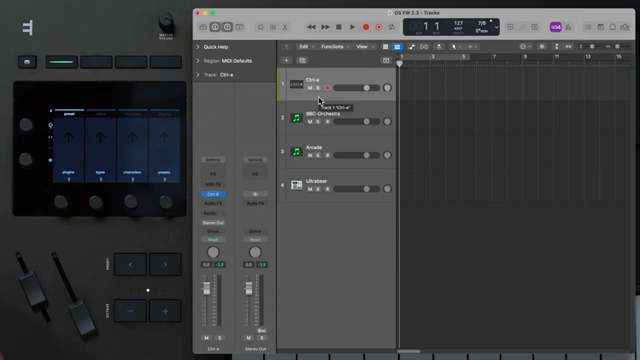
What makes Ctrl-e particularly compelling is its deep integration with the hardware. Expressive E has focused on eliminating the usual complexity associated with MPE setups. As soon as a user selects a track with Ctrl-e in their DAW, the Osmose CE automatically detects it, configures itself, and provides direct access to sound browsing—all from the hardware interface. This plug-and-play approach minimizes setup friction and keeps the creative flow uninterrupted.
The browsing system is described as highly visual and intuitive, allowing users to quickly find and audition sounds without leaving the controller. This workflow-centric design is a clear nod to musicians who value immediacy and hands-on control, especially in fast-paced studio or live environments.
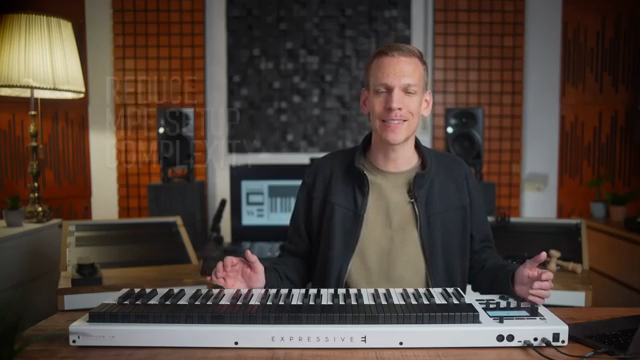
"It is deeply integrated with Osmos CE for a true plug-and-play experience."
© Screenshot/Quote: Expressivee (YouTube)
Performance Tools: Pressure Glide and Expressive Arpeggiator
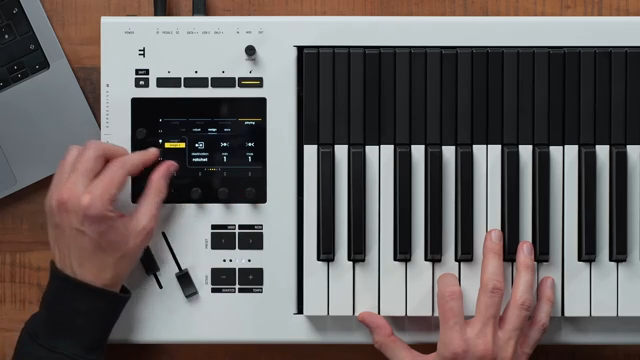
"The result is an arpeggiator that feels far more alive, dynamic and open to exploration."
© Screenshot/Quote: Expressivee (YouTube)
Osmose CE introduces advanced performance features that go beyond standard MIDI controller fare. The Pressure Glide function, accessible in the playing menu for MPE sounds, allows players to glide seamlessly between notes by balancing pressure—a clever workaround for the segmented nature of piano keys. This seesaw-like motion offers natural control over both the direction and speed of glides, making expressive transitions possible without a ribbon or touch strip.
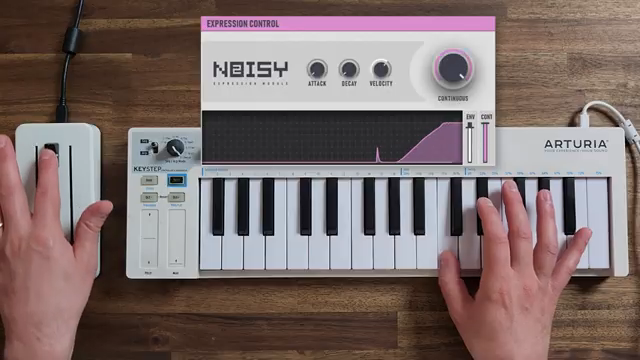
The expressive arpeggiator is another standout, transforming the traditional arpeggiator into a dynamic, per-note tool. Velocity is determined by key pressure, and players retain full control over pressure, aftertouch, and pitch bend for each note in real time. Many arpeggiator parameters can be mapped to keybed dimensions, enabling on-the-fly transformation of sequences through gesture. The result is an arpeggiator that feels alive and deeply interactive, rather than a static pattern generator.
Versatility: Breathing New Life into Classic Setups
A major strength of the Osmose CE is its ability to enhance traditional, non-MPE instruments. When not controlling Ctrl-e, the device automatically switches to external MIDI mode, offering ready-to-play configurations like classic keyboard, poly aftertouch, or multi-channel setups. Users can customize and save these presets directly on the hardware, ensuring quick adaptation to any rig.
The video demonstrates how even monophonic analog synths can benefit from the Osmose CE’s expressive capabilities. By mapping aftertouch and pitch bend to standard MIDI parameters, classic hardware and software instruments gain a new level of playability. The controller also supports advanced tricks for multi-channel plugins and orchestral libraries, enabling per-note expression even where MPE is not natively supported. This flexibility positions the Osmose CE as a transformative tool for both modern and legacy setups.
This article is also available in German. Read it here: https://synthmagazin.at/expressive-e-osmose-ce-ein-neuer-bauplan-fuer-expressive-midi-kontrolle/
More articles about these products:
Watch on YouTube:
Latest articles
Watch on YouTube:
Visit the channel:
https://www.youtube.com/ExpressiveE
https://www.youtube.com/ExpressiveE
Links from ExpressiveE:
Sponsored links:
If you purchase via these links, we may earn a small commission – at no extra cost to you. The link opens an Amazon keyword search, and results may vary depending on availability.
Ctrl-e
🔗 Check price on Amazon
🔗 Check price on Amazon
Osmose CE
🔗 Check price on Amazon
🔗 Check price on Amazon