Arturia’s AudioFuse line aims to be more than a collection of audio interfaces: it’s an ecosystem tailored for everyone from solo creators to modular synth obsessives. This official overview video walks through each model—Rev2, 8Pre, Studio Rev2, 16Rig, X8 IN, and X8 OUT—showcasing their conversion quality, hands-on controls, and clever connectivity. We break down the architecture, workflow touchpoints, and exactly where each model slots into today’s studio landscape—without the marketing gloss.

11. September 2026
LYRA
Arturia’s AudioFuse Range: Modular Interfaces for Modern Studios
AudioFuse 16Rig, AudioFuse 8Pre, AudioFuse Rev2, AudioFuse Studio Rev2, AudioFuse X8 IN, AudioFuse X8 OUT
A Family for Every Studio
The AudioFuse range is Arturia’s answer to the ever-diverse needs of modern studios. From the outset, the lineup is positioned as a modular ecosystem, not just a single product, designed to fit setups as compact as a solo creator’s desktop or as sprawling as a multi-mic, hybrid hardware–software environment. The underlying philosophy is clear: each interface is built for a different way of working, but shares the same core principles.
This approach means you’re not locked into a one-size-fits-all box; instead, the AudioFuse family is described as growing to match your workflow. Whether you’re running a DAWless rig, recording full bands, or driving a modular synth wall, there’s a targeted model. The video frames the range as both a connected ecosystem and a set of discrete solutions, with the flexibility to scale your studio one interface at a time.

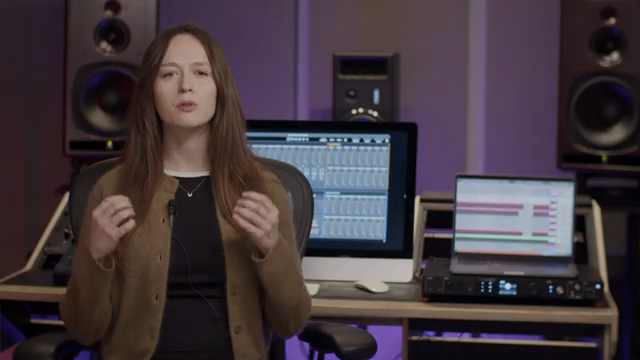
"Arturia's family of audio interfaces each built around a different way of working, from a compact desktop setup to a full outboard driven studio."
© Screenshot/Quote: Arturiaofficial (YouTube)
Conversion, Construction, and Control
"Let's go deeper through this line-up."
© Screenshot/Quote: Arturiaofficial (YouTube)
Arturia stresses that every AudioFuse shares a foundation: sonic excellence, careful conversion, and robust build quality. This isn’t just about spec sheets; the video focuses on the tactile, hands-on aspect, emphasizing minimal menu diving and direct hardware control. The AudioFuse Control Center app manages all units via computer, but the physical interfaces are built for quick, intuitive access.
Across the range, you’ll find features like dual monitor outs, A/B switching, talkback mics, reamping, and extensive digital I/O—all wrapped in solid enclosures. Each model’s interface is tailored to its intended context, from the compact, all-rounder Rev2 to the rackmount 8Pre and the flagship 16Rig. The philosophy: regardless of size or channel count, you get Arturia’s take on conversion and reliability, plus a workflow that doesn’t get bogged down by menus.
Studio Rev2: Swiss Army Connectivity
The AudioFuse Studio Rev2 is pitched as the flexible hub for modern producers and engineers. With 18 inputs and 20 outputs, four discrete mic preamps, and dedicated inserts on each preamp channel, it’s built for scenarios where both high-fidelity tracking and outboard processing are central. The two auxiliary outputs feature reamping, making it easy to send signals back out to amps or pedals, maintaining proper impedance for guitar and bass workflows.
One standout is the built-in Bluetooth receiver for instant reference playback—no more fumbling with cables just to check a mix from a phone. Sampling is streamlined via phono inputs, so turntable-centric producers can bypass extra boxes. The expanded ADAT and SPDIF connectivity supports future growth, making the Studio Rev2 a desktop centerpiece for setups that need to blend hardware, software, and multiple monitoring paths with minimal friction.

"It also includes a built-in Bluetooth receiver for wireless reference playback."
© Screenshot/Quote: Arturiaofficial (YouTube)
16Rig: Modular Control Central
At the top of the AudioFuse range sits the 16Rig, explicitly designed with electronic musicians and hybrid studios in mind. It delivers 16 analog inputs for extensive synth or drum machine setups and 12 DC-coupled outputs, targeting those who want to send CV directly to modular rigs or integrate complex hardware chains. The front panel includes two digitally recallable mic preamps and a dedicated reamping output, catering to easy pedal or amp patching without repatching cables mid-session.
The 16Rig stands out for its internal low-latency mixers, allowing it to function as a standalone hub—no computer required. Full configurations can be saved, recalled, and even controlled via MIDI, making it practical for both studio and live scenarios. This architecture is about flexibility: you can shift from a DAW-centric workflow to a DAWless or performance setup with minimal overhead.
X8 IN/OUT: Expansion Without Limits

"It's also not just for audio, but could be used for sending control voltage to modular synths."
© Screenshot/Quote: Arturiaofficial (YouTube)
The X8 IN and X8 OUT modules bring expandability to the AudioFuse line via ADAT, providing 8 additional line-level analog inputs and 8 DC-coupled outputs, respectively. This is less about raw channel count and more about integrating external hardware and enabling CV routing to modular synths. Both modules are designed for plug-and-play expansion—connect over dual optical ADAT ports to maintain full channel counts at higher sample rates.
Arturia highlights that these modules reduce cable chaos and make integration seamless. The X8 OUT, in particular, is emphasized for immersive monitoring: when paired with the 16Rig, it supports complex speaker arrays, even extending to Dolby Atmos 9.1.6 setups. The design philosophy is clear—keep every piece of your hardware always available, minimize patching headaches, and open up new creative workflows for hybrid and modular setups.
This article is also available in German. Read it here: https://synthmagazin.at/arturias-audiofuse-serie-modulare-interfaces-fuer-moderne-studios/
More articles about these products:
Watch on YouTube:
Latest articles
Watch on YouTube:
Visit the channel:
https://www.youtube.com/ArturiaOfficial
https://www.youtube.com/ArturiaOfficial
Links from ArturiaOfficial:
website: https://www.arturia.com
instagram: https://instagram.com/arturia_official
twitter: https://twitter.com/ArturiaOfficial
soundcloud: https://soundcloud.com/arturia-official/albums
Sponsored links:
If you purchase via these links, we may earn a small commission – at no extra cost to you. The link opens an Amazon keyword search, and results may vary depending on availability.
AudioFuse 16Rig
🔗 Check price on Amazon
🔗 Check price on Amazon
AudioFuse 8Pre
🔗 Check price on Amazon
🔗 Check price on Amazon
AudioFuse Rev2
🔗 Check price on Amazon
🔗 Check price on Amazon
AudioFuse Studio Rev2
🔗 Check price on Amazon
🔗 Check price on Amazon
AudioFuse X8 IN
🔗 Check price on Amazon
🔗 Check price on Amazon
AudioFuse X8 OUT
🔗 Check price on Amazon
🔗 Check price on Amazon