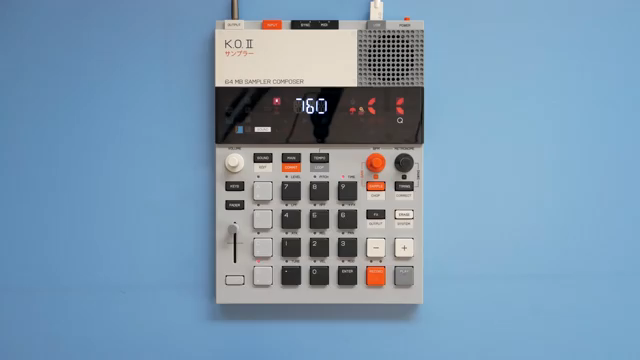
The EP-133 K.O. II is one of those instruments whose limits are almost as obvious as its possibilities: 128 MB of memory, an idiosyncratic display, twelve sample pads and a workflow quite unlike a conventional groovebox or a compact DAW. On paper, that does not sound like much room to manoeuvre.
Teenage Engineering follows a different logic. The K.O. II is not designed to hold every production feature; it links sampling, sequencing and performance so that a small number of elements can quickly become a track. Four groups, patterns, scenes, Song Mode, pressure-sensitive Punch-in FX and a deeper-than-it-looks sequencer all contribute to that approach.
Even its most conspicuous limit—memory—has become part of the creative proposition. Variable sample rates can save space, but they also let the K.O. II move deliberately between clean sampling and a pronounced lo-fi character.
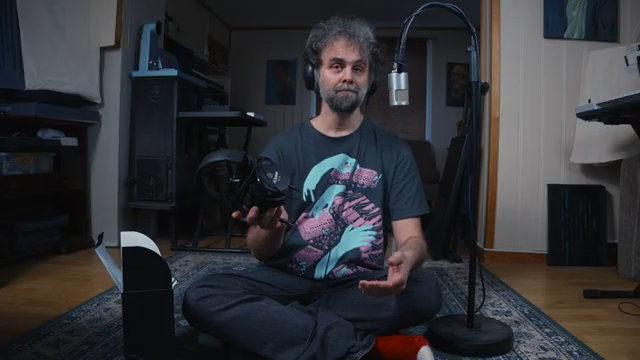
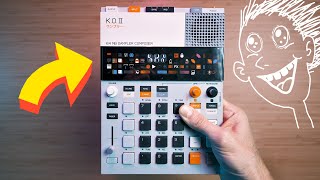
“The lo-fi version needs less than a quarter of the memory used by the normal sample.”
© Screenshot/quote: SON WU (YouTube)
The observation comes from SON WU’s look at the K.O. II’s hidden, and later officially expanded, lo-fi workflow.
Teenage Engineering EP-133 K.O. II – Price & availability
Sampler & Composer · 128 MB · pressure-sensitive pads · Song Mode · Punch-in FX
Check price & availability at Amazon →
Advertising – affiliate link. We may receive a commission if you buy through this link, at no extra cost to you.
A sampler built to be played, not managed
The K.O. II is related in spirit to Teenage Engineering’s small PO-33 K.O!, but it is a far more extensive instrument. Samples can be recorded via the integrated microphone or stereo input, assigned to pads, chopped, pitched and organised into patterns. MIDI In/Out and Sync In/Out make it possible to connect external gear.
The twelve velocity- and pressure-sensitive pads, together with four groups, form the sequencer’s actual workspace. Each group can contain patterns that can be combined with one another. Teenage Engineering specifies up to 99 patterns per group and 80,000 notes per project; Song Mode chains scenes across up to 99 positions.
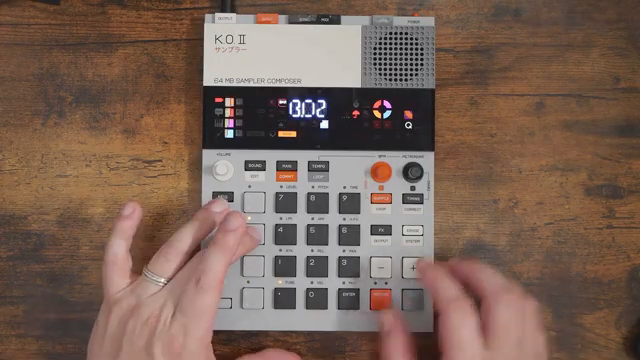
That makes the EP-133 more than a machine for short loops. In Free Beat’s attempt to make a complete song on the device, the conclusion was clear:
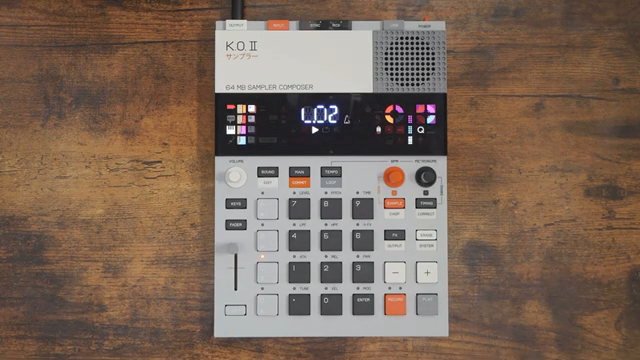
“A full song is definitely possible here. As far as I know, you can have up to 99 song sections.”
© Screenshot/quote: Free Beat (YouTube)
The route there is not organised like a conventional DAW. Patterns, groups, scenes and Commit are a vocabulary of their own. Once that system clicks, variations can be created and recombined quickly; anyone expecting familiar sequencer concepts will need to accept the instrument’s logic first.
128 MB: limited memory, increasingly flexible use
In 2026, 128 MB sounds almost absurdly tight. That is exactly why Teenage Engineering’s way of working with that boundary is interesting. Samples can be recorded at several sample rates: the regular 46.875 kHz setting is joined by lower-quality modes that use markedly less memory while changing the sound. The company specifies 32 kHz as a middle setting and 26.25 kHz for a distinctly lo-fi recording. Even lower rates can be imported with the EP Sample Tool and retained.
SON WU’s observation therefore matters beyond its effect value: a lo-fi version that takes less than a quarter of the space turns sample rate into a choice between storage use and sonic character. The limit does not disappear, but it can be used creatively. The current software also allows longer recordings, with a mono sample reaching up to 40 seconds.
A capable sequencer that does not explain itself
The K.O. II’s strength is not a long list of menu functions, but sequencing as an ongoing process. Patterns can be changed while playing and combined group by group. Commit captures a current state so that it can be developed further; beats, basses and samples can progress independently without rebuilding an entire arrangement each time.
Song Mode addresses one of the original weaknesses of a highly performance-oriented device by placing scenes in a fixed order. It does not make the instrument automatically simple, though. Free Beat puts the learning curve plainly:
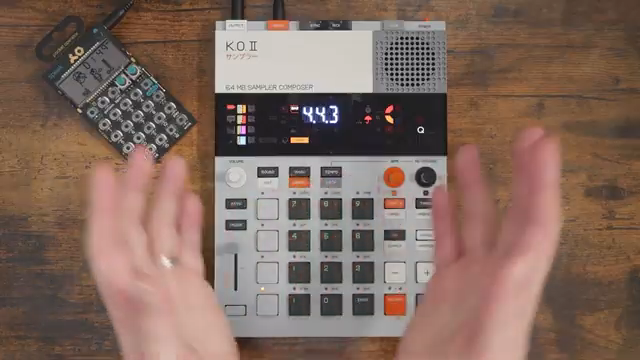
“It will be frustrating at first. You have to experiment and learn quite a few things.”
© Screenshot/quote: Free Beat (YouTube)
The surface reduces conventional menus, not necessarily the number of things that need to be understood. Many functions are accessed through combinations, modes and multi-function controls. Once its logic is familiar, the K.O. II is immediate—but it is not self-explanatory.
Punch-in FX turn the K.O. II into an instrument
The same approach is especially clear in the effects. Alongside six send effects and a master compressor, the K.O. II offers twelve pressure-sensitive Punch-in effects. They are less a conventional insert section than part of a performance: played from the pads, they can turn a simple pattern into something far more animated.
The fader belongs to that idea too, with assignments for filter, level, pitch and other parameters. Its multiple roles are also one of the areas that users do not always find intuitive. Woody Piano Shack described the experience this way:
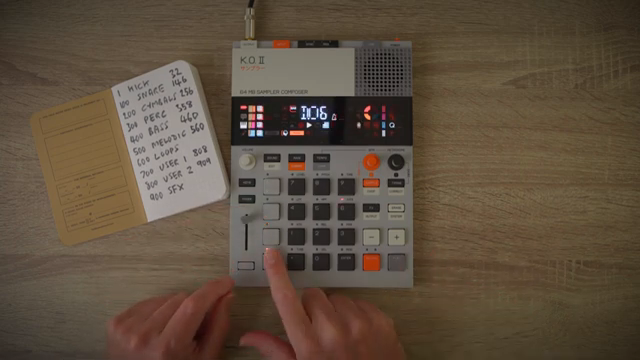
“It is really confusing how the fader works. It jumps between modes and keeps doing different things.”
© Screenshot/quote: Woody Piano Shack (YouTube)
That criticism reflects an earlier software version. Teenage Engineering has since addressed stability issues and several quirks around the fader, sampling and chopping, so early reports should not be treated as a complete picture of the current instrument.
Updates have made the K.O. II a different instrument
This is central to any current assessment. Today’s EP-133 can do considerably more than the unit that arrived in 2023. OS 2.0 added resampling, Song Mode, sidechain functions, extra polyphony and expanded MIDI options. Resampling lets sounds and effects be combined—or whole patterns be captured again as a new pad sample.
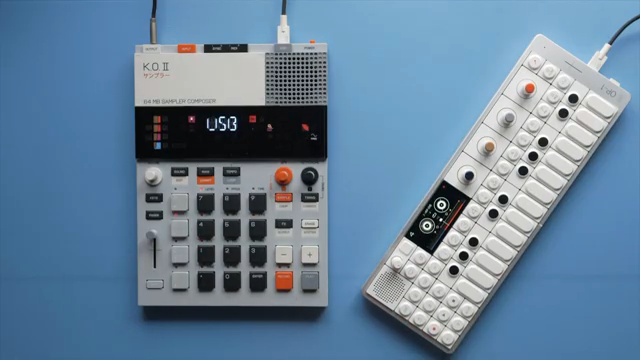
OS 2.5 expanded the sampling workflow again: USB audio can be used for recording and monitoring, samples can play backwards, recording sample rate is variable, mono samples can be longer, and Auto Chop and time-stretching were extended. OS 2.5.1 followed with fixes for long-sample editing and USB-audio streaming on certain Android devices.
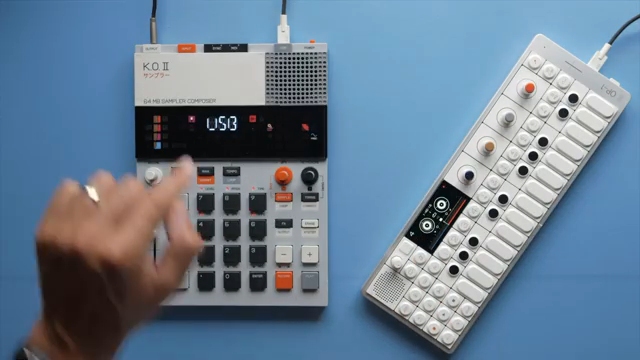
“You can already see the first major feature on the display: audio over USB.”
© Screenshot/quote: SON WU (YouTube)
That makes a phone or computer much more direct in the sampling workflow—more than a minor extra connection on a portable instrument.
Resampling changes the relationship with limits
Resampling is particularly suited to the K.O. II: several samples can be combined, processed with filters and effects, then recorded again as one new sample. Whole patterns can be condensed in the same way. This creates room by reducing a more complex construction to one pad, while retaining the classic sampler aesthetic of committing decisions and processing the result again.
The K.O. II does not become an unlimited production environment. It gains practical ways to work productively inside its own limits. Anyone checking the current price can check the EP-133 K.O. II’s price and availability at Amazon.
Portable enough to actually take along
At 240 × 176 × 16 mm and around 620 g, the K.O. II remains remarkably slim. It runs from USB-C or four AAA batteries and includes both a microphone and a small speaker. The microphone is less a studio tool than an invitation: capture a sound, put it on a pad and continue. The stereo input can sample external instruments, phones and other sources.
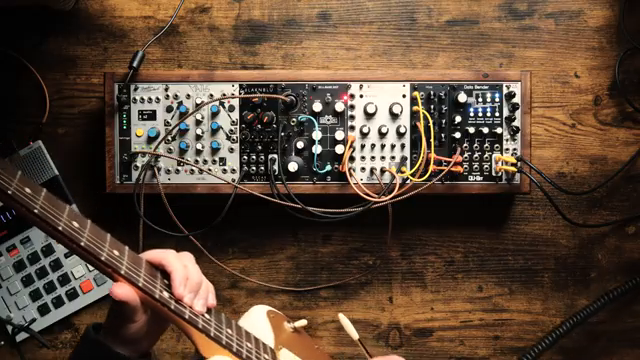
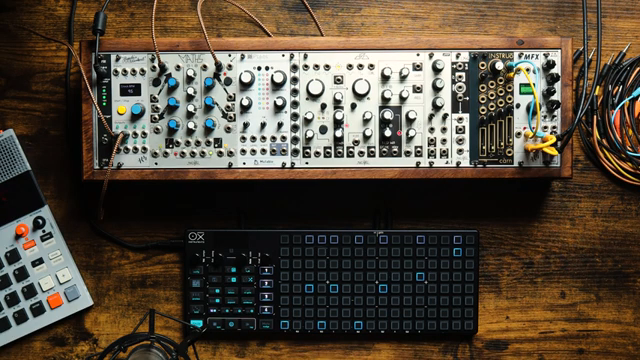
MIDI In/Out and Sync In/Out also leave it open enough for larger setups. It can work on its own or as the sampling and sequencing centre between other instruments; in a live context, the combination of songs, scenes, MIDI and a play-oriented surface is especially compelling.
Its idiosyncrasy is part of the concept
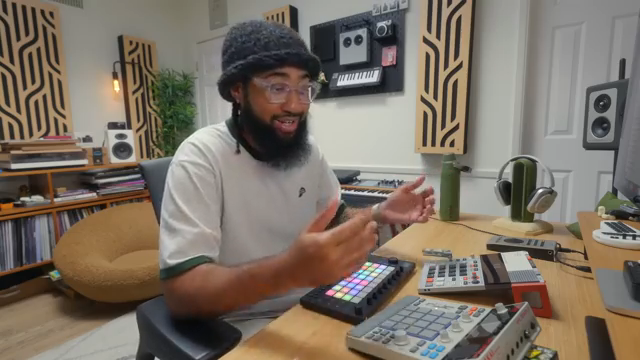
Read the available experiences side by side and a contradiction emerges. Many users make interesting results with the K.O. II while describing the path there as unusual. Free Beat made complete songs but speaks openly about initial frustration; Woody Piano Shack praised build quality while criticising workflow and bugs in the version used. Others place the K.O. II naturally in live rigs.
Those differences cannot be fully resolved because they are part of the product. The K.O. II does not try to shrink familiar DAW behaviour into hardware; it asks the player to learn its own terms, combinations and shortcuts. That can feel needlessly cryptic, or it can make sampling, sequencing and performance unusually close together.
Who is the EP-133 K.O. II for?
The K.O. II suits musicians who want to play samples rather than merely manage them. Pads, patterns, groups, Punch-in FX and resampling encourage an evolving workflow. Battery power, microphone, speaker and compact dimensions also make it useful in mobile setups. Those who want to create complete songs in the hardware can now do so through Song Mode and scenes.
It is less suitable for anyone expecting a largely self-explanatory interface, a large on-board sample library or a conventional DAW/workstation structure. Memory remains limited and the workflow has to be learned. That limitation is also its character: the EP-133 does not try to do everything; it tries to turn samples into something playable quickly, then offers many more ways than at launch to build that material into a complete track.
Specifications at a glance
| Area | Teenage Engineering EP-133 K.O. II |
|---|---|
| Type | Sampler, sequencer and composer |
| Memory | 128 MB |
| Sample slots | 999 |
| Pads | 12 velocity- and pressure-sensitive sample pads + 4 group pads |
| Sampling | Stereo/mono, up to 46.875 kHz / 16 bit as standard; variable sample rates |
| Polyphony | 12 stereo or 16 mono voices |
| Projects | 9 |
| Patterns | Up to 99 per group |
| Groups | 4 |
| Song Mode | Up to 99 song positions |
| Sequencer | High-resolution, quantised or free, with swing |
| Resampling | Samples, sounds and patterns |
| Effects | 6 send FX, master compressor, 12 Punch-in FX |
| Audio | 3.5 mm stereo input and output |
| Microphone / speaker | Integrated |
| MIDI | TRS Type A MIDI In/Out |
| Sync | Sync In/Out |
| USB | USB-C for power, MIDI and, with current OS, USB audio |
| Power | 4 × AAA or USB-C |
| Dimensions | 240 × 176 × 16 mm |
| Weight | Approx. 620 g |
MILES’ verdict
It is easy to reduce the EP-133 K.O. II to its unusual limits: 128 MB looks small, the interface needs explanation and some workflows demand more learning than the toy-like appearance suggests. What is more interesting is what Teenage Engineering has made possible inside that frame.
The sequencer reaches complete songs, resampling condenses more complex ideas, Punch-in FX make processing part of performance and multiple sample rates turn tight memory into a sonic choice. OS updates have made the K.O. II substantially more mature without turning it into a conventional workstation.
For a straightforward production environment, other tools will likely be faster. For players who want a sampler whose peculiarities become part of making music, the K.O. II remains an unusually distinctive instrument.
View the Teenage Engineering EP-133 K.O. II
Sampler & Composer · 128 MB · pressure-sensitive pads · Song Mode · Punch-in FX
Check price & availability at Amazon →
Advertising – affiliate link. We may receive a commission if you buy through this link, at no extra cost to you.
Sources for this product feature

All other articles featuring the Teenage Engineering EP-133 K.O. II
 Woody Piano Shack’s Gear Bloodbath: Tier Rankings, Regrets, and $1,000 Down the Drain
 TAETRO’s MPC Sample: Workflow Weapon or Missed Beat?
 Sampler Showdown 2026: Nu-Trix The Synth Guy Keeps It Real
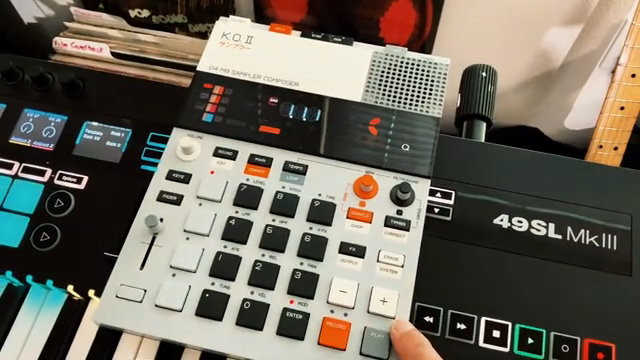 Defmod Network’s Hybrid Rig: Where Synths Meet Six Strings and Chaos Ensues
 Free Beat’s KOII Adventure: Quirky Sampler or Outback Oddity?
All YouTube videos featuring the Teenage Engineering EP-133 K.O. II
Primary – main topic (20)
 How I Make a Synth Jam From Scratch
 I tried learning the EP-133 KOII in one sitting... here's what happened
 KOII just got ANOTHER UPDATE!
 EP-40 RIDDIM vs KOII…the NEW KING?!
 How I Perform Live with Synths + Guitar | Hybrid KO II & UB-XA Rig
 Is an EP-133 KOII Full Song Possible? (Yes, But...)
 Understanding the KOII (It's Still Weird to Me)
 Teenage Engineering EP 133 KO2 // Demo, Tutorial & Review
Show all (12 more)
 3 Reasons Why I Love the Teenage Engineering EP 133 KO II
 Lo Fi Chill Beats from Teenage Engineering EP 133 KO II
 Is the EP 133 KO II by Teenage Engineering the Right Purchase? - Unboxing and First Impression
 Teenage Engineering EP-133 K.O.II - FIRMWARE 2.0!
 there's more…discover the KOII's HIDDEN LO-FI MODE!
 Modded MC-202 & EP-133 KO II Jam // Compact Creations
 5 Favorite Things About the teenage engineering EP-133 K.O. II w/ SON WU
 Teenage Engineering EP-133 KOII: 3 things we love... and 3 things we don't
 Making a beat on the EP-133 K.O. II (ITS NOT EASY)
 What's All the Hype About? // Teenage Engineering EP-133 K.O. II
 Teenage Engineering EP 133 K.O II REVIEW – Does this $299 sampler live up to the HYPE?!
 Get started with the new EP-133, K.O.II by Teenage Engineering (Tutorial)