Expressive E’s Noisy 2.6 update pushes its distinctive software synth architecture further, introducing five new resonators, a fresh suite of effects, new noise types, and a vast preset library. The focus remains on expressive MPE workflows, letting users shape and automate highly dynamic sounds with nuanced gesture control. In this official overview, Chris from Expressive E walks through the new features and illustrates how Noisy 2.6 delivers a uniquely interactive sound design experience for both beginners and seasoned synth explorers.
24. July 2026
LYRA
Expressive E Noisy 2.6: Expanding the Architecture of Expressive Synthesis
A Synthesizer That Listens Back
Noisy 2.6 is positioned as more than just another software synthesizer—its core philosophy is about building a sonic engine that truly responds to the musician’s gestures. Right from the outset, Chris highlights the update as a major release, emphasizing the instrument’s evolution in versatility and depth, now spanning analog, FM, wavetable, and acoustic territories. The workflow is built around expression: every preset is constructed with four expression control blocks, providing a modular but highly interactive interface for shaping the sound’s character in real time.
These expression blocks are not tied to a single type of hardware interface. Users can shape parameters using any MIDI controller, mouse, or DAW automation, but the real magic emerges with advanced expressive controllers like Expressive E’s own Touché or MPE-capable hardware such as Osmose. The video makes it clear that the architecture is designed to reward nuanced performance input, setting the stage for a deeply responsive synthesis experience.
Five New Resonators, Infinite Directions
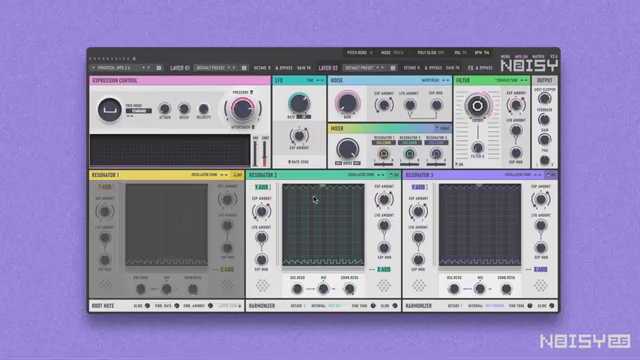
The 2.6 update centers on expanding Noisy’s core synthesis engine. Each of the two sound layers in Noisy offers three resonator slots, and version 2.6 introduces five entirely new resonator types. These additions open up new sonic directions: acoustic modeling, analog-style warmth, crystalline FM, and evolving digital timbres are all now on the menu. Chris explains that the new Analog Unison Resonator enables instant access to wide, thick, and powerful synth sounds—a direct nod to classic analog textures but with the flexibility of digital layering.
Two fresh FM resonators are introduced as well: a classic FM Resonator for bell-like, metallic timbres, and an FM Feedback Resonator that explores grittier and more unstable harmonic content. The Harmonic Resonator allows detailed harmonic sculpting, and the 2D Wavetable Resonator offers seamless morphing across a two-dimensional digital soundscape. This combination equips Noisy 2.6 with a palette spanning from traditional acoustic and analog to forward-thinking digital synthesis.
"for version 2.6 we've added five new resonator types that open the door to entirely new synthesis approaches."
© Screenshot/Quote: Expressivee (YouTube)
Gesture-Driven Sound Design: Expression Control Blocks
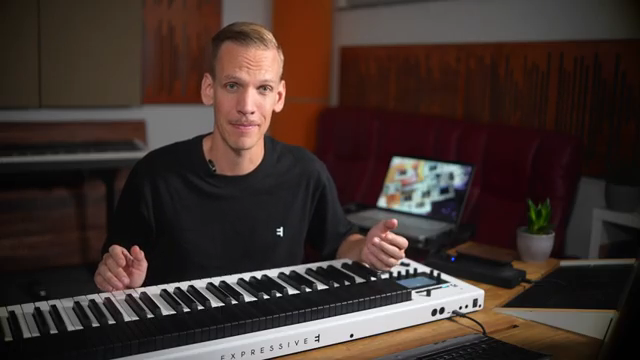
"Noisy 2 features one of the deepest MPE integrations available today."
© Screenshot/Quote: Expressivee (YouTube)
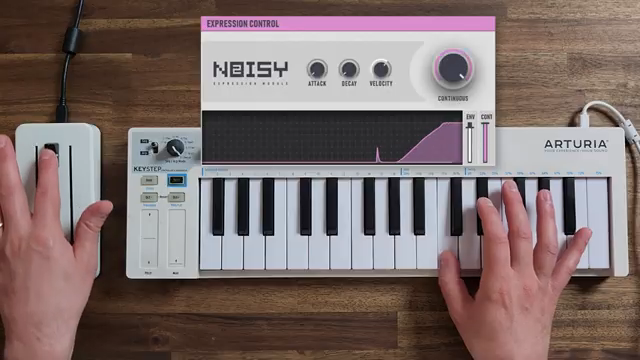
A signature feature of Noisy 2.6 is its deeply integrated gesture-responsive architecture. The four expression control blocks—two for the sound layers, two for shared effects—enable customized responses to performance input. Chris points out that these can be manipulated by a wide range of sources, but their full expressive potential is unlocked with MPE controllers. Users can blend pressure, aftertouch, and expressive envelopes to shape exactly how a patch reacts, creating a personalized playing response.
The update also brings innovative trigger modes that go beyond standard keyboard interaction. With dynamic triggers, users can activate articulations by pressing, releasing, or even shaking keys, yielding real-time musical nuances impossible on traditional keyboards. This level of configurable expressivity is rare in software synths, and Expressive E’s focus on MPE integration is clearly foregrounded in the demonstration.
New Effects & Noise Types: Sculpting Movement and Texture
Noisy 2.6 isn’t just about new resonators—the update also introduces a suite of effects and noise sources aimed at expanding the range of playable textures. Five new noise types have been added, allowing users to alter the grain and texture of their sound sources. In addition, a new LFO shape is included for more intricate modulation possibilities, further increasing the instrument’s capacity for movement.
The highlight, however, is the new expressive effects suite. Chris demonstrates algorithms like Galactic Vibe, which imparts cosmic, undulating motion, and a lo-fi combo effect for retro-flavored nostalgia. Tube distortion and amp simulations are also featured, designed to react sensitively to playing dynamics. All effects are optimized for smooth, real-time modulation, reinforcing Noisy’s performance-oriented design.
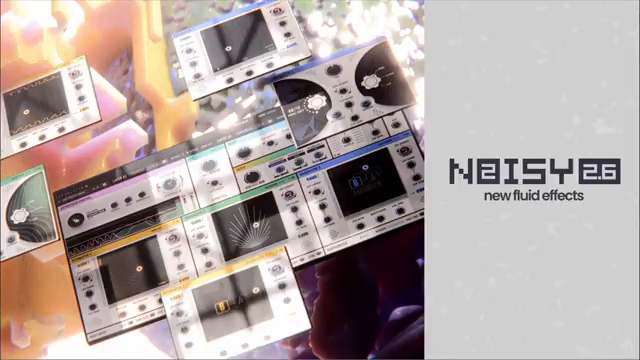
"A major highlight of the 2.6 update is the new suite of expressive effects that add new colors and movement to your productions."
© Screenshot/Quote: Expressivee (YouTube)
Workflow, Presets, and Expressive Sound Platform
Despite the expanded sonic capabilities, Noisy 2.6 retains the intuitive workflow that defines the platform. Chris notes that 150 new presets have been added, tailored to showcase the new resonators and effects. These presets are fully MPE-ready, making them instantly playable and responsive with compatible controllers.
Noisy 2’s integration with the Control-E sound platform further streamlines the user experience, enabling players to browse, filter, tag, and favorite patches directly—particularly from Osmose. The combination of expressive architecture and an accessible workflow positions Noisy 2.6 as a comprehensive option for both those just entering the world of expressive synthesis and advanced users seeking deeper control.
This article is also available in German. Read it here: https://synthmagazin.at/expressive-e-noisy-2-6-erweiterte-architektur-fuer-ausdrucksstarke-synthese/
More articles about these products:

Watch on YouTube:
Latest articles
Watch on YouTube:
Visit the channel:
https://www.youtube.com/ExpressiveE
https://www.youtube.com/ExpressiveE
Links from ExpressiveE:
Sponsored links:
If you purchase via these links, we may earn a small commission – at no extra cost to you. The link opens an Amazon keyword search, and results may vary depending on availability.
Noisy 2.6
🔗 Check price on Amazon
🔗 Check price on Amazon