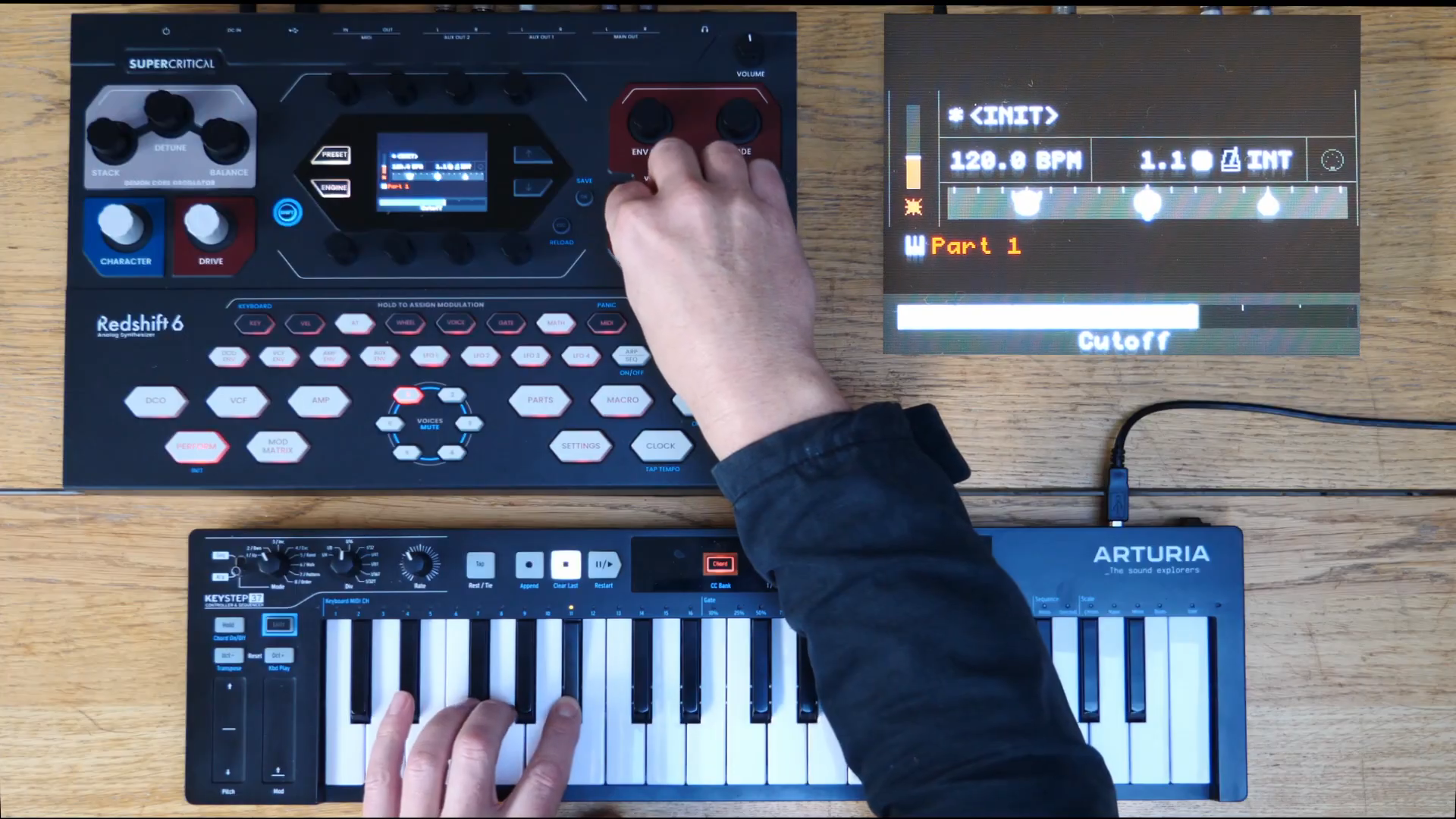
A pad plays four chord tones and still only uses one voice. Next to it, there’s room for bass, noise shot, and other sound roles. Starsky Carr doesn’t just explain the Redshift 6 by its parameters: in his tour of version 1.7, published on November 24, 2026, he deconstructs his own intro track. What looks like a limited voice count quickly becomes a fascinating arrangement question.
One Synthesizer, Not the Whole Studio
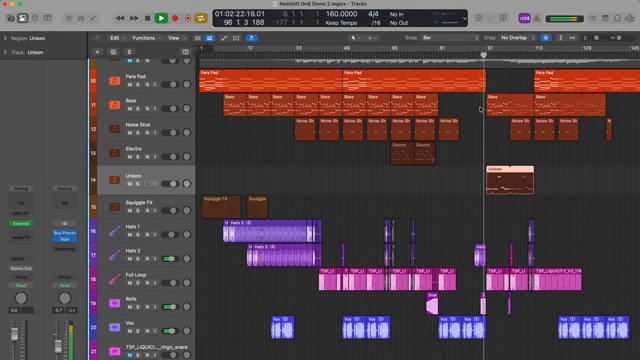
© Screenshot: Starsky Carr (YouTube)
“I'm playing a whole track using just the one synth.”
© Quote: Starsky Carr (YouTube)
Carr spreads the track across pad, bass, noise shot, electro tone, unison sound, and a playful little effect. Each part gets its own job. His conclusion at first sounds like the familiar one-synth challenge:
Supercritical Redshift 6 – Amazon keyword search
Search for this product on Amazon →
This link opens an Amazon keyword search. Depending on availability, other results may be shown.
Advertising – affiliate link. If you buy through this link, we may earn a commission – at no extra cost to you.
The Bass Doesn’t Have to Bathe in Effects
Here, that means a shared sound source, not a fully isolated production environment. Carr works with Logic; he also sends the noise shot through an external Zen Delay. This openness makes his demonstration especially relevant for real-world studio work.
He uses one of the three stereo output pairs as stereo and three more channels as mono. The main output carries sounds with internal effects, the bass remains dry on an aux output, and the noise shot gets its own path. The six parts don’t have to end up as a finished stereo mix. They can be treated more like multiple instruments—including different effect decisions.
Just as important: six parts are not six fully six-voice synthesizers. Carr distributes a total of six voices and lets them be dynamically assigned. His arrangement explicitly doesn’t require all six sounds at once. For a bass that should never suffer from voice stealing, he demonstrates the option to reserve a voice. The four-voice pad, meanwhile, works paraphonically within a single voice. Multiple pitches here are not the same as four fully independent synth voices.
What Became of the Placeholders
How essential these functions are to the instrument is clear from Carr’s earlier video from January 2025. There, he examines firmware 1.00: multitimbrality, effects, math functions, as well as arpeggiator and sequencer are all described as pending. In the current tour, he actually demonstrates these areas. The difference is not just a longer feature list: only in combination do they support his small ensemble.
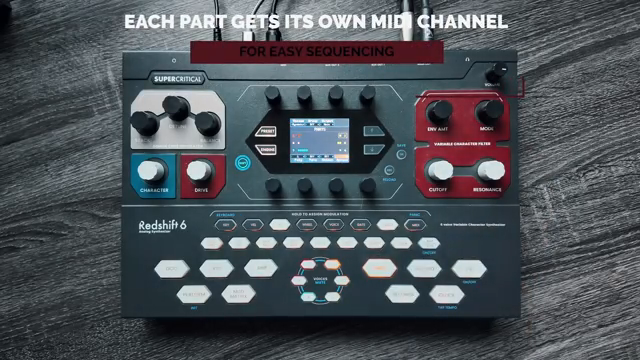
A personal appreciation had already come from another source in the meantime. Devin Belanger named the Redshift 6 his favorite of the year in his video “My Favorite Synths of 2025.” He highlights the Demon Core oscillators, six-part multimode operation, and the analog character modeling. His ranking is expressly subjective, not a lab-certified best-of list:
© Screenshot: Devin Belanger (YouTube)
“my favorite synth release of 2025 was the supercritical redshift 6.”
© Quote: Devin Belanger (YouTube)
Complexity Needs Good Controls
© Screenshot: Devin Belanger (YouTube)
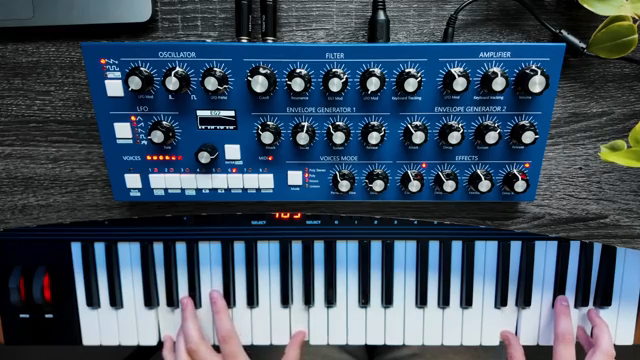
“it's pushing the boundaries of analog synthesis forward, and it's just a joy to use.”
© Quote: Devin Belanger (YouTube)
Carr’s handling of the device makes the operational aspect especially tangible. When switching parts, the backlighting changes; the active sound role remains visible. He holds a modulation source and turns the target parameter, then checks the connection in the matrix. With several parallel sound roles, such orientation aids are more than just decoration.
On the pad, he demonstrates how far this can go: a math slot crossfades between four differently set LFOs. One macro controls this crossfade, a second the strength of the resulting filter modulation, a third the volume. From a more complex routing, a few musically useful controls emerge. This is where Belanger’s second assessment gains substance—as his verdict, not as an independent test result:
Not Every Part Needs to Be Huge
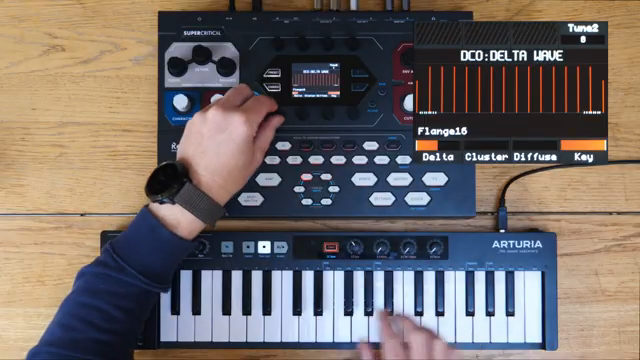
For all his enthusiasm, Carr also provides the right caveat. At the end, he reports working on several tracks where he had to pull the Redshift 6 back. An impressive single sound is still not a successful arrangement:
© Screenshot: Starsky Carr (YouTube)
“but I had to pull it back a bit because it was just overtaking everything 'cause it was this monstrous, huge, amazing tone.”
© Quote: Starsky Carr (YouTube)
Carr’s track is convincing as a demonstration not through maximum utilization, but through distributed roles. Some sounds share voices, others get their own output, not all need to appear at once. A synthesizer can provide an ensemble. That its members let each other have their say, fortunately, remains up to the musician.
Supercritical Redshift 6 – Amazon keyword search
Search for this product on Amazon →
This link opens an Amazon keyword search. Depending on availability, other results may be shown.
Advertising – affiliate link. If you buy through this link, we may earn a commission – at no extra cost to you.
Videos for this article
All other articles featuring the Supercritical Redshift 6
All YouTube videos featuring the Supercritical Redshift 6
Primary – main topic (7)
 Redshift 6 : V1.7 Full Tour + Delta Wave Preview
 Supercritical Redshift 6 | Cinematic performance
 My Favorite Synths of 2025
 BEST SYNTHS & MUSIC PRODUCTION GEAR 2025
 Supercritical - Redshift 6 Update - Bristronica 25
 Supercritical Redshift 6 Review
 Supercritical RedShift 6 // Analog Weight with Multiple Personalities

