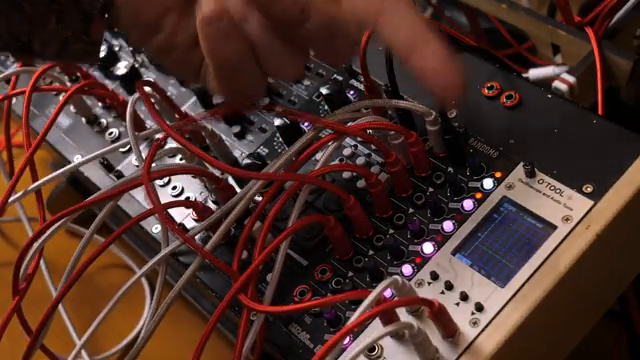
Eight channels of chaos, all dialled in by Molten Music Technology. The Mylar Melodies Random8 isn’t just another random CV generator—it’s a modular weapon, cooked up with Befaco and ready to hijack your rack. Robin Vincent gives it a proper British grilling: from off-the-wall modulation to no-holds-barred preset madness. If you think you know randomness, you don’t—at least not until you’ve seen this in action.
10. July 2026
SPARKY
Molten Music Technology vs. Random: The Random8 Riot
Digitakt, Gemini Dual Filter, Music Thing Modular Turing Machine, Mylar Melodies Random8, O'Toole scope, Pamela's Pro Workout, Proteus, Shroud of Turing, Sycamore from Divergent Waves
Randomness Unleashed
Right out of the gate, Robin Vincent of Molten Music Technology drops us into the deep end with the Mylar Melodies Random8, a Eurorack module born from the unholy matrimony of chaos and control. Eight channels of random CV, each itching to turn your carefully curated patch into a proper rave bunker. If you’re still thinking random is just for those who can’t write melodies, think again—this is about letting the machine do the legwork while you get on with the fun stuff.
The lineage is clear: inspired by the Turing Machine, but on steroids and with better shoes. You get the DNA, but with the sort of mutation that lets you run your entire set from one slab of silicon. Robin’s quick to point out this box is all about versatility—one moment it’s pure chaos, the next it’s a meticulously curated stream of voltages. Forget basic random—this is street-level modulation with options.
Scale It, Offset It, Save It – Repeat
Let’s get stuck into the features: scaling and offsetting put the power in your hands, letting you tame or unleash those voltages as needed. Want to shove your melodies up an octave? Sorted. Prefer to keep your modulation in a tight lane? Easy. The menu system is as cryptic as a back alley in Soho, but once you’ve cracked the colour codes and button holds, it’s a breeze—or at least, manageable after a few cups of tea.
The real kicker is the preset system. You can save seven different states, flipping the module from bubbling modulation to melodic loops in seconds. It’s a proper hack for live performance or those who like to prep their chaos in advance. Robin notes that while you can dive in and tweak on the fly, the real magic comes when you prep your patches and use the presets to trigger tectonic shifts in your set. But don’t expect to write Beethoven—this is a randomiser, not a sequencer, and that’s where its charm lies.
"So I can turn it off now, and I turn it back on again, and it will be exactly as it was."
© Screenshot/Quote: Moltenmusictech (YouTube)
Simplicity vs. Complexity: The Balancing Act
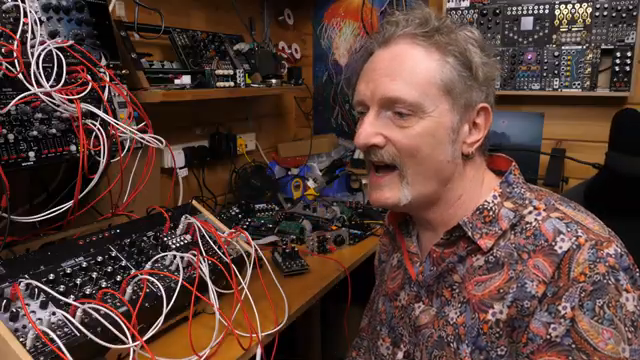
"Simplicity means this instantness you get about it, this intuitiveness. Complexity gives you options and versatility and power."
© Screenshot/Quote: Moltenmusictech (YouTube)
Here’s where the Random8 struts its stuff: walking the tightrope between being dead simple and mind-bendingly deep. You want immediacy? It’s there—plug in a clock, twist a knob, and you’re away. But dive into the menus and you’ll find layers of control that could leave you lost in the sauce if you’re not careful. Robin calls it out: with eight channels, it’s easy to forget what you’ve done to each, especially after a few rounds of tweaking. One knob controls everything, but what it’s pointing at is anyone’s guess after a session.
The payoff? Massive versatility in a tight package, but the cost is a bit of menu-diving and the occasional existential crisis when you try to recall your patch decisions. Still, Molten Music Tech’s approach is all about embracing that fluidity and letting the randomness surprise you. If you crave one-knob-per-function, this module might feel like a toaster-fight, but if you surf the chaos, it’s a dream.
Melodies, Modulations, and Evolving Mayhem
Now to the good stuff: what can you actually do with this thing? Robin takes us through looping, evolving patterns, and using scales to wrangle proper melodies out of the chaos. Want a locked groove? Grab a loop. Need a slow morph? Let it evolve. The Random8 spits out everything from burbling filter modulations to syncopated pitch lines, and with eight channels, you can carve out evolving bass, leads, and modulations without breaking a sweat.
It’s especially tasty for live performance—set up your patches, jump between presets, and you’ve got an arsenal of morphing randomness on tap. Robin demonstrates how different styles of randomness and quantised scales keep things musical without getting predictable. Some bits, like the nuanced differences between the random styles or hearing the module jam with real drums, are simply better experienced in the video. Trust me: you’ll want to see (and hear) the Random8 in full swing.
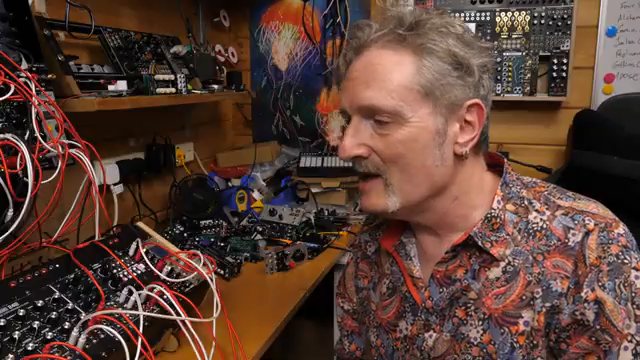
"But that ever changing change of randomness is always going to be adding variation, always going to be adding interest."
© Screenshot/Quote: Moltenmusictech (YouTube)
No Triggers, No Problem? The Final Verdict
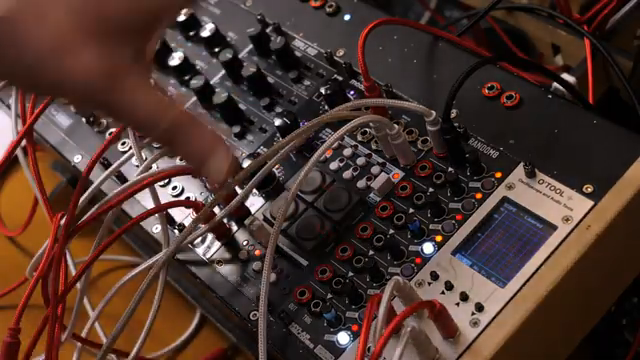
"Now, this is a randomization device. It's not a trigger sequencer."
© Screenshot/Quote: Moltenmusictech (YouTube)
Robin doesn’t shy away from calling out the absence of trigger outputs as a missed trick. If you want gates or pulses, you’ll need another module—maybe a Pamela’s Pro Workout or anything else with triggers. That means more patch cables and a bit more planning, but it keeps the Random8 focused on what it does best: randomising voltages with style.
Suggestions for the future? Maybe a firmware update to allow some channels to spit out pulses, but as it stands, this beast is about CV, not gates. In the end, it’s a permanent resident in Robin’s rack—a chaotic, colourful playground for those who know how to handle a bit of voltage anarchy. The Random8 is not perfect, but it’s a sonic street weapon that’ll keep your modular sets fresh and unpredictable.
This article is also available in German. Read it here: https://synthmagazin.at/molten-music-technology-vs-zufall-das-random8-chaos/
More articles about these products:
 Vostok SIGMA: The Unperson Unleashes Modular Mayhem
 ALM TV: Maarten Vos and the Modular Cello Mindset
 tafony’s Eurorack Live Rig: Like a Modular Kangaroo on a Red Bull Bender
 Nebula in a Case: The Unperson’s Eurorack Ambient Machine
 DivKid Throws Down with Random8: Three Patches, Infinite Chaos
 The Unperson’s Modular Drum Safari: Kicking Writer’s Block in the Teeth
 The Unperson’s 40HP Mono Modular: A Rave Bunker in a Lunchbox
 ALM TV’s FMco: Compact FM Synthesis, Maximum Patchability
 ALM TV’s QUAID GIGASLOPE: Four Channels of Modular Mayhem
 DivKid & Tom Whitwell: Modular Mayhem, Hollywood Apes, and 60,000 Patching Possibilities
 The Unperson Goes Full Triton: Eurorack Layering Like a Kangaroo on a Synth Bender
 The Unperson’s Live Rig: A Hardware Rave That Laughs in the Face of DAWs
Watch on YouTube:
Latest articles
Watch on YouTube:
Visit the channel:
https://www.youtube.com/MoltenMusicTech
https://www.youtube.com/MoltenMusicTech
Links from MoltenMusicTech:
website: https://moltenmusictechnology.com
twitter: https://x.com/MoltenMusicTech
Sponsored links:
If you purchase via these links, we may earn a small commission – at no extra cost to you. The link opens an Amazon keyword search, and results may vary depending on availability.
Digitakt
🔗 Check price on Amazon
🔗 Check price on Amazon
Gemini Dual Filter
🔗 Check price on Amazon
🔗 Check price on Amazon
Music Thing Modular Turing Machine
🔗 Check price on Amazon
🔗 Check price on Amazon
Mylar Melodies Random8
🔗 Check price on Amazon
🔗 Check price on Amazon
O'Toole scope
🔗 Check price on Amazon
🔗 Check price on Amazon
Pamela's Pro Workout
🔗 Check price on Amazon
🔗 Check price on Amazon
Proteus
🔗 Check price on Amazon
🔗 Check price on Amazon
Shroud of Turing
🔗 Check price on Amazon
🔗 Check price on Amazon
Sycamore from Divergent Waves
🔗 Check price on Amazon
🔗 Check price on Amazon