In the latest Spotlight from FRANK AND FREE, DeSade’s hybrid sound architecture unfolds, using AI not as a replacement but as a tool in the creative process. Between cyberpunk fiction, fictional K-pop bands, and a highly complex workflow, machine ethics and humanity are remixed. Milan Holz provides technical precision in mastering, while the future of AI in music production remains an open question—a piece for those who prefer exploring sonic spaces over managing them.

26. July 2026
RAUMKLANG
FRANK AND FREE and the Origami of AI Sound Production
11 Labs, Midjourney, Nano Banana, ODEA, Soos, Suno, Voice-AI by Sonoworks
AI as a Tool: DeSade’s Creative Machine Ethics
Piotr “DeSade” Kucharzak exemplifies a fresh approach to music production: here, AI is not a substitute for musical skill but expands the producer’s toolkit. The machine becomes a partner, not an all-in-one solution—a stance that clearly distances itself from pure automation. DeSade emphasizes that AI shines especially where human abilities reach their limits, such as in the complex world of K-pop: arrangements that would be nearly impossible without AI suddenly become manageable, without losing one’s own musical signature.
In conversation with FRANK AND FREE, it becomes clear that this machine ethic requires patience and an ear for the unpredictable. The workflow is marked by a spirit of experimentation, but also by respect for the creative process. DeSade uses AI to create sonic spaces that unfold like origami from tension and noise—a patch geometry where the human sets the direction and the machine provides impulses. Not for workflow fetishists, but definitely a dream for chaos aesthetes.
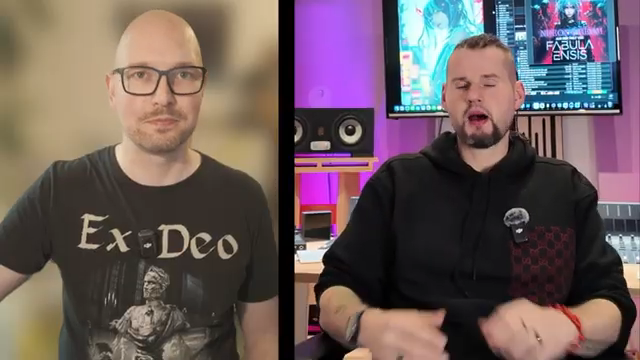
"AI can construct incredibly cool things that you might not be able to create yourself."
© Screenshot/Quote: Frankandfree De (YouTube)
NEEON DREAM: Fiction Meets Frequency
"I can really build these lyrics, I can create stories with, for example, GPT and then turn them into song lyrics."
© Screenshot/Quote: Frankandfree De (YouTube)
The fictional K-pop band NEEON DREAM is more than a musical experiment—it is an integral part of the cyberpunk universe “Fabula Ensis,” created by DeSade together with author Lillith Korn. Here, literature and music merge into a carefully crafted total work of art, with AI contributing both narrative and sonic dimensions. The band primarily exists in the novel’s world but is made audible and tangible through AI-driven productions. It’s a clever move that makes the band’s concept itself part of the story.
It gets especially interesting when DeSade describes how AI has, for the first time, made it possible to fully shape his own messages and characters—including song lyrics in Korean and a stylistic coherence that previously hit practical limits. The result is a band fighting evil and creating sonic spaces where liberation and identity are central motifs. Context and background knowledge become the acoustic glue for the soul: without them, AI music remains soulless; with them, a new form of authenticity emerges.
Complex Workflow: From Prompts to Sound Architecture
DeSade’s workflow resembles a modular patch geometry: the starting point is often stories from the world of Fabula Ensis, which are first turned into song lyrics and then, via Suno, into music. But that’s not the end—the AI provides raw material, which is then further processed through classic production steps like arrangement, recording, and editing. There are numerous iterations, and elements are often extracted, revised, and recombined until the result is both technically and artistically convincing.
The variety of tools used is interesting: Suno is the central element, but ODEA, 11 Labs, and specialized voice AIs are also used to smooth out artifacts and make voices sound more organic. Even image and video AIs like Midjourney or Nano Banana are used for visual storytelling. The machine provides impulses, but the human shapes them further until the desired sonic space emerges. To experience the full complexity, you should watch the video—some patch branches and sound examples can only truly be grasped beyond the text.
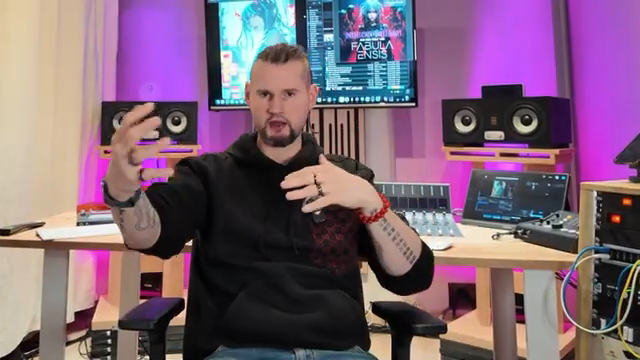
"In my working world, it’s really very, very, or at least very complex."
© Screenshot/Quote: Frankandfree De (YouTube)
Mastering and Machines: Milan Holz in the Green Room
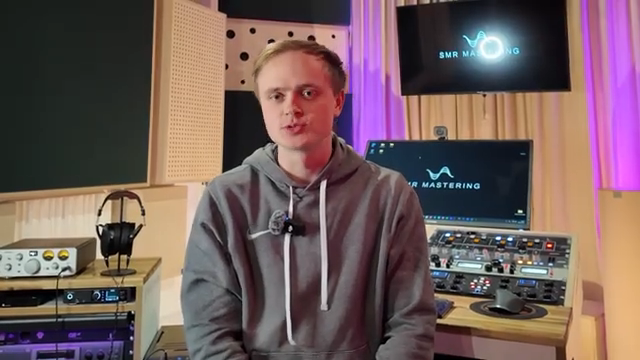
"There are almost always the same problems with AI songs."
© Screenshot/Quote: Frankandfree De (YouTube)
With Milan Holz, technical precision enters the picture: as a mastering engineer at Green Room Studio, he ensures that AI-generated tracks get the professional polish they need. The challenges are anything but trivial—AI songs tend to have artifacts, unbalanced frequencies, hi-cuts, and phasing issues. Especially the low end and dynamics require targeted post-processing so that the song can ultimately compete with classic productions.
Milan describes how post-processing becomes mandatory: compressors, equalizers, and specialized tools like Soos are used to iron out the typical weaknesses of AI-generated music. Mastering here is like a surgical sound operation, removing disturbing frequencies and adding missing punch. Despite all the technology, the human remains in control—and shows that machine aesthetics and craftsmanship must go hand in hand to achieve professional results.
Sound Spaces of the Future: Human, Machine, and Creative Responsibility
At the end of the video, the big question is the role of AI in the future of music production. DeSade sees the machine as a tool that supports human creativity but never fully replaces it. Especially in the professional realm, final responsibility—and creative control—remain with the human. The challenge is to tame the machine and give it direction, rather than being dominated by it.
The discourse between DeSade and FRANK AND FREE remains refreshingly sober: AI is here to stay, but its real value lies in its ability to accelerate processes and open up new sonic spaces. Those who maintain control and delve into the patch branches of AI music production with patience and precision can create origami-like works of art that go far beyond mere chance. The real magic, however, remains human—in the decision of what is sound and what is just noise.
This article is also available in German. Read it here: https://synthmagazin.at/frank-and-free-und-das-origami-der-ki-klangproduktion/
Watch on YouTube:
Latest articles
Watch on YouTube:
Visit the channel:
https://www.youtube.com/frankandfree-DE
https://www.youtube.com/frankandfree-DE
Links from frankandfree-DE:
Website: https://frankandfree.de
Facebook: https://facebook.com/frankandfreede
SoundCloud: https://soundcloud.com/frank-and-free
Instagram: https://www.instagram.com/frankandfreede/
Sponsored links:
If you purchase via these links, we may earn a small commission – at no extra cost to you. The link opens an Amazon keyword search, and results may vary depending on availability.
11 Labs
🔗 Check price on Amazon
🔗 Check price on Amazon
Midjourney
🔗 Check price on Amazon
🔗 Check price on Amazon
Nano Banana
🔗 Check price on Amazon
🔗 Check price on Amazon
ODEA
🔗 Check price on Amazon
🔗 Check price on Amazon
Soos
🔗 Check price on Amazon
🔗 Check price on Amazon
Suno
🔗 Check price on Amazon
🔗 Check price on Amazon
Voice-AI by Sonoworks
🔗 Check price on Amazon
🔗 Check price on Amazon