Ever wondered what happens when Yamaha fumbles the ball in the middle of a synth arms race? Espen Kraft digs up the V50, a digital workstation that was already a fossil when it hit the shelves. With a brutal mix of dry wit and 80s nostalgia, Espen gives us the lowdown on why the V50 flopped harder than a dodgy pub band—and why, with the right attitude, you might still wring something interesting from its cold, metallic heart.
26. August 2026
JET
Espen Kraft vs. Yamaha V50: The Workstation Yamaha Hoped You’d Bin
The Forgotten Fossil Rises
Let’s set the scene: 1989, Berlin Wall about to hit the deck, rave culture surging, and everyone’s losing their minds over the Korg M1’s sample wizardry. Yamaha, not wanting to be left behind, lumbers in with the V50—a synth so overlooked, it’s practically an endangered species. Espen Kraft wastes no time telling us how the V50 was outgunned from day one, as sampling tech and fat new sounds left it stuck in the past. If you wanted a revolution, you were in the wrong shop—Yamaha was still flogging yesterday’s tech while the world was ready for tomorrow.

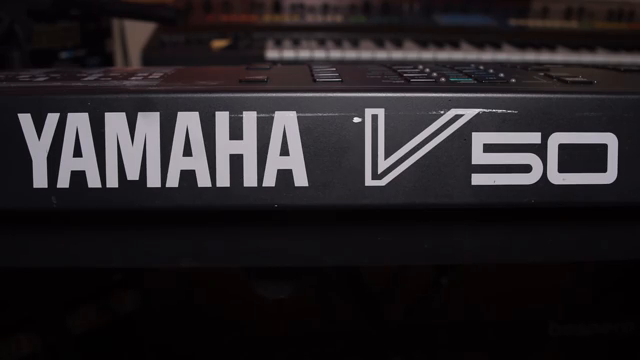
"Well, no. What they did was they rummaged around in their dustbin and brought out their 4-operator FM engine from an old DX100, slapped on a sequencer, a limp drum machine, and it was called the V50."
© Screenshot/Quote: Espenkraft (YouTube)
Specs on Paper, Dust in Practice
"You got 16 voices of polyphony, 8 parts multi-timbral just like the TX802 or DX72 before it."
© Screenshot/Quote: Espenkraft (YouTube)
Here’s the roast: for your hard-earned cash, you did get a synth built tougher than a bricklayer’s lunchbox. The V50 arrived loaded with a 16-voice polyphony, 8-part multitimbrality, a sequencer that could hold 16,000 notes, and a pair of digital effects units. There’s even a built-in floppy drive—because nothing screams cutting-edge like a 3.5-inch diskette.
But don’t get too excited. Espen lays it out: the sequencer is more cryptic than a Soho back alley, and you’ll need the patience of a saint to wrangle it. Sure, the keybed’s got velocity and aftertouch, and you could sync the sequencer to external gear. Yet, in a world hungry for new sounds and innovation, the V50 just felt like a relic. All these features couldn’t distract from the fact that the market wanted something fresh, not another reheated FM casserole.
The 4-Op FM Engine: Toothless Tiger
Let’s talk about the elephant in the room—or rather, the toothless tiger under the V50’s hood. Yamaha slapped in their 4-operator FM engine, the same one you’d find in the DX11 and TX81Z, hoping nobody would notice. But Espen’s not fooled, and neither were musicians back in the day. The sounds—especially the pianos—were more limp handshake than knockout punch. Instead of lush, realistic tones, you got the same glassy, thin FM textures folks were already tired of.
It’s like Yamaha thought nobody would notice they’d recycled the same old engine. Dual effects, multi-timbrality, whatever—none of it masked the fact that the V50 just couldn’t deliver the fat, organic, or dance-ready sounds that were all the rage. It’s the synth equivalent of serving cold chips at a punk gig: technically food, but nobody’s happy about it.
Sounds, Drums, and the Art of Disappointment
If you were hoping for the V50 to redeem itself with its drum machine, prepare for a letdown. The built-in PCM drums are short, lifeless, and about as inspiring as last week’s takeaway. Espen demonstrates just how bland these samples are—no amount of onboard effects can save them from mediocrity. And let’s not even get started on sharing those meagre effects across all eight parts; it’s like fighting over the last stale crisp at closing time.
The video is a masterclass in showing, not just telling: Espen runs through the V50’s sounds, and if your idea of excitement is a house piano that gets steamrolled by the M1, you’re in for a treat. To really get the full flavour of this synth’s lacklustre presets and anaemic beats, you’ve got to hear them for yourself—the video’s honest demos say more than specs ever could.
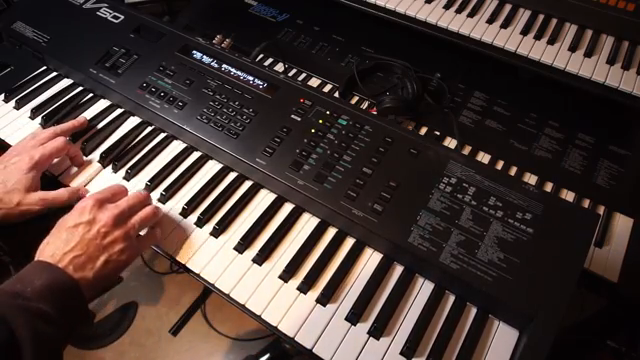
"And as I mentioned earlier, it has drums, but very boring drums and short samples as well."
© Screenshot/Quote: Espenkraft (YouTube)
A Misstep, But Not a Write-Off
In the end, Espen Kraft doesn’t sugarcoat it: the V50 was a flop, a synth out of time and out of step. But here’s the twist—if you find one in a skip or someone palms it off on you, don’t bin it straight away. With the right bit of punk ingenuity, you might just wring some character out of this much-maligned box. It’s a reminder that sometimes, even the dodgiest gear can surprise you—if you’re willing to give it a proper kicking.
This article is also available in German. Read it here: https://synthmagazin.at/espen-kraft-vs-yamaha-v50-die-workstation-die-yamaha-am-liebsten-vergessen-wuerde/
Watch on YouTube:
Latest articles
Watch on YouTube:
Visit the channel:
https://www.youtube.com/EspenKraft
https://www.youtube.com/EspenKraft
Links from EspenKraft:
Instagram: https://instagram.com/espenkraft
Sponsored links:
If you purchase via these links, we may earn a small commission – at no extra cost to you. The link opens an Amazon keyword search, and results may vary depending on availability.
Yamaha V50
🔗 Check price on Amazon
🔗 Check price on Amazon