Quantizers boring? Not on DivKid’s watch. We dive into his mega-demo of Acid Rain Technology’s Ziggurat—a four-channel quantizer that’s smarter than your average sequencer and rowdier than a rave at closing time. Expect note-wrapping wizardry, slews on demand, and more patching tricks than you can shake a stackable at. If you thought quantizers were just for pitch correction, think again—this street weapon is here to turn your modular on its head.
24. July 2026
SPARKY
DivKid’s Ziggurat Review: Quantizer Chaos in a 14HP Bunker
First Impressions: Four Channels, No Waiting
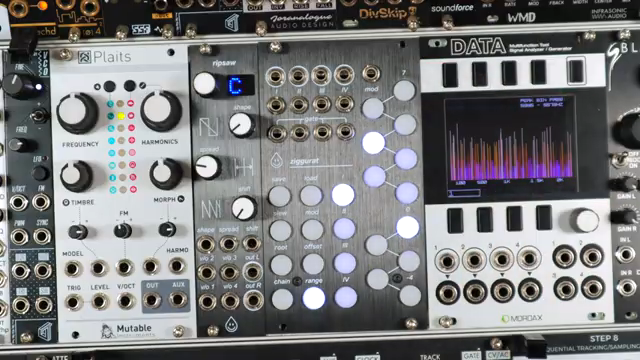
Ziggurat from Acid Rain Technology storms the rack with a four-channel quantizer that feels like it was designed by someone who’s actually patched after midnight. The interface is a breath of fresh air—no endless menu diving, just hands-on controls and a keyboard layout that makes sense even in the dark. DivKid points out how the brushed panel reflects his blinding video lights, but let’s be real: it’s what’s under the hood that matters.
Each channel has its own input, gate, and output, plus a mod jack that can be assigned to a bunch of useful tasks. The different modes—CV only, CV+gate, or gate-only for random voltages—make it as flexible as a broken drum machine in a jungle set. The keyboard-style interface lets you pick scales, save and load complete states, and tweak everything from note masks to slews, all without a manual. This isn’t your typical quantizer: it’s made for people who want to get weird, fast.
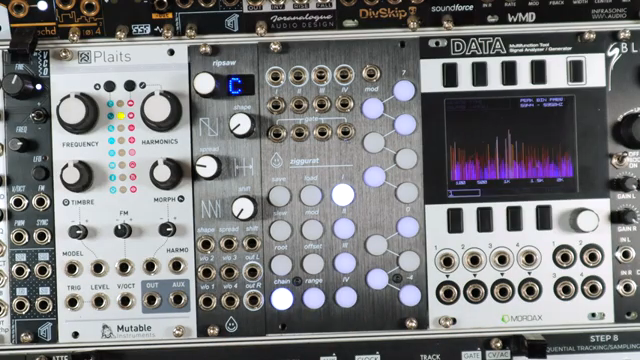
"There's lots going on here and some really smart and creative features that's led to lots of really musical results."
© Screenshot/Quote: Divkid (YouTube)
Note Wrapping, Slew Kung-Fu & LFO Madness
"That range is super smart as it doesn't just clip your voltages at the top and bottom ranges. It actually note wraps everything outside of those ranges back down or back up."
© Screenshot/Quote: Divkid (YouTube)
Let’s talk features that actually matter. Ziggurat’s note wrapping doesn’t just clip your voltages at the top and bottom—it folds them back like a breakbeat in a ping-pong delay, so your melodies never hit a dead end. That means you can go wild with your voltage ranges and still keep things musical, not messy. It’s a trick you usually have to patch up with three modules and a prayer.
Then there’s the slew section: you can apply glide only to specific notes, not just globally, and even modulate the slew time externally. This is ninja-level control over your slides and bends, letting you shape sequences that wobble like a warehouse sub but snap back into place when you want. And let’s not forget the LFO-to-melody magic—patch in a couple of triangles, clock them in creative ways, and suddenly you’re pulling melodies out of modulation sources like a sonic street magician.
Patch Playground: Chords, Randoms & Canons
This is where DivKid earns his keep: patch examples that make you want to call in sick and rack up the hours. Chord generation is a breeze—mult your keyboard CV across the four channels, offset each one for intervals, and you’re playing jazzy stacks without breaking a sweat. You can even shift octaves mid-performance, and use the mod input to create evolving basslines that sit right under your chords. It’s pure modular flexing, but accessible enough for anyone who knows their way around a cable.
Random voltages? Ziggurat spits them out internally if you patch a gate without CV, serving up everything from classic stepped randoms to quantized chaos for pitch or modulation. And with range and note wrapping, you can set each channel to its own flavour of madness—tight bass, sprawling melodies, or octave-jumping riffs. The real star is the shift-register canon patch: one sequence, offset triggers, and you get a cascade of delayed melodies, all quantized and ready for battle. It’s the kind of trick that turns a giggling jam into a headline set.
There are even audio-rate hijinks—run an oscillator through it and you’re suddenly in lo-fi, bitcrushed territory. Smash a drum loop through the quantizer and you’ll get crunchy, downsampled mayhem that’s more Berlin than bedroom. The bottom line: Ziggurat doesn’t just keep your notes in key, it shoves them through a funhouse mirror and dares you to follow.
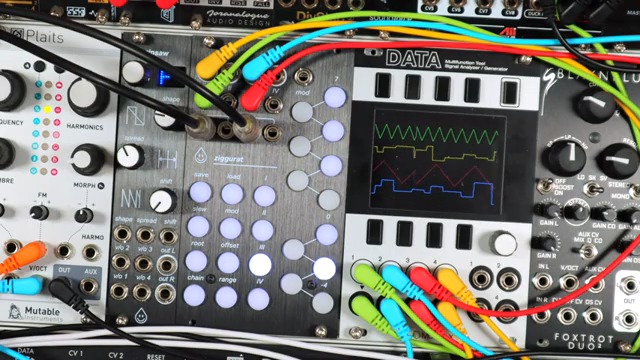
"Playing around with LFO shape, the rate coming in, and the rhythms that you trigger with, whether it's one melody or four even here on Ziggurat, you can pull a lot of melody out of your modulation."
© Screenshot/Quote: Divkid (YouTube)
Navigation Without the Nonsense
Despite the wild feature set, DivKid shows that Ziggurat is dead simple to use once you’ve poked around for a few minutes. All the core functions are right there on the panel, and the save/load system is so easy you might actually use it. There’s even an autosave that remembers your messiest patches when you power up. Whether you’re a new-school patcher or a seasoned voltage addict, you won’t be menu-diving or swearing at cryptic LEDs. It’s clear Acid Rain have designed this thing for performers, not just studio hermits.
Watch the Video—Your Patching Will Thank You
Look, words and screenshots don’t do justice to DivKid’s patch wizardry—or the sheer amount of sonic grit this module can push. If you want to really hear the bouncy chords, see the scope traces, and catch those filthy bitcrushed beats, you owe it to your rack to watch the full video. There are more patch tricks, sound demos and happy accidents than any article can deliver. Ziggurat is a quantizer for people who hate boring quantizers—and after this, you’ll never look at your old pitch box the same way again.
This article is also available in German. Read it here: https://synthmagazin.at/divkids-ziggurat-review-quantizer-chaos-im-14hp-bunker/
Watch on YouTube:
Latest articles
Watch on YouTube:
Visit the channel:
https://www.youtube.com/DivKid
https://www.youtube.com/DivKid
Links from DivKid:
Patreon: https://patreon.com/divkid
Website: https://divkidvideo.com
Instagram: https://instagram.com/divkidvideo
Twitter: https://twitter.com/divkid
Facebook: https://facebook.com/Sir.DivKid
Sponsored links:
If you purchase via these links, we may earn a small commission – at no extra cost to you. The link opens an Amazon keyword search, and results may vary depending on availability.
Acid Rain Technology Ziggurat
🔗 Check price on Amazon
🔗 Check price on Amazon