Behringer steps back from the digital maze with the 1601 Sequencer, a hardware box clearly bent on hands-on creativity. Their latest video sidesteps menus, mice and endless screen-scrolling, instead highlighting the joy of tactile control. The 1601 is shown as a direct descendant of classic analogue sequencers, offering a workflow where each knob and switch invites instant musical feedback. With a focus on live jamming and real-time sequencing, Behringer’s presentation is all about unfiltered, patch cable-driven fun. The video promises a sequencer for those who prefer voltage over clicking.
5. November 2026
MILES
Behringer’s 1601 Sequencer: Menu-Free Modulation in Action
A Sequencer for the Menu-Weary
Behringer positions the 1601 Sequencer as an antidote to the complexities of modern gear, highlighting its menu-free, mouse-less approach to music making. The video introduces the unit as a device that places tactile interaction at the forefront, suggesting a return to the hands-on ethos of classic analogue sequencers. There’s a clear emphasis on immediacy—every function is laid out on the panel, eliminating the need for deep menu diving or software navigation.
This philosophy is underscored by the presenter’s demonstration style, which avoids computer screens and focuses solely on hardware interaction. The message is simple: the 1601 is built for spontaneous jams, allowing users to shape ideas on the fly without technological distractions. For anyone tired of clicking through layers of digital menus, Behringer’s 1601 promises a more direct and musical workflow.
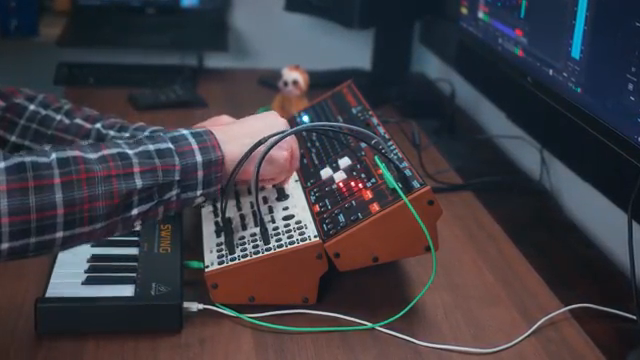
"No menu diving, no mouse clicking, just pure unadulterated jamming."
© Screenshot/Quote: Behringer (YouTube)
Knobs, Switches, and Straightforward Control
"You have immediate access to every control right on the panel."
© Screenshot/Quote: Behringer (YouTube)
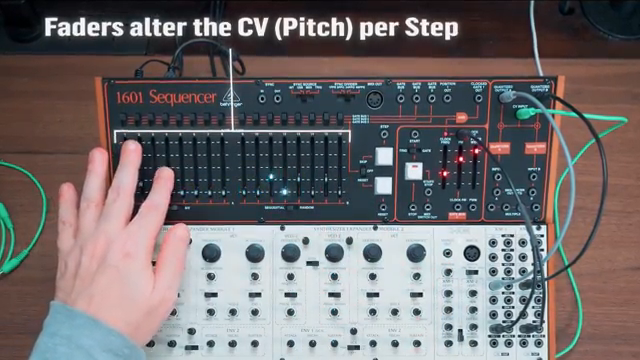
Central to the 1601’s appeal is its immediate interface, which puts every essential control at arm’s reach. The video points out the sequencer’s layout: step buttons, voltage sliders, and clearly marked switches dedicated to functions like sequence length, gate mode, and clock source. There’s no need to remember hidden shortcuts or secondary functions; what you see is what you get.
This design allows for a seamless transition from inspiration to execution. The presenter showcases how quickly one can set up a basic pattern, adjust step voltages, and experiment with gate timing, all without pausing for a manual or a submenu. It’s a workflow that invites experimentation, ideal for modular enthusiasts who thrive on improvisation and patching by ear.
Jamming in Real Time: The 1601’s Creative Edge
The heart of the video lies in its demonstration of live, real-time sequencing. The presenter manipulates patterns on the fly, adjusting step values, clock divisions and playback direction without interrupting the musical flow. This encourages a style of performance where happy accidents and evolving grooves are part of the process.
Behringer’s approach here is all about liberating creativity—there’s a clear invitation to push, pull, and mutate sequences as inspiration strikes. The 1601 is shown driving both melodic and rhythmic material, making it a versatile centrepiece for anyone keen on hands-on control. For those who favour voltage over mouse clicks, this sequencer feels purpose-built for spontaneous exploration and unfiltered musical expression.
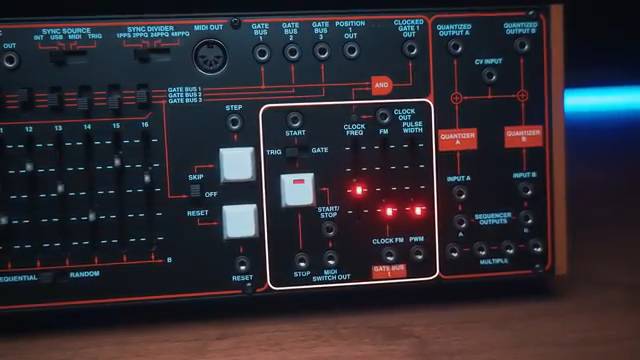
"You can change patterns and tweak steps in real time without stopping the music."
© Screenshot/Quote: Behringer (YouTube)
This article is also available in German. Read it here: https://synthmagazin.de/behringer-1601-sequencer-modulation-ohne-menues-im-praxistest/
Watch on YouTube:
Latest articles
Watch on YouTube:
Visit the channel:
https://www.youtube.com/behringer
https://www.youtube.com/behringer
Links from behringer:
website: https://www.behringer.com
facebook: https://www.facebook.com/Behringer
twitter: https://twitter.com/BEHRINGER
instagram: https://instagram.com/Behringer
Sponsored links:
If you purchase via these links, we may earn a small commission – at no extra cost to you. The link opens an Amazon keyword search, and results may vary depending on availability.
Behringer 1601 Sequencer
🔗 Check price on Amazon
🔗 Check price on Amazon