With the BM Series, Behringer isn’t just peddling another range of effects – they’re pushing a patchable, CV-friendly playground for the sonically restless. In this official video, Adam Husk strings together filters, phasers, delays and more, revealing how cross-patching and control voltage transform these pedals into something far more than the sum of their parts. Whether you’re slinging guitar, synth, or an unruly modular rig, this is a peek into a pedalboard with the soul of a Eurorack system. Let’s see how the BM Series stitches itself into an ecosystem built for discovery.
27. August 2026
MILES
Behringer BM Series: Modular Pedal Patching for the Adventurous
Behringer BM-11M Low Pass Filter, Behringer BM-12 Ring Modulator, Behringer BM-13 PHASER, Behringer BM-14M Analog Delay, Behringer BM-15M RESONANCE FILTER, Behringer BM-17 Frequency Box, Behringer BM-18M CLUSTER BOX
Welcome to the BM Series Ecosystem
Behringer’s BM Series pedals aren’t meant to be lone wolves. As the video opens, we’re invited to consider these boxes as an ecosystem – a set of devices designed to interact, exchange signals, and push sonic boundaries beyond what any single pedal can achieve alone. The emphasis is on play and exploration, not just stacking effects in a linear chain.
This approach sets the tone for the entire demonstration. Instead of the usual pedalboard fare, where each stompbox does its own job, the BM Series encourages lateral thinking: sending control voltages between pedals, letting one pedal’s behaviour shape another’s, and opening up a world of cross-modulation and interaction. It’s a philosophy that will feel instantly familiar to anyone who’s ever lost an afternoon in a modular patching session.
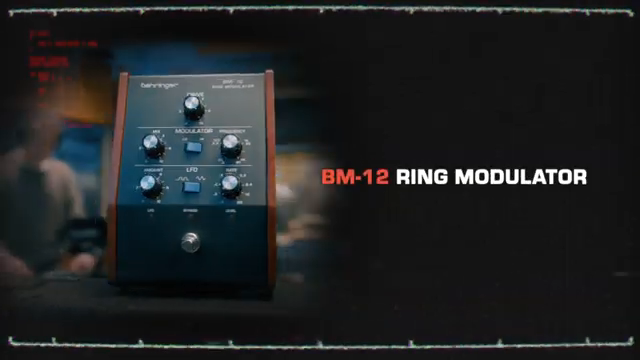
"A series that works together like an ecosystem, communicating with each other to create sounds that they simply would not be able to make on their own."
© Screenshot/Quote: Behringer (YouTube)
CV Connectivity: The Secret Ingredient
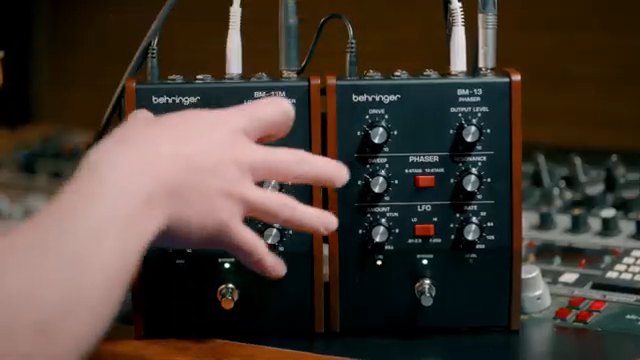
"You're using how loud you play to control the sweep of the phaser."
© Screenshot/Quote: Behringer (YouTube)
The heart of the BM Series is its CV connectivity. The demo shows how control signals—like envelope followers and LFOs—can be patched between pedals, turning the board into a living, breathing system. For example, the BM-11M Lowpass Filter’s envelope out is used to control the sweep of the BM-13 Phaser, making the phaser’s movement directly responsive to playing dynamics. This isn’t just about stacking effects; it’s about interaction and feedback.
Such cross-control means the pedals can shape and modulate each other in ways that blur the typical boundaries of pedalboard logic. By routing the LFO output from the phaser back into the filter’s cutoff, for example, you get evolving textures and motion you’d never achieve with fixed controls. It’s a modular mindset, but in stompbox form.
Patching in the Wild: Dynamic Modulation and Sonic Chaos
The real meat of the video is in the live patching examples. One moment, an envelope follower from the BM-17 Frequency Box is steering the BM-15M Resonance Filter, making filter transitions react to how hard you play. Next, an LFO from the BM-13 Phaser is modulating the filter’s rate, introducing a layer of evolving rhythmic complexity. These aren’t just theoretical options—the video walks through the cabling and the resulting sonic changes, step by step.
We then see a patch involving the BM-14M Analog Delay, which features an FB insert for routing the delayed signal out to other effects and back again—classic feedback-loop trickery, but with a modular twist. Later, the BM-18M Cluster Box and BM-17 Frequency Box are combined so that the Cluster Box’s mix control responds dynamically to picking intensity. It’s all about giving your playing new dimensions of movement and unpredictability, using CV as the connective tissue.
What stands out is the sheer flexibility and the encouragement to experiment. The video is quick to admit it barely scratches the surface of what’s possible; the combination of available I/O and creative routing begs for deeper exploration. For those used to modular systems or complex pedalboards, this approach will feel like home.
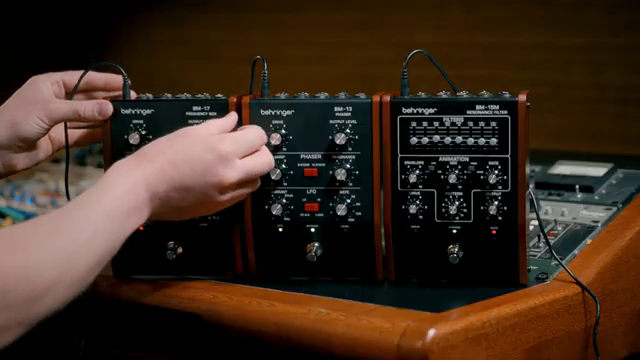
"The amount of I/O and connectivity between these pedals is so large that I am barely touching the surface here, really."
© Screenshot/Quote: Behringer (YouTube)
Compatibility and Creative Setups
The BM Series isn’t just for guitarists; its CV control and generous I/O make it a versatile option for synth players, modular aficionados, and anyone keen to experiment across different rigs. The demonstration frequently references using ABY splitters and varied audio sources, underlining how these pedals slot into a wide range of setups. It’s a clear invitation to treat the BM Series not as mere effects, but as active participants in any creative workflow needing modulation, interaction, and a dash of unpredictability.
This article is also available in German. Read it here: https://synthmagazin.at/behringer-bm-series-modular-pedal-patching-fuer-experimentierfreudige/
More articles about these products:
 Behringer BM-17 Frequency Box: Analogue VCO Unleashed for Guitarists and Synth Heads
 Behringer BM-18M CLUSTER BOX: Modulation Muscle in a Compact Chassis
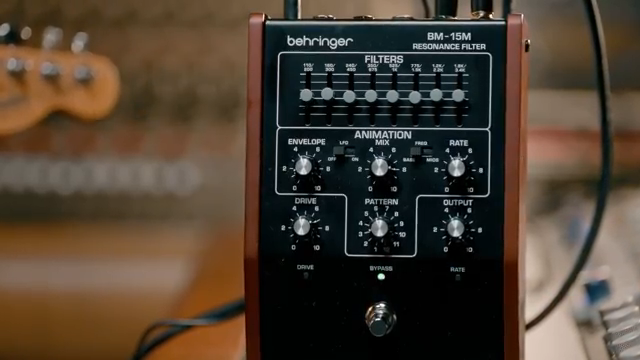 Behringer BM-15M RESONANCE FILTER: Analogue Animation Unleashed
 Behringer BM-14M Analog Delay: Beyond the Bucket Brigade
 Behringer BM-12 Ring Modulator: Classic Chaos Reborn for Modern Patchers
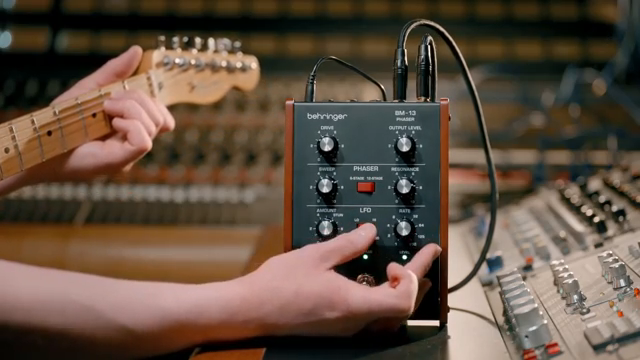 Behringer BM-13 PHASER: Classic Phase, Modern Mojo
Watch on YouTube:
Latest articles
Watch on YouTube:
Visit the channel:
https://www.youtube.com/behringer
https://www.youtube.com/behringer
Links from behringer:
website: https://www.behringer.com
facebook: https://www.facebook.com/Behringer
twitter: https://twitter.com/BEHRINGER
instagram: https://instagram.com/Behringer
Sponsored links:
If you purchase via these links, we may earn a small commission – at no extra cost to you. The link opens an Amazon keyword search, and results may vary depending on availability.
Behringer BM-11M Low Pass Filter
🔗 Check price on Amazon
🔗 Check price on Amazon
Behringer BM-12 Ring Modulator
🔗 Check price on Amazon
🔗 Check price on Amazon
Behringer BM-13 PHASER
🔗 Check price on Amazon
🔗 Check price on Amazon
Behringer BM-14M Analog Delay
🔗 Check price on Amazon
🔗 Check price on Amazon
Behringer BM-15M RESONANCE FILTER
🔗 Check price on Amazon
🔗 Check price on Amazon
Behringer BM-17 Frequency Box
🔗 Check price on Amazon
🔗 Check price on Amazon
Behringer BM-18M CLUSTER BOX
🔗 Check price on Amazon
🔗 Check price on Amazon