In this episode of ALM TV’s Busy Visits, composer and cellist Maarten Vos invites us into his Berlin studio for a reflective look at how classical training and modular synthesizers collide. ALM/Busy Circuits’ modules play a pivotal role in his hybrid sonic world, blending acoustic expressivity with electronic freedom. Vos shares why patching is never routine, how each rack becomes its own little island, and what makes modules like Pamela’s Workout and MCF X2 essential in his creative toolkit. For anyone curious about the intersection of strings, patch cables and emotional sound design, this is a fascinating insight into a modular artist’s philosophy.
3. October 2026
MILES
ALM TV: Maarten Vos and the Modular Cello Mindset
From Cello Strings to Patch Cables: Maarten Vos’ Studio Setup
The episode opens with Maarten Vos welcoming us into his studio at Berlin’s Funkhaus, a space equally at home with vintage synths, modular racks, and, not least, a classical cello. Vos’s background as a cellist is far from a footnote; it’s the foundation of his musical identity and a subtle influence on his approach to synthesis. He points out how the tactile expressivity of cello playing finds a new home in controllers like the Haken Continuum, which he treats with the same sensitivity as bowed strings.
Vos describes his studio as a hybrid environment, where acoustic and electronic domains intertwine. There’s a Polysix here, a Minimoog there, and a modular setup occupying its own strategic zone. The studio isn’t just for his own explorations—he produces albums for other artists too, shaping the space for both collaboration and solo experimentation. As with many modular enthusiasts, this mix of workhorse and esoteric gear is less about collecting and more about creating a flexible, responsive workspace.
Modular as Mutable Instrument: Infinite Configurations
Vos contrasts the standardisation of classical instruments like cello and piano with the open-ended, customisable nature of modular synthesisers. Where a cello’s physicality and muscle memory shape a player’s approach, a modular rack is, in his words, an instrument of one’s own design, defined by how modules are arranged and patched. This is not just a technical point—it’s a philosophical shift that invites constant re-examination of what the instrument can be.
He emphasizes that the modular’s reconfigurability is its greatest asset: even with the same modules, new arrangements yield fresh sonic territory. Vos’s racks are set up as small islands, each dedicated to a different function—sound design, polyphony, or live performance. This modular approach to modular, if you will, means the studio is in a state of perpetual flux, optimised for exploration rather than routine.

"For me a modular synthesizer is a very special instrument because as a cellist a cello is kind of standardized."
© Screenshot/Quote: Busycircuits (YouTube)
Layered Workflows: Blending Acoustic and Electronic
Vos’s creative process is as fluid as his studio layout, shifting with each project. On recent collaborations, such as his album with pianist Hugh Bathing, the workflow might begin with live improvisations on cello and piano, with electronics added later—or vice versa. The process is organic and iterative, involving multiple takes and a willingness to let the music evolve through repetition and revision.
His versatility extends to composing for film, dance, and visual art, sometimes favouring in-the-box editing and collage techniques. Despite this variety, Vos notes a signature sound running through his work—a product of both his classical roots and his embrace of electronic manipulation. There’s no single formula; instead, he tailors his approach to the demands of each artistic context, always seeking new intersections between acoustic and electronic worlds.
ALM Favourites: Pamela’s Workout and MCF X2 in Action
"That's basically almost in all my releases because it was mostly the master clock of what I was doing."
© Screenshot/Quote: Busycircuits (YouTube)
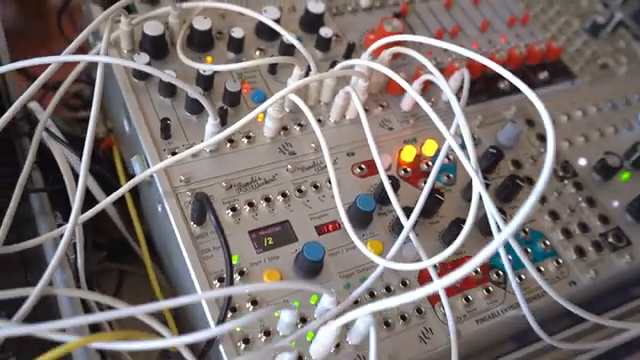
Reflecting on his history with ALM modules, Vos singles out Pamela’s Workout as a formative purchase—his third or fourth module, acquired back in 2011. He describes it as the holy grail of clock modules, serving as the master sync in countless projects, its presence felt even when not directly audible. Pamela’s reliability and flexibility have made it a near-permanent fixture in his racks, underpinning the rhythmic backbone of his productions.
Vos also praises the MCF X2, ALM’s dual filter module, for its musical response and modulation options. He highlights the joy of pinging the filters with envelopes, enjoying the sharp resonance and the ability to modulate multiple parameters or link the filters for complex, evolving textures. These modules, he suggests, are not just tools but co-creators, enabling the nuanced interplay of control and surprise that characterises his sound.
Emotion in Voltage: Music for Humans, Animals, and Electricity
Vos concludes with a wry reflection on his ultimate goal: to move people emotionally through music shaped by modular synthesis. He jokes that perhaps even animals—and, for that matter, the electricity itself—might enjoy the results. In the end, modular becomes not just a technical playground, but a medium for shared feeling, comfort, and a bit of tongue-in-cheek inclusivity.
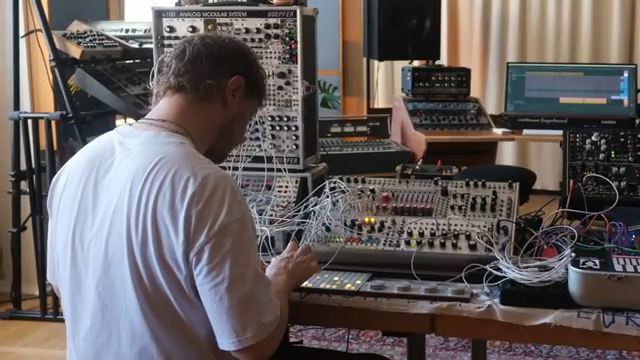
"I mainly use the modular synthesizer to make people emotional and to make myself also emotional."
© Screenshot/Quote: Busycircuits (YouTube)
This article is also available in German. Read it here: https://synthmagazin.at/alm-tv-maarten-vos-und-das-modulare-cello-denken/
More articles about these products:
 tafony’s Eurorack Live Rig: Like a Modular Kangaroo on a Red Bull Bender
 Nebula in a Case: The Unperson’s Eurorack Ambient Machine
 Molten Music Technology vs. Random: The Random8 Riot
 The Unperson’s Modular Drum Safari: Kicking Writer’s Block in the Teeth
 The Unperson’s 40HP Mono Modular: A Rave Bunker in a Lunchbox
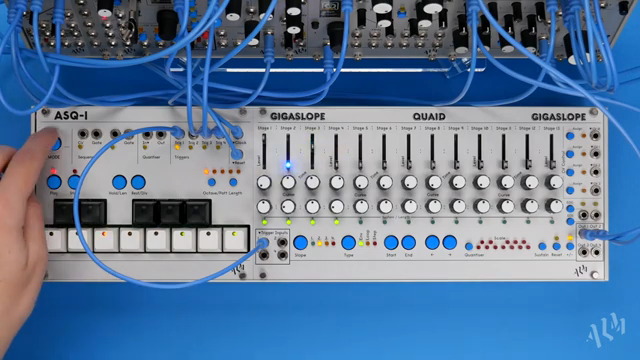 ALM TV’s QUAID GIGASLOPE: Four Channels of Modular Mayhem
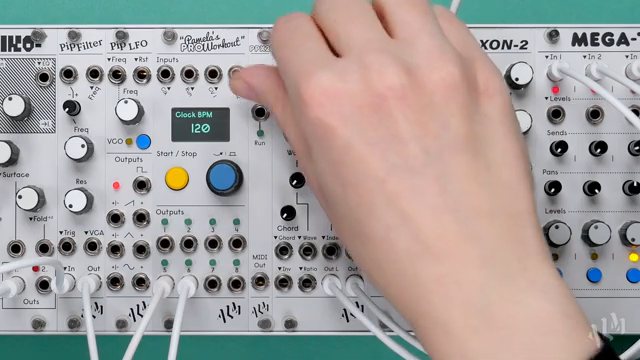 ALM TV’s FMco: Compact FM Synthesis, Maximum Patchability
 The Unperson Goes Full Triton: Eurorack Layering Like a Kangaroo on a Synth Bender
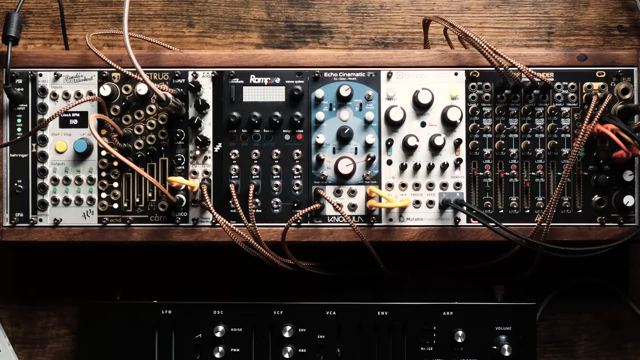 The Unperson’s Live Rig: A Hardware Rave That Laughs in the Face of DAWs
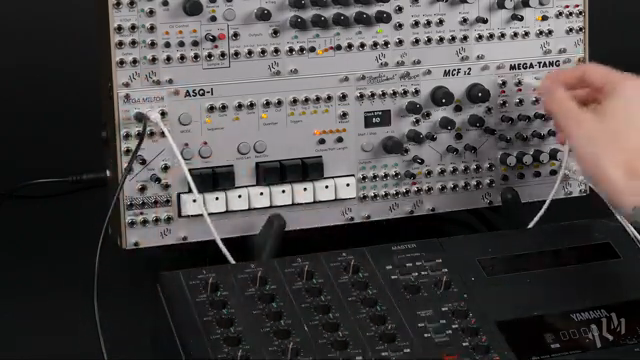 ALM TV’s Turismo: Iterative Drones and Tape Loops in a Modular Playground
 The Unperson’s Polymeter Playground: Rhythms That Refuse to Behave
 ALM TV’s Turismo: Sculpting Storms in the Modular Domain
Watch on YouTube:
Latest articles
Watch on YouTube:
Visit the channel:
https://www.youtube.com/busycircuits
https://www.youtube.com/busycircuits
Links from busycircuits:
website: https://busycircuits.com
instagram: https://instagram.com/busycircuits
soundcloud: https://soundcloud.com/busycircuits
Sponsored links:
If you purchase via these links, we may earn a small commission – at no extra cost to you. The link opens an Amazon keyword search, and results may vary depending on availability.
MCF x2
🔗 Check price on Amazon
🔗 Check price on Amazon
Pamela's Pro Workout
🔗 Check price on Amazon
🔗 Check price on Amazon
Pamela's Workout
🔗 Check price on Amazon
🔗 Check price on Amazon