Yamaha Synths Official brings us a focused walkthrough of the Montage M8x, with Michael Feiner spotlighting its most compelling features for sound designers and performers alike. This video is a showcase of what happens when expressive control meets a robust digital architecture: polyphonic aftertouch, advanced filter drive, polyphonic wave folding, and a comprehensive effects system all take center stage. The presentation leans into the Montage M8x’s ability to morph and layer sounds seamlessly, making it a strong contender for both creative studio work and dynamic live performance. If you’re curious about how Yamaha’s flagship integrates deep sound-shaping with performance-friendly workflows, this is a must-watch.
15. May 2026
LYRA
Yamaha Synths Official Unveils Montage M8x: A Deep Dive into Expressive Power and Sound Design
First Impressions: Power Meets Playability
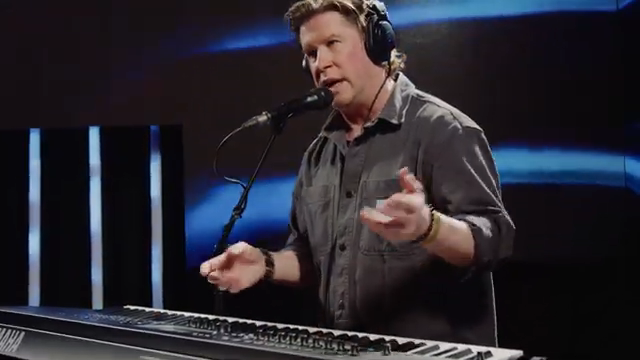
The video opens with Michael Feiner introducing the Montage M8x as a powerhouse synthesizer, immediately emphasizing its impressive keybed. Yamaha’s decision to equip the M8x with an 88-key weighted action and polyphonic aftertouch sets the stage for expressive performance possibilities that go far beyond the basics. This is not just about triggering notes; it’s about nuanced articulation and dynamic control.
From the outset, Feiner demonstrates how polyphonic aftertouch allows for independent expression on each note, letting one voice soar while others remain static. This level of control is rare, especially in a full-size stage keyboard, and it’s clear Yamaha wants to position the Montage M8x as a flagship for both sound designers and performers who demand tactile expressiveness.
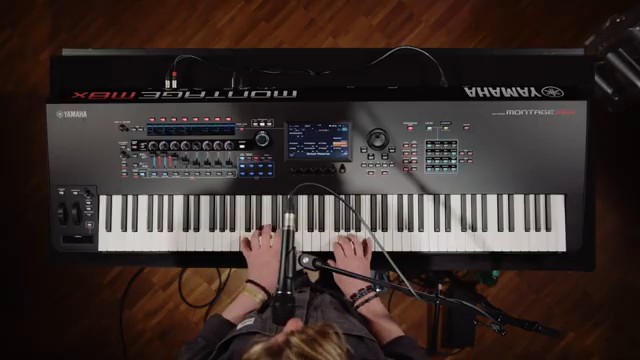
"The ability to go and just make expression on one single note while holding down others is amazing, to make one note stand out like this with polyphonic aftertouch."
© Screenshot/Quote: Yamahasynthsofficial (YouTube)
Dynamic Sound-Shaping: Aftertouch, Filter Drive, and Wave Folding
"As you hear, it's polyphonic, so it's not like putting a fuzz pedal or a distortion unit on top of it."
© Screenshot/Quote: Yamahasynthsofficial (YouTube)
Feiner dives into the Montage M8x’s sound-shaping arsenal, starting with the filter drive and gain staging options. The instrument allows users to apply drive both pre- and post-filter, with the unique twist that this can be done polyphonically. By manipulating a simple sine wave, he demonstrates how driving the filter before and after the amplitude section transforms the sound from pure to harmonically rich, even approaching the character of a squashed square wave. This isn’t just a global distortion effect; each note retains its own character, a distinction from typical analog or pedal-based approaches.
The discussion then shifts to the inclusion of a polyphonic wave folder—a feature more common in modular synthesis than in mainstream keyboards. Feiner shows how the wave folder, accessible via the modulation section, can radically alter a sine wave’s harmonic content, opening up new creative avenues for sound designers. The fact that these features are available polyphonically means complex, evolving textures are easily within reach.
Combined, these tools make the Montage M8x a formidable platform for those who want to move beyond presets and sculpt their own sonic landscapes. Yamaha’s virtual analog engine, paired with these advanced processing options, offers a playground for experimentation that is rarely matched in this class of instrument.
Effects Architecture: Layers, Mastering, and More
The effects section of the Montage M8x receives particular attention, with Feiner highlighting its depth and flexibility. Each patch can host two insert effects, providing ample room for creative processing at the voice level. On top of that, a master reverb and delay can be layered, allowing for lush, spacious textures or tightly controlled ambiences depending on the needs of the patch.
Beyond the basics, the effects menu is packed with options: chorus, flanger, phaser, speaker cabinets, and more, including Yamaha’s classic SPX-style algorithms. Feiner demonstrates how these can be stacked and routed, with an EQ section available before the reverb for precise tonal shaping. The inclusion of a post-EQ filter enables further control over the final output, making it possible to master a patch’s sound directly on the instrument—a boon for both live performers and studio tweakers.
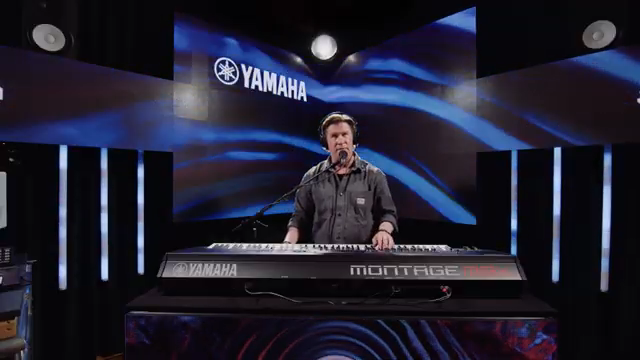
"Another great feature that I like about this synthesizer is the effects section. It's very deep."
© Screenshot/Quote: Yamahasynthsofficial (YouTube)
Live Sets and Scenes: Seamless Sound Switching
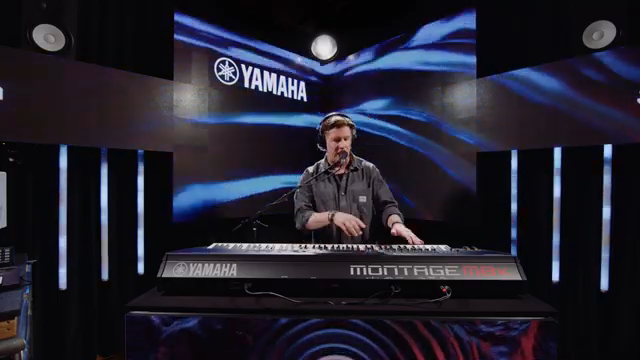
"The sound I was holding down doesn't get cut off. Very useful in a live situation."
© Screenshot/Quote: Yamahasynthsofficial (YouTube)
Performance workflow is a clear priority in the Montage M8x, as demonstrated by Feiner’s exploration of Live Sets and Scenes. Live Sets allow users to switch between sounds without cutting off sustained notes—a critical feature for stage musicians who need seamless transitions during a set. Feiner shows how holding a note while changing patches keeps the original sound alive, ensuring musical continuity.
Scenes add another layer of flexibility, enabling multiple variations within a single patch. By assigning different sound settings to scene slots, performers can quickly morph between textures, effects, or even entirely different instrument layers. Feiner cycles through several scenes in a custom patch, illustrating how this system supports dynamic, evolving performances without menu-diving or external controllers.
Conclusion: A Synthesizer for the Expressive and the Experimental
Yamaha Synths Official’s presentation makes it clear: the Montage M8x is engineered for musicians who crave both expressive control and deep sound design. With features like polyphonic aftertouch, advanced filter and wave folding options, and a robust effects and scene architecture, the M8x stands out as a versatile tool for both stage and studio. While the video focuses on highlights rather than exhaustive menus, it leaves little doubt about the instrument’s creative potential.
This article is also available in German. Read it here: https://synthmagazin.at/yamaha-synths-official-praesentiert-montage-m8x-ein-architektur-check-fuer-ausdruck-und-sounddesign/
More articles about these products:
 Jon Makes Beats & Dawson: FL Studio Gets a Streetwise Upgrade
 Jon Makes Beats: Why the MPC XL Is the Streetwise DAW You Didn’t Know You Needed
 Yamaha Synths Official Delivers: Montage M8x as a Digital Performance Powerhouse
 Yamaha Synths Official Delivers: Analog-Style Soundcraft with the Montage M8X
 AndertonsKeyboardDept Brings the Noise with Yamaha Montage 2.1 Update
 Yamaha Synths Official: CP-70 Heritage Meets MONTAGE M8x Innovation
Watch on YouTube:
Latest articles
Watch on YouTube:
Visit the channel:
https://www.youtube.com/YamahaSynthsOfficial
https://www.youtube.com/YamahaSynthsOfficial
Links from YamahaSynthsOfficial:
instagram: https://instagram.com/yamahasynths_official
facebook: https://www.facebook.com/yamahasynths
twitter: https://twitter.com/YamahaSynths
website: https://yamahasynth.com
Sponsored links:
If you purchase via these links, we may earn a small commission – at no extra cost to you. The link opens an Amazon keyword search, and results may vary depending on availability.
Yamaha Montage M8X
🔗 Check price on Amazon
🔗 Check price on Amazon