Verbos Electronics, the Berlin-based champions of West Coast modular design, take a deep dive into the origins and philosophy behind their Sawtooth Stack module. Drawing inspiration from Barry Schrader’s legendary 1970s “Lost Atlantis Patch,” this video unpacks how a complex, multi-oscillator concept was distilled into a performance-friendly Eurorack tool. With interviews, historical context, and musical demonstrations, Verbos Electronics show how the Sawtooth Stack bridges the gap between intricate sound design and hands-on playability. If you’re curious about how classic Buchla ideas can be reimagined for modern racks, this is essential viewing.

23. April 2026
MILES
Verbos Electronics: Sawtooth Stack – From Buchla Roots to Performance-Ready Macro Module
Patch Inspiration: From Lost Atlantis to Modern Racks
The Sawtooth Stack’s story begins in the early 1970s, a period when electronic music was evolving from the simple tones of the ’60s into more sophisticated sonic territory. Mark Verbos recounts how Barry Schrader, then at CalArts with access to Buchla 200 systems, developed a five-oscillator patch that became the backbone of his albums “Lost Atlantis” and “Trinity.” This patch, with its ability to morph between sine and saw waves and spread oscillators in pitch, represented a leap in expressivity for modular synthesis.
What made Schrader’s approach so compelling was its patch-oriented nature. Rather than relying on a single oscillator or simple voice, he crafted a flexible, evolving soundscape from a tightly coordinated stack of oscillators. Verbos Electronics took this as a challenge: how could such a complex, labor-intensive setup be reimagined for live performance and improvisation, where ease of use and reliability are paramount? The Sawtooth Stack module is their answer, distilling the spirit of Schrader’s original patch into a tool designed for both depth and immediacy.
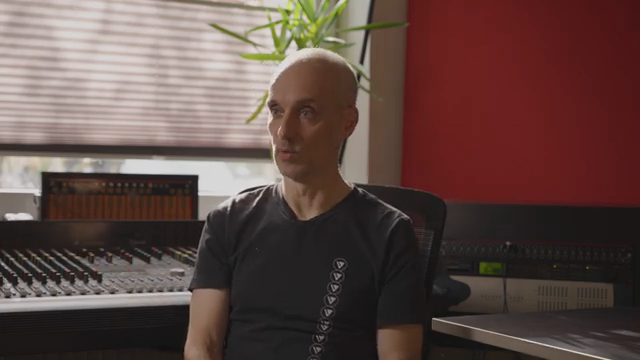
"Just with those three parameters there's an enormous amount of variation how he could make textural changes."
© Screenshot/Quote: Verboselectronicsgmbh (YouTube)
Five Oscillators, Infinite Textures
At the heart of the Sawtooth Stack are five analog oscillators, each capable of morphing from sine to sawtooth waveforms. This design allows users to blend and shape the overall timbre with remarkable flexibility, echoing the original Buchla 258 oscillators used by Schrader. The module’s architecture makes it easy to control the spread of pitches and the wave shape of all oscillators simultaneously, opening up a vast landscape of textures from a single set of controls.
The video highlights how this approach enables both subtle and dramatic sonic shifts. By adjusting just a few parameters, users can move from pure, unison tones to richly detuned clusters, or from gentle sine-based drones to aggressive, harmonically complex stacks. This flexibility is baked into the hardware, making it possible to achieve results that would otherwise require extensive patching and tuning across multiple modules.
Auto-Tuning: Keeping Analog Honest
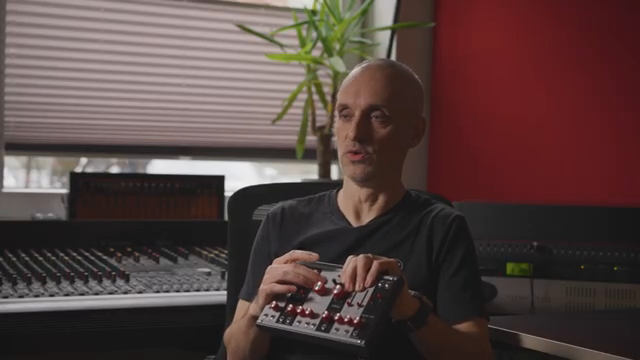
"The five oscillators, which are analog oscillators that naturally drift around can be auto-tuned."
© Screenshot/Quote: Verboselectronicsgmbh (YouTube)
One of the perennial challenges with analog oscillators is their tendency to drift, especially during long sessions or under stage lights. Verbos Electronics address this head-on with an auto-tuning function in the Sawtooth Stack. Rather than tuning to a specific pitch, this feature brings all five oscillator cores back into precise unison, ensuring that carefully crafted intervals and textures remain intact over time.
This auto-tuning doesn’t rob the module of its analog character; instead, it streamlines the workflow for performers and sound designers. If your patch has wandered after an hour of tweaking, a quick recalibration brings everything back to centre, letting you focus on the music rather than the maintenance. It’s a practical nod to the realities of live modular performance, where reliability is as important as sonic potential.
Micro vs Macro: The Philosophy Behind the Stack
Mark Verbos introduces the idea of micro versus macro modules—a core part of his design philosophy. Micro modules are single-function, requiring extensive patching and coordination to achieve complex results. Macro modules, by contrast, encapsulate an entire patch’s worth of functionality behind a single panel, making sophisticated sounds accessible with minimal setup.
The Sawtooth Stack is a textbook example of this macro approach. All the balancing, tuning, and mixing that would normally demand a tangle of patch cables and hours of preparation are handled internally. The result is a module that invites immediate musical exploration: plug in your control voltages and outputs, and you’re off. This philosophy is about making complexity playable, not just possible.
"Micro modules meaning very simple single function type modules, which you would have to patch a lot together in order to create interesting musical patches versus macro modules meaning that there's in effect an entire patch behind the scenes."
© Screenshot/Quote: Verboselectronicsgmbh (YouTube)
From Drones to Melodies: Real-World Use Cases

"It's a mistake to think of the module as a super saw, Hoover lead machine. Of course it can do that, but it also can do so many other things."
© Screenshot/Quote: Verboselectronicsgmbh (YouTube)
The Sawtooth Stack isn’t just a super saw or Hoover lead machine—though it can certainly deliver those classic sounds. The video demonstrates its versatility, from subtle, detuned sine waves and atmospheric drones to metallic percussion and inharmonic textures. The richness control, inspired by hard sync effects, allows for everything from dense noise clusters to shimmering, bell-like tones.
With stereo VCA, envelope generators, and MIDI control all on board, the module can serve as a complete voice in a compact 42HP package. Whether you’re after cinematic atmospheres, evolving pads, or intricate melodic lines, the Sawtooth Stack adapts to a wide range of musical contexts. It’s a module designed to be both a sound designer’s playground and a performer’s workhorse.
This article is also available in German. Read it here: https://synthmagazin.at/verbos-electronics-sawtooth-stack-von-buchla-wurzeln-zum-performance-tauglichen-makro-modul/
Watch on YouTube:
Latest articles
Watch on YouTube:
Visit the channel:
https://www.youtube.com/VerbosElectronicsGmbH
https://www.youtube.com/VerbosElectronicsGmbH
Links from VerbosElectronicsGmbH:
website: https://www.verboselectronics.com
tech_cards: https://www.verboselectronics.com/tech-cards
instagram: https://www.instagram.com/verboselectronics
Sponsored links:
If you purchase via these links, we may earn a small commission – at no extra cost to you. The link opens an Amazon keyword search, and results may vary depending on availability.
Verbos Electronics Sawtooth Stack
🔗 Check price on Amazon
🔗 Check price on Amazon