Ever felt your step sequencer running circles like a hamster on Red Bull? Underdog Electronic Music School is here to slap your loops awake with the dark art of daisy-chaining sequencers—both in Eurorack and Ableton Live. Oscar’s got his modular in rave bunker mode, tossing clocks and resets around like cheap glowsticks, and the results are anything but predictable. If you’re after endless techno patterns that evolve, mutate, and refuse to sit still, this is the street weapon you need. Don’t expect hand-holding or basic theory—just pure, dirty groove science, explained with Underdog’s trademark energy and zero nonsense.
2. June 2026
SPARKY
Underdog Electronic Music School Chains Sequencers For Infinite Techno Mayhem
Ableton Live, Metropolis, Mimeophon, Moog Defam, Schachmann Ballista Blast, Steps (Max for Live device)
Loopy Beginnings: Why Daisy-Chain Sequencing Matters
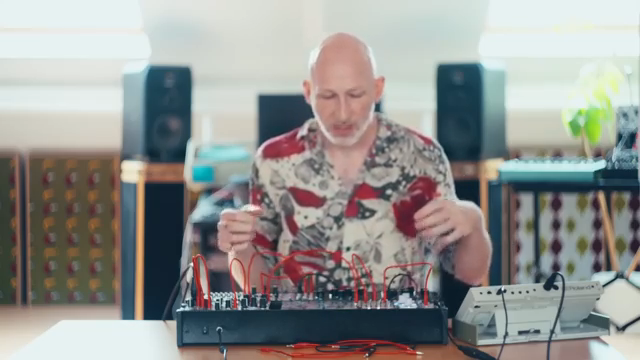
Oscar kicks things off with a basic eight-step sequence—a classic closed loop that gets old faster than a stale rave. It’s simple, sure, but after a few cycles, your ears beg for something less predictable. There’s a shoutout to the Moog Defam for those who like their sequences with a side of voltage per octave, but the main point is clear: vanilla loops get boring—fast.
The real juice comes when you start asking, ‘What if we chain these things together?’ That’s where daisy-chaining steps in, allowing multiple sequencers to interact and mess with each other’s timing. The result? Patterns that evolve, mutate, and keep you guessing. Oscar’s approach is all about stripping things down to the essentials, then building complexity by letting sequencers control each other in ways that are simple to set up but sound anything but basic.
"You daisy chained your sequencers. So let's talk about just sequencers today."
© Screenshot/Quote: Oscarunderdog (YouTube)
Chaos Agents: Multiple Sequencers, Infinite Grooves
"Pretty quickly, I'm gonna stop being able to visualize it in my mind's eye and pretty quickly I'm just gonna have to use my ears and play around."
© Screenshot/Quote: Oscarunderdog (YouTube)
Now things get spicy. Oscar introduces a second sequencer into the mix, running at a different step length. Suddenly, you’re not stuck in eight-step purgatory—the patterns start twisting and turning, sometimes looping predictably, sometimes throwing curveballs you didn’t see coming. By resetting one sequencer every three steps while the other sticks to eight, you get those glorious moments where the groove just refuses to land in the same place twice.
It’s the unpredictability that makes this setup so powerful. Oscar admits there’s a point where you can’t even visualise what’s going on—you have to trust your ears. This isn’t just happy accident territory; it’s controlled chaos, the kind of subtle variation that keeps dancefloors moving and head-nodders guessing. The interaction between sequencers isn’t just technical—it’s musical, adding depth without losing the original vibe.
From Patch Cables to Plug-ins: Hardware and DAW Tricks
Oscar doesn’t keep the magic locked in the modular cave. After flexing on Eurorack with Ballista Blast, Mimeophon, and the classic Metropolis for acid glides, he pivots to Ableton Live. Sure, DAWs aren’t as wild as patching hardware—no shock there—but with the right tools (hello, Max for Live’s Steps), you can still inject plenty of movement into your patterns.
Whether you’re running mod sequencers to shift pitch, filter, or decay across non-standard step lengths, or mapping plug-ins to parameters that don’t sit on neat multiples, the vibe is the same: keep things unstable, keep the patterns swirling. Oscar shows how DAW users can chase after that modular unpredictability, even if the patch cables are virtual. You won’t get the same freeform chaos, but you’ll still end up with techno that breathes and morphs.
Break the Four: Tips for Tasty Techno Mutations
The golden rule? Ditch the multiples of four for your modulation sequencer lengths. Oscar demonstrates how running a three-step LFO on one parameter and a five-step on another keeps things from ever looping back on themselves at the same moment. This is the secret sauce for patterns that stay fresh all night. If your sequence is too tidy, it’s probably time to add an oddball modulation lane into the mix.
"Modulation sequencers that would move at amounts that are not eight steps because then at least we'll start to get that complexity."
© Screenshot/Quote: Oscarunderdog (YouTube)
Level Up: Sequencer Skills for Techno Tinkerers
If you want to get out of the preset ghetto and take your patterns into uncharted territory, this video is your blueprint. Oscar serves up a hands-on, jargon-free guide to making your sequencers work for you—no matter your rig. It’s all about experimentation, trusting your ears, and embracing a bit of sonic chaos. If you’re serious about techno, you need these tricks in your arsenal. And honestly, the interplay of sequencers is something you need to hear in action, so don’t just read about it—watch the video, patch it up, and let your studio explode.
This article is also available in German. Read it here: https://synthmagazin.at/underdog-electronic-music-school-verkettet-sequencer-fuer-endlose-techno-patterns/
More articles about these products:
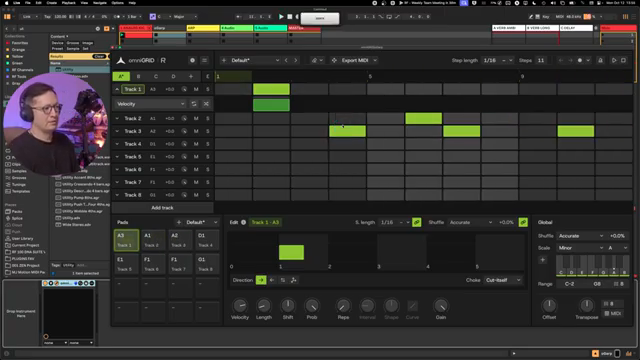 Rapid Flow’s Step Sequencer Survival Kit: omniGRID 1.1 from Blank Slate to Bass Face
 Underdog Electronic Music School: When One Pulse is Enough to Break Your Brain
 Markers That Splash: Underdog Electronic Music School’s Guide to Kickstarting Your Phrases
 Kairos as Living Sculpture: MusicRadar Tech Enters Laura Misch’s Sonic Sanctuary
 Voltage Labs: Berlin’s Sonic Mosaic – Studios, Shadows and the Pulse of Creation
 Architecting Performances: Novation Launch Control and Ableton Live Macro Workflows
 Nebula Machines: Bahadırhan Koçer and the Sonic Physics of Dub Techno
 Pick Yourself’s Hypnotic Bass Hack: Rumble Kicks Are Out, Sliding Grooves Are In
 Mad Moments & Club Tactics: Tom VR Gets Real with MusicRadar Tech
 Bonedo Synthesizers: How to Make Any Synth Scream Acid Like a 303
 LNA Does Audio Stuff: Making Beats on the Cheap with Ableton Note—Beach Edition
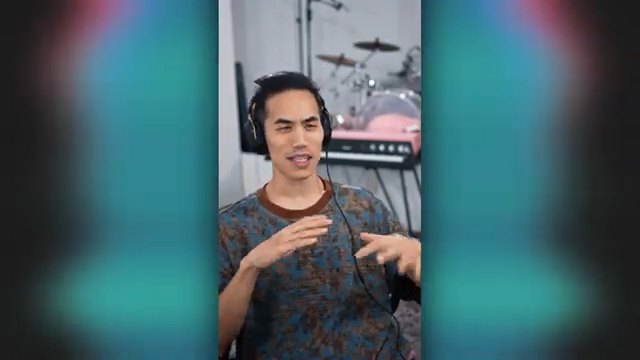 Andrew Huang’s Remix Rodeo: Four Producers, One Song, Total Mayhem
Watch on YouTube:
Latest articles
Watch on YouTube:
Visit the channel:
https://www.youtube.com/OscarUnderdog
https://www.youtube.com/OscarUnderdog
Links from OscarUnderdog:
underdog.brussels: https://underdog.brussels
Underdog instagram: https://instagram.com/oscarunderdog
Underdog facebook: https://facebook.com/underdogbrussels
Sponsored links:
If you purchase via these links, we may earn a small commission – at no extra cost to you. The link opens an Amazon keyword search, and results may vary depending on availability.
Ableton Live
🔗 Check price on Amazon
🔗 Check price on Amazon
Metropolis
🔗 Check price on Amazon
🔗 Check price on Amazon
Mimeophon
🔗 Check price on Amazon
🔗 Check price on Amazon
Moog Defam
🔗 Check price on Amazon
🔗 Check price on Amazon
Schachmann Ballista Blast
🔗 Check price on Amazon
🔗 Check price on Amazon
Steps (Max for Live device)
🔗 Check price on Amazon
🔗 Check price on Amazon