Sineway’s taken the Novation Peak for a year-long spin—through tracks, live sets, and the daily grind. This isn’t your average synth review; it’s a straight-talking look at what makes the Peak a modern classic (and where it faceplants). Expect sharp insights, a few gripes, and plenty of praise for a synth that’s as much at home in a club as it is in your bedroom bunker. If you’re after glossy sales talk, look elsewhere. If you want to know why the Peak still rules the roost in 2026, Sineway’s got the answers—delivered with the clarity and no-BS attitude we love.
30. April 2026
SPARKY
Sineway’s Novation Peak Review: Digital Precision, Analog Bite, and Zero Nonsense
Digitakt II, Hologram Microcosm, Novation Launch Control XL 3, Novation Peak
Digital Brains, Analog Fists
The Novation Peak isn’t just another hybrid synth—it’s a digital-analog chimera with a serious attitude. Sineway dives straight into the Peak’s core: digital oscillators calculated at a ridiculous rate, giving you waveforms cleaner than a freshly wiped rave floor. This isn’t your grandad’s aliasing-ridden digital box; the Peak’s sound is sharp, clear, and ready to slice through any mix.
But clarity alone doesn’t make a synth worth the desk space. Here’s where the analog side steps in: real filters, beefy drive circuits, and analog distortion. You get the best of both worlds—digital precision up front, analog filth on the back end. Stack the drives, crank the distortion, and you’ve got a street weapon that can go from pristine pads to snarling leads faster than you can say “filter sweep.”
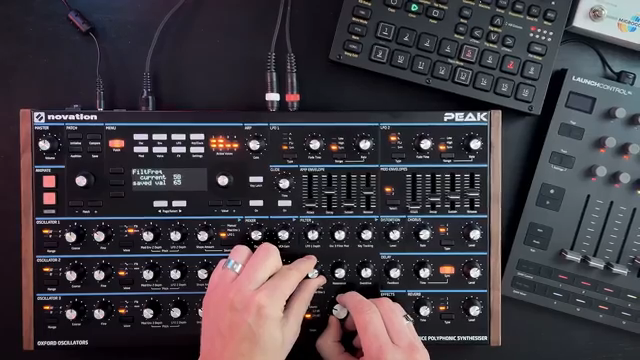
"The result is a waveform that is just clean, free from aliasing, free from sharp edges."
© Screenshot/Quote: Sinewaymusic (YouTube)
Built Like a Tank, Feels Like a Classic
"Everything about the Peak feels solid."
© Screenshot/Quote: Sinewaymusic (YouTube)
Sineway doesn’t mess about when it comes to build quality. The Peak’s metal case and wooden cheeks scream boutique, and every knob feels like it could survive a toaster-fight in a warehouse party. This is gear that begs to be used, not babied. It’s the kind of synth that makes you want to write better music just by sitting there looking mean.
There’s a minor gripe—the screen’s alignment lines are a bit of a guessing game if you’re not staring at it dead-on. But let’s be real: if that’s the worst complaint, Novation’s doing something right. The overall feel is solid, inviting, and makes you reach for the Peak more than you probably should. If you like your gear to feel like it could double as a weapon in a synth riot, this is your jam.
Touch and Go: The Surface Rules
Here’s where the Peak really flexes: almost everything you need is right on the surface. Sineway points out that, unlike so many other synths buried under menus and button combos, the Peak puts the essentials front and centre—LFOs, envelopes, filter, tuning—all ready for a quick tweak. It’s a hardware-first dream, especially if you’re allergic to menu-diving.
This layout isn’t just for the seasoned knob-twiddler. Whether you’re building a performance rig or just starting your sonic journey, the Peak’s interface invites you to get hands-on and lose yourself in sound design. It’s a synth that wants to be played, not programmed, and that makes all the difference when you’re chasing inspiration at 3am.
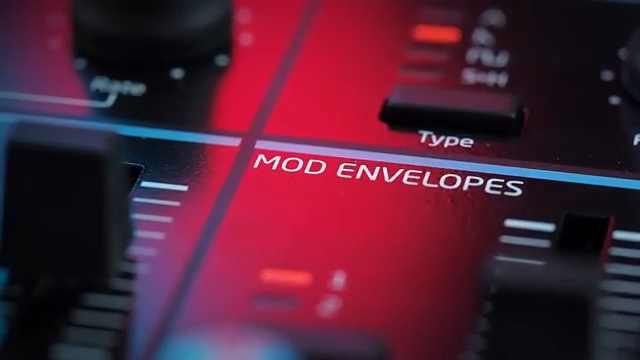
"What impresses me about the Peak, especially given how deep it can go, is how much of it lives on the surface."
© Screenshot/Quote: Sinewaymusic (YouTube)
Presets, Patches, and Live Firepower
Sineway gives props to the Peak’s preset library—hundreds of patches that are actually usable, not just demo fluff. Load up a sound, twist a few knobs, and suddenly you’ve got something fresh. The Novation Components app opens the floodgates even wider, letting you grab more patches for free. For live performers, the near-instant patch switching is a game changer—no awkward gaps, just seamless transitions even when sequencing from the Digitakt II.
This speed and flexibility make the Peak a beast in dynamic setups. Yes, it’s monotimbral, but the fast patch changes almost make you forget. If you’re the type who likes to jump between sounds mid-set without breaking a sweat, the Peak’s got your back. It’s the kind of feature you don’t notice until you use a synth that gets it wrong.
Flaws, Value, and Why the Peak Sticks Around
"It seems to hold its value. It suggests to me that the people who buy the peak, they tend to hold onto it."
© Screenshot/Quote: Sinewaymusic (YouTube)
No synth is perfect, and Sineway’s not shy about calling out the Peak’s weak spots. The mod matrix feels like it belongs to another synth—clunky compared to the rest of the interface. The animate buttons are just binary, not touch-sensitive, which is a letdown for anyone hoping for expressive control. And yes, monotimbrality at this price point stings, but it’s workable if you’re clever with sampling and sequencing.
Still, the Peak holds its value on the secondhand market, and there’s a reason for that: people buy it, and they keep it. After a year of heavy use, Sineway’s still got it front and centre on the desk—sharing space with a spouse’s work-from-home setup, no less. That’s the kind of staying power most synths only dream of. If you want a synth that’ll stick around long after the hype dies down, the Peak’s a safe bet.
This article is also available in German. Read it here: https://synthmagazin.at/sineway-und-der-novation-peak-digitale-praezision-analoger-punch-und-null-bullshit/
More articles about these products:
 Summit Stays Supreme: The Midlife Synthesist’s One-Year Verdict
 Starsky Carr’s £15,000 Synth Soup: Analog Royalty, Now in Your Serum
 Sineway’s Redshift 6 Rave Surgery: Paraphony, Chroma Chaos and Digitakt II Tricks
 A Studio of Sonic Memory: synth4ever Journeys through Devin Belanger’s Ambient Sanctuary
 OXI Instruments OXI One mkII: Mod Lanes Unleashed
 OXI Instruments E16: Dual MIDI Destinations Demystified
 Devin Belanger and the Cinematic Synth: Sculpting Sound into Story
 OXI Instruments: Architectural MIDI Connections with the OXI ONE MKII
 Sineway’s First Live Set: Gear Glory and Rookie Regrets
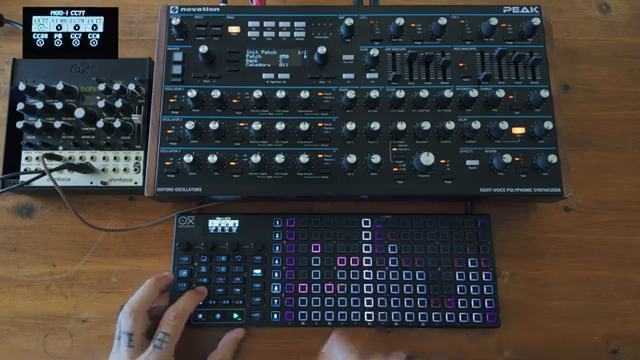 OXI Instruments: Mod Lanes, Pattern Reset and the Hidden Rhythms Within
 TAETRO’s Sidekick Hack: Parallel FX Mayhem Unleashed
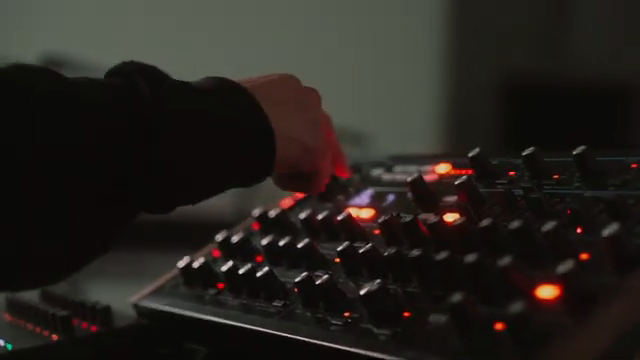 Novation Peak in SCALER’s Live Rig: Digital Powerhouse at the Heart of Hybrid Performance
Watch on YouTube:
Latest articles
Watch on YouTube:
Visit the channel:
https://www.youtube.com/sinewaymusic
https://www.youtube.com/sinewaymusic
Links from sinewaymusic:
Patreon: https://patreon.com/Sineway
TikTok: https://tiktok.com/@sinewaymusic
Instagram: https://instagram.com/sinewaymusic
Our music-only channel: https://youtube.com/@SinewayOfficial
Sponsored links:
If you purchase via these links, we may earn a small commission – at no extra cost to you. The link opens an Amazon keyword search, and results may vary depending on availability.
Digitakt II
🔗 Check price on Amazon
🔗 Check price on Amazon
Hologram Microcosm
🔗 Check price on Amazon
🔗 Check price on Amazon
Novation Launch Control XL 3
🔗 Check price on Amazon
🔗 Check price on Amazon
Novation Peak
🔗 Check price on Amazon
🔗 Check price on Amazon