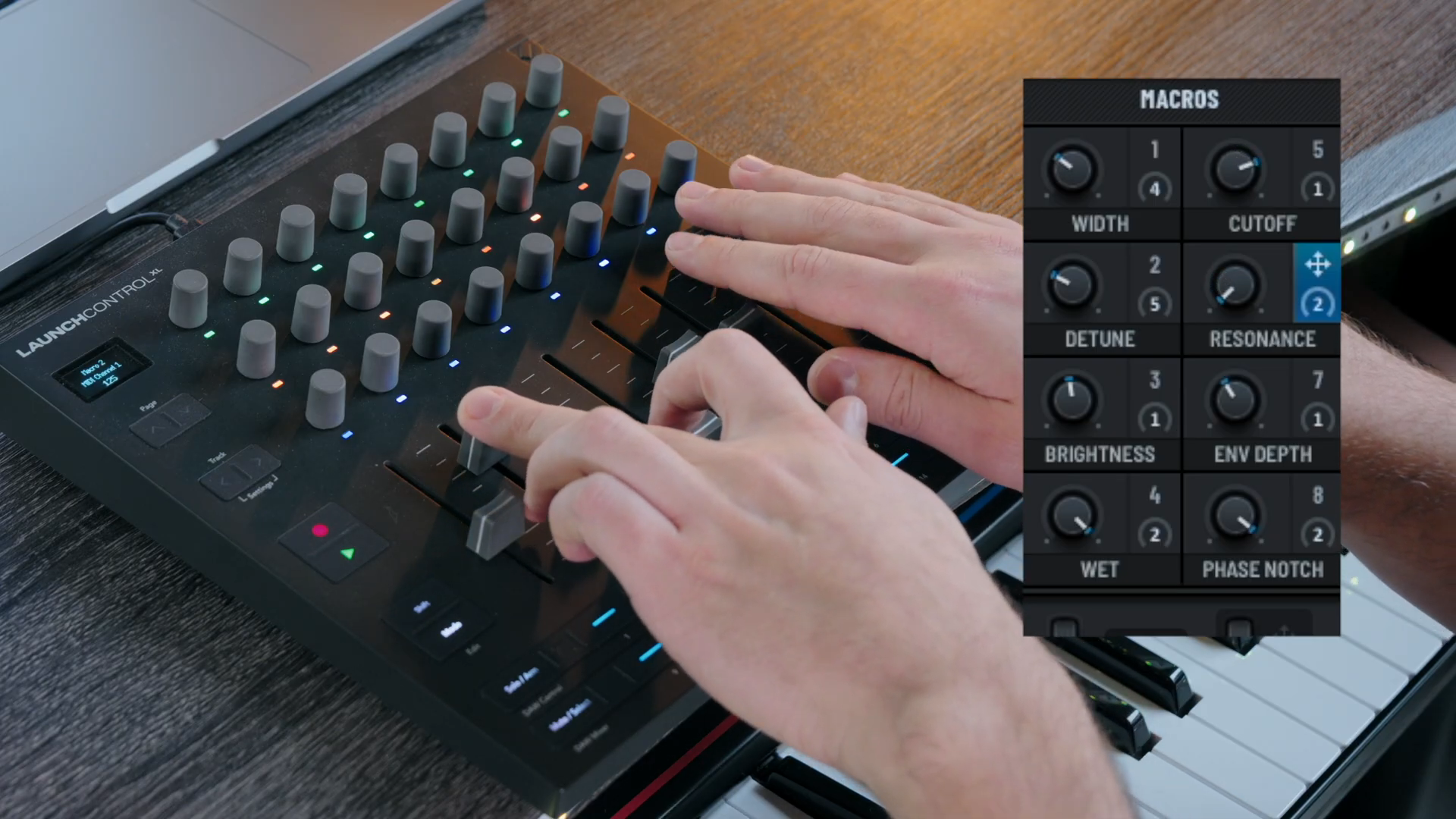
Two hands on the faders, next to them Serum macros for cutoff, resonance, and envelope depth: this isn’t just about opening a filter. Devin Belanger turns sound shaping into a two-handed affair. In his video “The Pro Sound Of Hardware Synths Your Music Is Missing,” published on November 26, 2026, he wants to play his favorite softsynth Serum 2 like a hardware instrument. His approach is refreshingly down-to-earth: before blaming the plugin for lacking life, why not try moving it? He’s transparent about it: Novation sponsors the video and puts the Launch Control XL MK3 at the center.
It’s Not the Oscillator That Changes, But the Way You Play
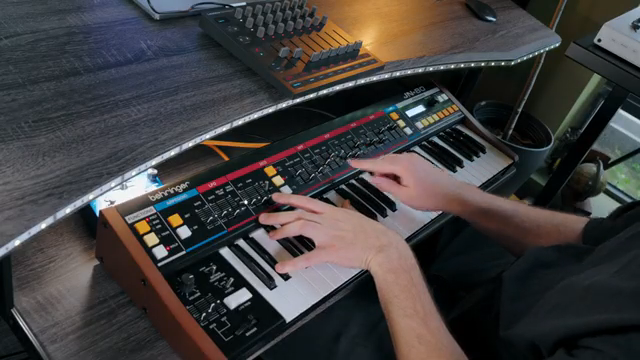
© Screenshot: Devin Belanger (YouTube)
“So let's actually test it. Same synth, same patch, same MIDI notes. The only thing I'm going to change is how it moves.”
© Quote: Devin Belanger (YouTube)
Belanger is annoyed by a skewed comparison: on one side, there’s a motionless plugin, at best with a straight automation ramp. On the other, several hardware parameters are changed irregularly by hand. His counter-experiment keeps synth, patch, and MIDI notes constant. The only thing to change is the movement:
Serum 2 – Amazon keyword search
Search for this product on Amazon →
This link opens an Amazon keyword search. Depending on availability, other results may be shown.
Advertising – affiliate link. If you buy through this link, we may earn a commission – at no extra cost to you.
Chorus Doesn’t Always Have to Be On Duty
To do this, Belanger builds a fixed performance surface: faders for macros, above them rows of knobs for oscillators, filters, and effects. He openly admits the setup effort; the assignments can then be saved as a preset. This is the unspectacular but crucial part of the experiment: the interesting interventions need to be accessible before the musical idea passes by.
For classic plucks, he combines filter, filter envelope, and resonance. Effects, on the other hand, are treated as tools for tension changes, not as an unchanging patina over the whole track. His advice:
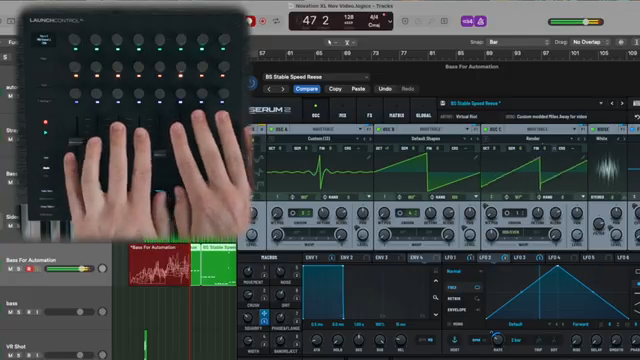
© Screenshot: Devin Belanger (YouTube)
“Instead of having your flanger, chorus, or phaser always on, treat them as a tool to help with transitions and movement between parts in the song.”
© Quote: Devin Belanger (YouTube)
Ollie Lets the Oscillators Answer
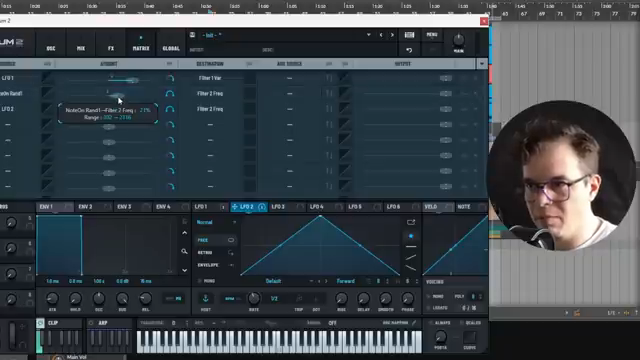
© Screenshot: Ollie Music (YouTube)
“Inside of Serum, now we have something called oscillator mapping. So we can map different octaves to different oscillators.”
© Quote: Ollie Music (YouTube)
Not every change needs a finger on a knob, though. In “You can do this in Serum now?” from March 25, 2025, Ollie Music builds a little question-and-answer machine. Oscillator A gets an FM wavetable he says he created from his Virus, Oscillator B a digital Serum wavetable. Separate formant and bandpass filters are added. He distributes the two sound roles using oscillator mapping:
Lively Doesn’t Automatically Mean Analog
Ollie records a four-bar sequence in the internal clip and shifts selected notes into the range of the second oscillator, adjusting its tuning accordingly. He then lowers the playback probability for individual notes and adds free-running LFOs and random modulation. This way, note selection and timbre vary without every change having to be played live. That’s a different kind of movement than Belanger’s consciously set effect transitions: the pattern gets room to breathe, but not yet a sense for the next chorus.
MusicRadar Tech’s team demonstrates another level in their comparison “Pigments 6 vs Serum 2” from July 19, 2025. The voice modulator in Pigments delivers a different output value with each new note. The team describes its use for subtle detuning like this:
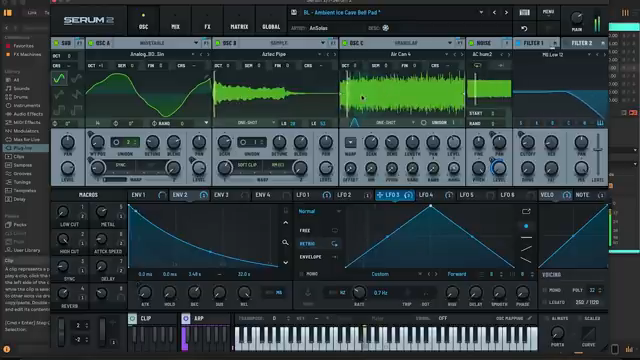
© Screenshot: MusicRadar Tech (YouTube)
“So when used subtly that can be used really nicely for kind of doing slight bits of detuning like you would an analog synth where the kind of the voices are aging differently or whatever.”
© Quote: MusicRadar Tech (YouTube)
Voice-dependent variation, random note selection, and played automation are not interchangeable ingredients. Belanger concedes that analog oscillators have their own special drift and characteristic interplay. His experiment illustrates something else: how much expression the way you play can contribute. He doesn’t claim any sonic identity between Serum and an analog circuit. Nor is the controller mandatory: Belanger shows editing a vocal sample with the mouse, but emphasizes the difference compared to simultaneous access to multiple parameters.
Belanger’s approach is most appealing where he shapes two pad sounds at once and finally presents a whole song with, as he says, live-performed automation. At that point, it’s no longer just about imitating hardware. A controller becomes a shared performance surface for multiple sound layers. The laptop doesn’t have to become analog for that. For now, it’s enough if the musician gets to play more than just the notes again.
Serum 2 – Amazon keyword search
Search for this product on Amazon →
This link opens an Amazon keyword search. Depending on availability, other results may be shown.
Advertising – affiliate link. If you buy through this link, we may earn a commission – at no extra cost to you.
Videos for this article
All YouTube videos featuring the Serum 2
Primary – main topic (21)
 The Pro Sound Of Hardware Synths Your Music Is Missing
 TINCTURE: 50 Keys & Plucks for Serum 2
 Xfer Serum 2: Deep Dub Techno Presets + Patterns Sound Demo
 Xfer Serum 2: 50 Complex Digital Arpeggio Presets Sound Demo
 How To Learn Sound Design Faster Than 99% Of Producers
 Xfer Serum 2 50 Presets: Dark Textures & Drones. Sound Demo
 Gear of the Year 2025 – Part 2: The best plugins and music tech software
 Xfer Serum 2: Dark Rhythmic Presets. Arps, Pads, Basses Demo
Show all (13 more)
 Ambient Pads and Sequences - Sound design with Serum 2
 Pigments 6 vs Serum 2 – software synths head-to-head: What's new? Which is best for your workflow?
 My first 100 hours with Serum2
 Stop Butchering Psytrance Basslines | Serum2 Tutorial
 Can Serum 2 Replace Real Analog Synths?
 Serum 2 Custom Presets // Retro Analog Synthwave (sound demo)
 One Knob to Rule Them All: The Power of the Macro
 Sampling is sooo 2025
 Bad Gear - SERUM 2 by Xfer
 You can do this in Serum now?
 My favorite Serum 2 Features!
 Sonic TALK 838 - Serum 2, PolyVera, PTNSHFT, Echolocator
 Xfer Serum 2 Update. New Factory Atmospheric Presets Demo