Metrical dissonance sounds like the kind of theory that’d kill a dancefloor, right? Wrong. Josh Lucan rips the lid off dry academia and shows how layering simple note lengths can turn your grid-locked beat into a toe-stubbing groove monster. If you think holding a note is just for pianists in tuxedos, you’re about to get schooled. Forget fancy DAW tricks—this is pure rhythmic subversion, as explained by someone who survived reading Krebs’s book so you don’t have to.
2. October 2026
SPARKY
Rhythmic Rebellion: Josh Lucan’s Guide to Metrical Dissonance That Actually Bangs
Metrical Dissonance: Not Your Dad’s Music Theory
Josh Lucan doesn’t waste time with introductions—he dives straight into a groove that owes its wonky pulse to a single, sneaky concept from Harald Krebs’s book on Schumann. Forget everything you know about boring meter; Krebs’s idea is that rhythm isn’t just a straight line, it’s a stack of pulses fighting for dominance, sometimes getting along, sometimes scrapping like bad neighbours at 3am. When those pulses line up, everything’s nice and consonant. But the magic—and the tension—happens when they don’t. That’s metrical dissonance: not a new time signature, but a fight club for pulses living on the same grid.
What makes this cook? It’s not about changing the tempo or throwing your drummer off a cliff. The different rhythmic layers pull against each other, creating a tension that’s less prog-wank, more street weapon. Lucan points out how Krebs even diagrams this in his book using coffee beans on a table—no expensive hardware required. If you ever wanted your beats to feel like they’re jumping ahead of themselves, this is your ticket. And let’s be honest, hearing Schumann discussed in the same breath as groove manipulation is the kind of culture clash we can get behind.

"Meter isn't one fixed grid, it's a bunch of layers all happening at once."
© Screenshot/Quote: Joshlucan3512 (YouTube)
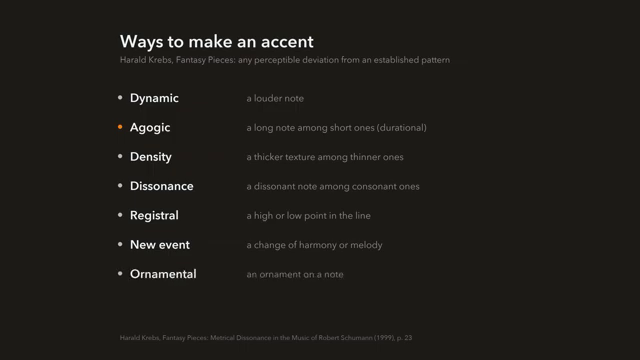
Agogic Accent: Hold That Note Like You Mean It
"What he calls the agogic accent, which is a long note among short ones."
© Screenshot/Quote: Joshlucan3512 (YouTube)
So, how do you make your rhythm bite? Enter the agogic accent: the art of holding a note longer than its neighbours. Forget about smashing keys harder—this is all about note length, not volume. Lucan zeroes in on this as the simplest, filthiest way to get your pattern to jump out of the grid. Every third note gets stretched, instantly setting up a battle between the regular pulse and the long note’s stubborn refusal to let go.
It’s braindead simple, but the effect is anything but. This isn’t a lesson in polite classical phrasing—it’s more like putting a traffic jam right in the middle of your Autobahn. Suddenly, your straight eighths start to sound like they’re tripping over themselves, all because a couple of notes can’t keep up with the rest. If you want your beat to sound like it’s plotting something, this trick is for you.
DAW-agnostic Groove Hacking: Piano Roll to the Rescue
You don’t need a secret handshake for Cubase or a Bitwig tattoo to pull this off—Lucan’s piano roll graphics spill the beans for anyone with a DAW and a pulse. First, he builds a layer where every third note is held, then stacks a second voice an octave down holding every second note. Suddenly, you’ve got three against two, with the tension snapping into place every six pulses. Then he flips it: every fourth note gets the long treatment, and the groove gets even slipperier, lining up only every twelve pulses.
But the real kicker? Both layers can live in a single melodic line. Hold every third note for the agogic accent, jump every fourth note up an octave for a registral accent, and you’re in three-against-four territory—no extra tracks needed. The video’s graphics make it dead obvious, so if you love pausing YouTube and copying patterns, this is your playground. And let’s be real, hearing these off-kilter patterns is a lot more satisfying than just reading about them.
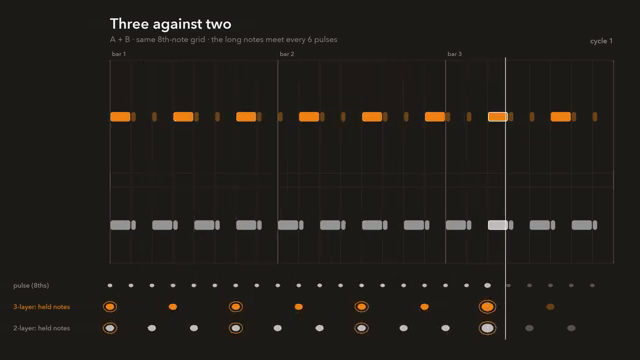
"Every note in both voices start on the same grid. The only difference is how long each note is held."
© Screenshot/Quote: Joshlucan3512 (YouTube)
The Final Track: Tension, Release, and a Kick Drum for Good Measure
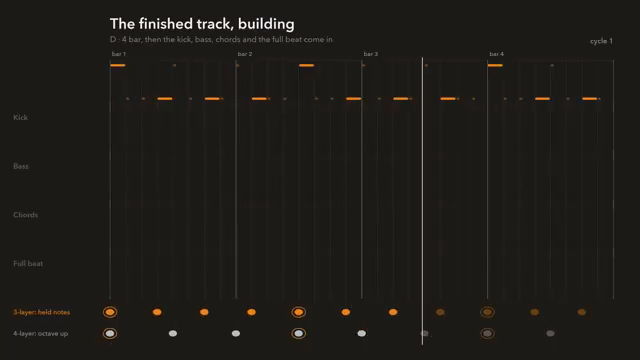
"Now I'm going to add a kick drum so you can kind of hear what that sounds like with the kick drum."
© Screenshot/Quote: Joshlucan3512 (YouTube)
All that theory comes home to roost when Lucan stacks his layers and lets them loose in a finished track. The four-bar arrangement means the rhythmic weirdness finally snaps back to the grid, but not before keeping your brain off balance just long enough to make you grin. He starts with the main line, then throws in a kick, then the bass, then the full drumbeat—each addition locking the chaos into something you could actually dance to (if you like your dancefloors just a bit broken).
It’s a proper demonstration that metrical dissonance isn’t just for dusty old manuscripts or academic show-offs. It’s a tool for making grooves that twitch, stumble, and eventually land right where they need to. The best bit? Watching (and hearing) how these layers stack and resolve is so much more satisfying in the video than any written breakdown could ever be. Don’t just read—go watch, and let your beatmaking get deliciously weird.
This article is also available in German. Read it here: https://synthmagazin.at/rhythmische-rebellion-josh-lucans-guide-zu-metrischer-dissonanz-die-wirklich-knallt/
Watch on YouTube:
Latest articles
Watch on YouTube:
Visit the channel:
https://www.youtube.com/joshlucan3512
https://www.youtube.com/joshlucan3512
Links from joshlucan3512:
Website: https://www.joshlucan.com/