Drum machines often boast robust internal sequencers, but juggling multiple devices can make your workflow scattershot. OXI Instruments, known for their hybrid performance brains, showcase the OXI One MKII as the unifying force for your groovebox and drum machine arsenal. This video walks through five key reasons why sequencing externally, with OXI One MKII at the helm, transforms fragmented setups into one fluid creative system—covering hands-on multitrack control, advanced MIDI features, and how your patterns finally break free from machine-specific silos.
22. October 2026
LYRA
OXI Instruments: Why Centralize Your Drum Machine Workflow with OXI One MKII?
One Workflow to Rule Them All
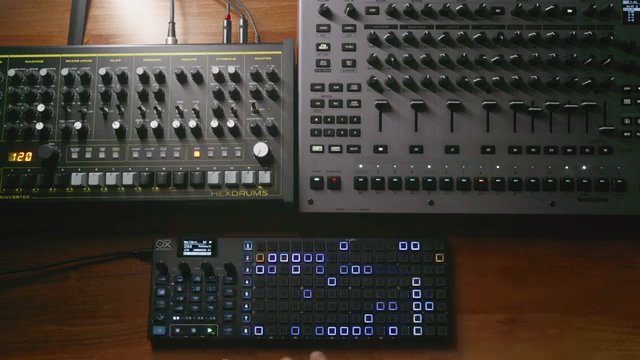
The OXI One MKII enters as a central sequencer designed to bring order to the chaos of multiple drum machines. OXI Instruments set the scene with a simple setup: the OXI One MKII sends MIDI to both the Roland TR-1000 and Erica Synths X-Drums, acting as the master clock. Each drum machine, while powerful on its own, brings a distinct workflow, menu system, and step sequencing logic, which can be a cognitive hurdle during creative sessions.
By sequencing externally, users no longer need to mentally switch gears with every hardware box. The OXI One MKII offers a consistent interface, allowing for a unified approach to writing beats and patterns. Whether editing a bass drum or a hi-hat, the gestures, grid, and logic remain the same across all connected instruments. This uniformity is especially useful when expanding beyond drums into basslines and chords, as the same sequencing paradigm applies throughout.
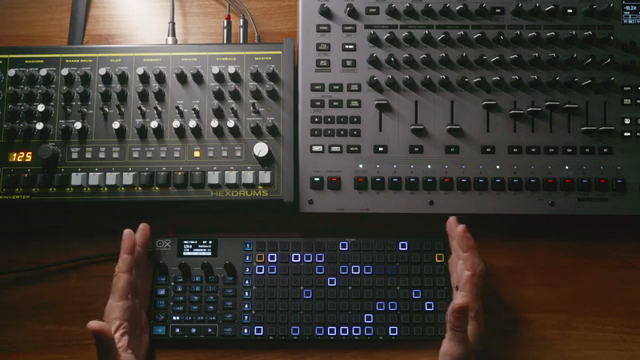
"What is great in owning an external sequencer is that once you learn the logic and how the sequencer works, you can apply it to any of your instruments."
© Screenshot/Quote: Oxiinstruments (YouTube)
Multitrack Mode: All Drums, All at Once
"Now what you see here is eight voices at the same time."
© Screenshot/Quote: Oxiinstruments (YouTube)
Multitrack mode is highlighted as a game changer, allowing the user to visualize and manipulate up to eight lanes of drum patterns simultaneously. Instead of being restricted to editing a single voice at a time, as with most onboard sequencers, OXI One MKII’s multitrack view provides immediate access to the entire drum landscape—kick, snare, toms, and more are all visible and editable together.
This broader perspective not only clarifies what’s happening rhythmically but also opens up advanced sequencing tricks. Each lane can have its own independent length, making complex polyrhythms possible without menu diving. Setting up multitrack mode for external gear does require some forethought, such as mapping MIDI channels and note offsets per lane, but the workflow quickly pays off in flexibility and control.
Expanding Drum Machines with Advanced Sequencing
The video emphasizes how the OXI One MKII can upgrade the capabilities of classic or limited drum machines. Even devices with robust internal sequencers may lack features like conditional triggers, groove settings, or advanced velocity and repetition options. By sequencing externally, these features become available to any MIDI-compatible drum machine, breathing new life into older hardware.
OXI One MKII’s lane-based interface enables users to inject groove, variable velocity, accents, and step repetitions with dynamic conditions. For example, groove settings not natively supported by the connected drum machines can be programmed directly from the OXI interface, making patterns more nuanced and expressive. This modular approach to sequencing means that creative tools are no longer limited by each device’s firmware.
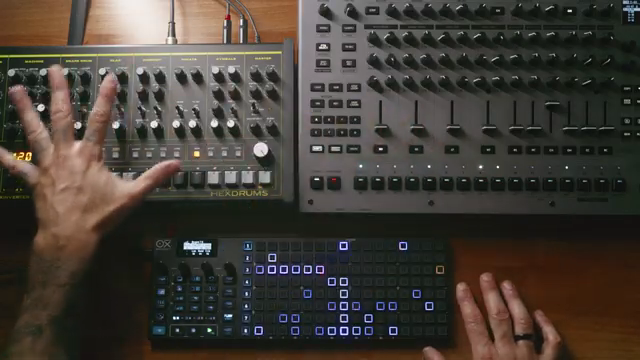
"Groove is not available on any of these machines."
© Screenshot/Quote: Oxiinstruments (YouTube)
Flexible Kits: Mixing and Matching Sounds Across Machines
Treating multiple drum machines as a single, cohesive kit is a major workflow upgrade enabled by OXI One MKII. The video demonstrates how users can easily swap sounds between connected devices simply by changing the MIDI output assignment for a given drum lane. Want to use the hi-hat from one machine and the kick from another? Just adjust the channel, and the interface doesn’t change.
This flexibility means that creating new kits or experimenting with different combinations of hardware becomes a matter of a few button presses, not a full pattern rewrite. The central sequencer becomes the kit architect, allowing the hardware to focus on delivering its best sounds while OXI One handles the structural logic.
Patterns That Travel: Independence from Hardware
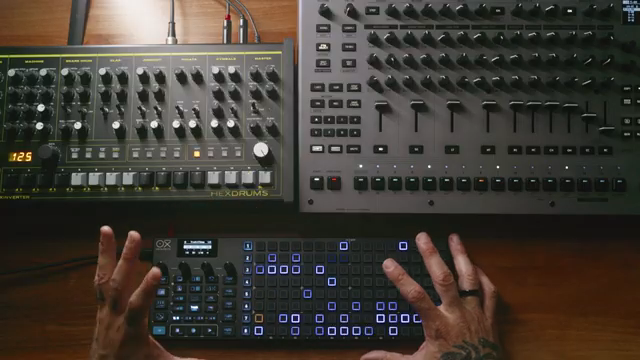
"You change the sound, but you keep the music."
© Screenshot/Quote: Oxiinstruments (YouTube)
Perhaps the most liberating aspect of external sequencing is pattern portability. The OXI One MKII stores patterns independently from any specific drum machine, so your musical ideas are never locked into a single device’s memory. This means you can send the same pattern to a different setup tomorrow, or even switch out machines entirely without losing your groove.
The video closes by acknowledging that while internal sequencers are great for single-box jams, a central sequencer like OXI One MKII transforms the workflow for multi-device setups. One writing method, one unified brain, and patterns that remain yours—regardless of what gear you’re connecting next.
This article is also available in German. Read it here: https://synthmagazin.at/oxi-instruments-warum-der-oxi-one-mkii-das-drum-machine-workflow-zentrum-sein-sollte/
More articles about these products:
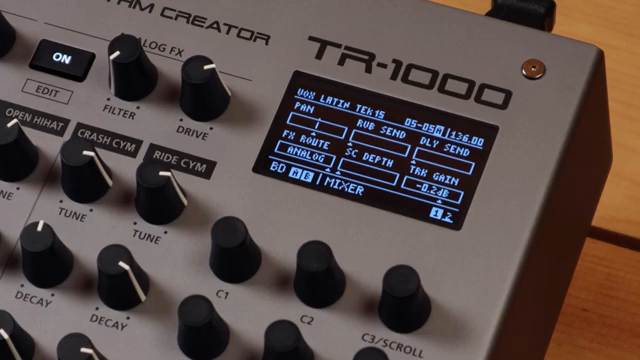 Roland TR-1000 Firmware 1.50 Adds Keyboard Mode and Reverse Pan Delay
 RolandChannel’s TR-1000: FJAAK’s Techno Workflow Unpacked
 Alex Ball’s Drum Synth Odyssey: From UFO Pads to Modern Mayhem
 RolandChannel’s TR-1000: Nadia Struiwigh’s Ambient Architectures Unveiled
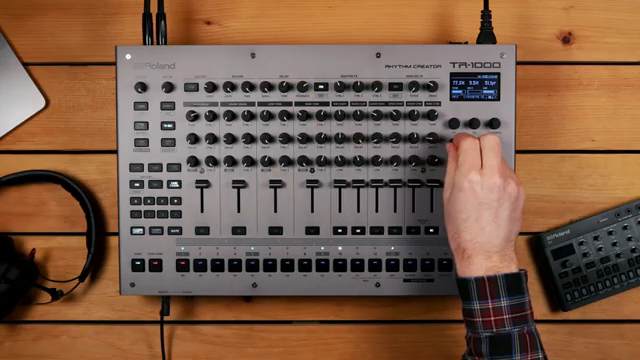 RolandChannel Pushes the TR-1000 Further: Version 1.20’s Digital Architecture Unpacked
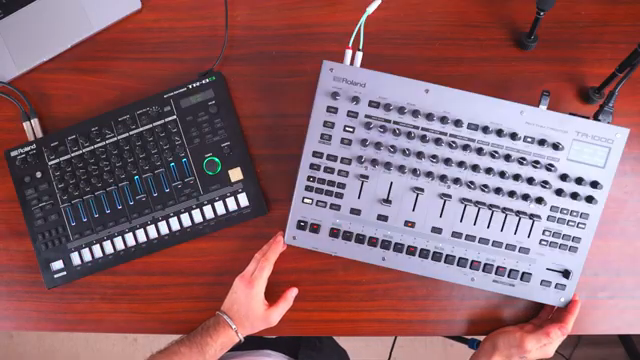 Liam Killen Throws Down: TR-1000 vs TR-8S – Which Drum Machine Rules the Rave Bunker?
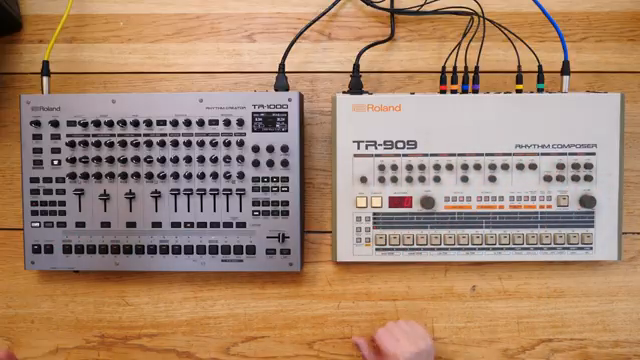 Starsky Carr Throws Down: TR-1000 vs TR-909 – The Real Drum Machine Face-Off
 AudioPilz Dishes the Dirt: What Your Synth REALLY Says About You
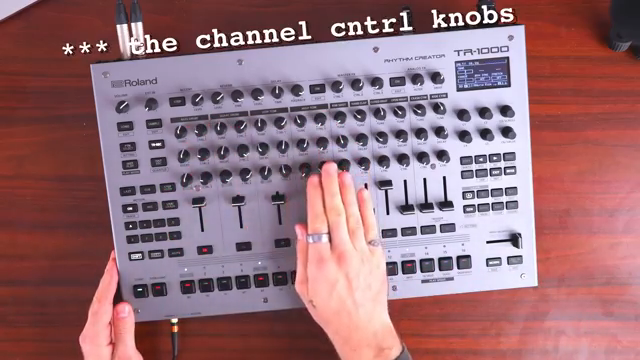 Liam Killen’s TR-1000: Three Months in the Drum Matrix
 Bonedo Synthesizers Unleash the Roland TR-1000: Analog Thunder Returns
 Jorb Twists the OBNE Parting: Glitch, Grit, and Lo-Fi Mayhem
 Andrew Huang’s 2025 Gear Picks: Grooveboxes, Glitch and Gearhead Gold
Watch on YouTube:
Latest articles
Watch on YouTube:
Visit the channel:
https://www.youtube.com/oxiinstruments
https://www.youtube.com/oxiinstruments
Links from oxiinstruments:
website: https://oxiinstruments.com
instagram: https://www.instagram.com/oxiinstruments
facebook: https://www.facebook.com/oxiinstruments/
support: https://oxiinstruments.com/support
Sponsored links:
If you purchase via these links, we may earn a small commission – at no extra cost to you. The link opens an Amazon keyword search, and results may vary depending on availability.
Roland TR-1000
🔗 Check price on Amazon
🔗 Check price on Amazon