Moog Music takes a trip down memory lane with the Spectravox, demonstrating how this modern filterbank can channel the quirky charm of 1970s preset drum machines and vintage organ rhythms. In this official walkthrough, the Spectravox is paired with ALM’s Pamela’s New Workout to sculpt everything from kick drums to hi-hats, all by exploiting its ten filter bands and flexible carrier section. The video is a methodical exploration of patching, tweaking, and modulating, revealing just how far Spectravox can stretch the classic drum machine concept. Expect a deep dive into spectral shaping, rhythmic sequencing, and the creative possibilities unlocked by external control voltages.

18. May 2024
MILES
Moog Music Spectravox: Vintage Drum Machine Alchemy in a Modern Filterbank
Spectravox: A Modern Take on Vintage Drum Machines
Moog Music opens this session by positioning the Spectravox as a tool for conjuring the nostalgic pulse of 1970s preset drum machines and the built-in rhythms of vintage organs. The video’s premise is clear: rather than simply replicating old sounds, Spectravox invites users to reimagine them through modular patching and spectral manipulation. This approach is rooted in hands-on experimentation, echoing the spirit of classic rhythm boxes but with a distinctly modern, modular twist.
The demonstration sets the stage for a workflow where each drum sound emerges from careful patching and parameter control. By leveraging Spectravox’s architecture, the video promises a playground for both faithful emulation and creative reinterpretation of vintage drum machine textures.
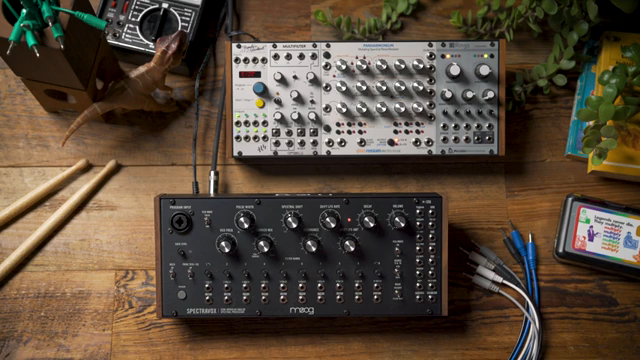
"We're going to explore ways that we can turn Spectravox into something that feels like an old preset drum machine that you'd find on electronic organ."
© Screenshot/Quote: Moogsynthesizers (YouTube)
Building the Tonal Foundation: The Carrier Section
"I have the resonance for all the filter bands set to full resonance."
© Screenshot/Quote: Moogsynthesizers (YouTube)
The heart of the Spectravox’s drum machine emulation lies in its Carrier section, which serves as the tonal base for all percussive voices. The video begins with a simple drone, achieved by setting the VCA mode to on and tuning the VCO low enough to introduce a gritty, broken-up character. Full resonance is dialed in across all filter bands, laying the groundwork for sharp, punchy drum timbres.
As the demonstration progresses, the presenter systematically turns down individual filter bands, sculpting the raw carrier into distinct percussive elements. This approach highlights how the interplay between oscillator tuning, resonance, and filter band control forms the backbone of the Spectravox’s drum synthesis capabilities.
Sequencing the Bands: Rhythmic Control with Pamela’s New Workout
To animate the Spectravox’s filter bands, the video enlists ALM’s Pamela’s New Workout, a rhythmic sequencer capable of generating envelopes and triggers. Each channel of Pamela’s is patched into the VCA CV inputs of different filter bands, with the corresponding panel knobs acting as attenuators for incoming voltages. This setup allows for precise rhythmic articulation of each drum voice.
The process unfolds methodically: channel one triggers a kick drum via the lowest band, channel two creates a woodblock on band three, and further channels are routed to bands five and eight for additional percussive textures like snares. The uppermost bands are switched to a noise source for hi-hat synthesis, demonstrating how the Spectravox’s architecture can mimic the layered, multi-voice approach of classic drum machines.
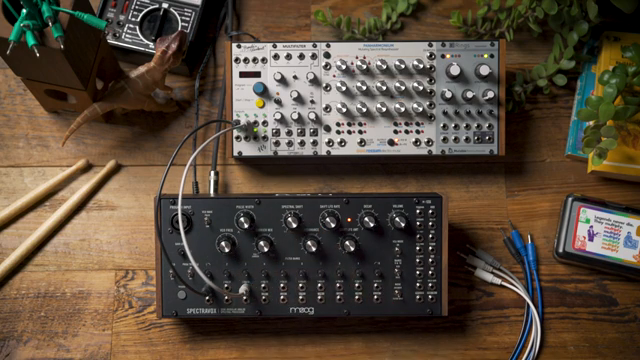
"So as you can hear, that gives us something that feels like a woodblock."
© Screenshot/Quote: Moogsynthesizers (YouTube)
Performance Tweaks: Shaping the Drum Machine’s Character
With the basic rhythm patch established, the video shifts focus to performance controls that shape the overall character of the drum machine. Adjusting the VCO frequency and spectral shift allows for real-time tuning of all drum voices, enabling everything from subtle timbral shifts to radical transformations. The resonance can be dialed back for smoother, less peaky sounds, or cranked up for more aggressive, resonant hits.
Other panel controls, such as oscillator wave shape and carrier mix, are explored to inject additional noise or harmonic content into the patch. These tweaks demonstrate the Spectravox’s flexibility, making it easy to morph between clean, classic drum sounds and more experimental, noisy textures—all with a few knob turns.
External Control Voltages: Unlocking Dynamic Rhythmic Evolution
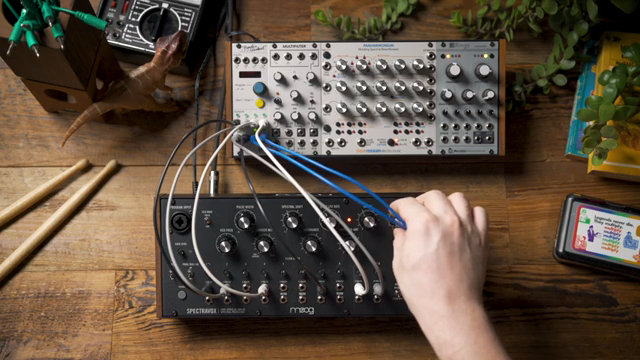
"Using an external voltage source to alter and control some of the behaviors of SpectreVox can radically change the behavior and lead to some really interesting results."
© Screenshot/Quote: Moogsynthesizers (YouTube)
The final section of the video delves into the creative potential unlocked by external control voltages. By routing stepped random voltages from Pamela’s New Workout into the Spectravox’s volt-per-octave and spectral shift inputs, the presenter demonstrates how drum machine patterns can be animated with evolving pitch and timbral movement. This automation introduces a level of unpredictability and dynamism that static drum machines simply can’t match.
Further modulation is achieved by feeding LFOs and additional envelopes into various filter bands, allowing for complex, shifting textures and layered rhythms. The ability to leave some bands unpatched for drone-like backgrounds adds yet another dimension, showing that Spectravox is as much a tool for experimental soundscapes as it is for classic drum machine emulation.
This article is also available in German. Read it here: https://synthmagazin.at/moog-music-spectravox-vintage-drum-machine-alchemie-im-modernen-filterbank-gewand/
More articles about these products:
 Tefty Music Tech Turns the MPC XL Into a Sonic Street Weapon
 Metamyther Illuminates the Moog Mind: Stephen Petoniak’s Sonic Blueprints
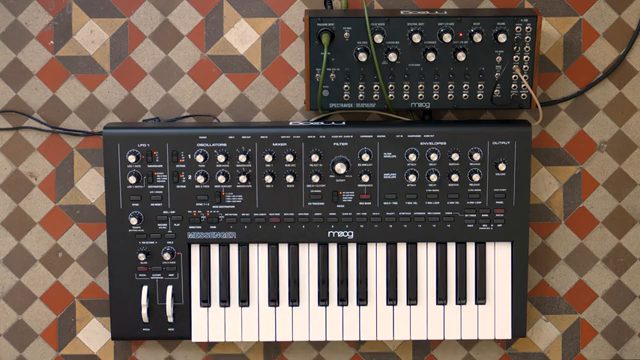 Moog Music: Messenger & Spectravox – Feedback Alchemy in Action
 Moog Music’s Sound Studio Accessory Kit: Building a Modular Playground
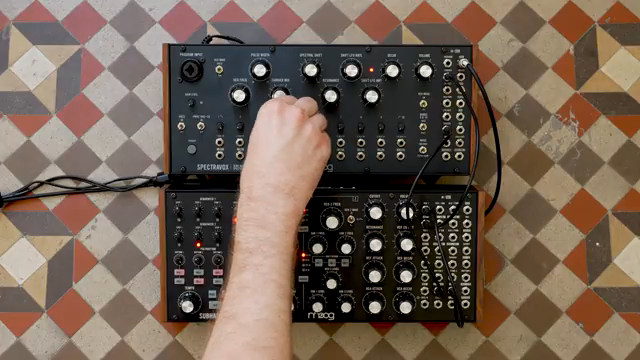 Moog Music’s Spectravox & Subharmonicon: Filter Bank Adventures Off the Beaten Path
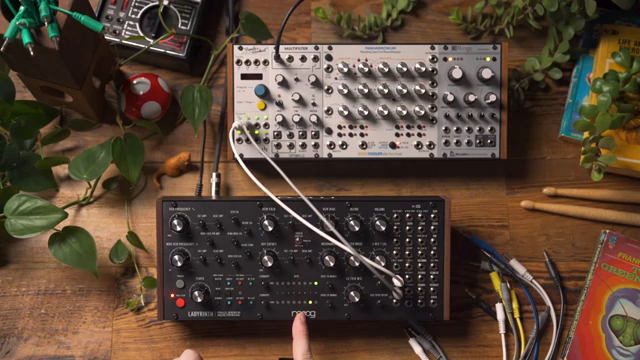 Moog Music Labyrinth: External Clocks, Alien Rhythms and Modular Mayhem
 Moog Music’s Spectravox: A Filter Bank Voice with a Patchable Twist
 Moog Music’s Spectravox: Filter Bank Alchemy in Action
 Moog Music Spectravox: Beyond Vocals—Vocoder Alchemy with Drum Machines
 Moog Music’s Spectravox: Analogue Vocoding with a Modular Edge
Watch on YouTube:
Latest articles
Watch on YouTube:
Visit the channel:
https://www.youtube.com/MoogSynthesizers
https://www.youtube.com/MoogSynthesizers
Links from MoogSynthesizers:
website: https://moogmusic.com
instagram: https://instagram.com/moogsynthesizers
facebook: https://www.facebook.com/moogmusicinc
twitter: https://twitter.com/moogmusicinc
Sponsored links:
If you purchase via these links, we may earn a small commission – at no extra cost to you. The link opens an Amazon keyword search, and results may vary depending on availability.
ALM Pamela's New Workout
🔗 Check price on Amazon
🔗 Check price on Amazon
Moog Spectravox
🔗 Check price on Amazon
🔗 Check price on Amazon