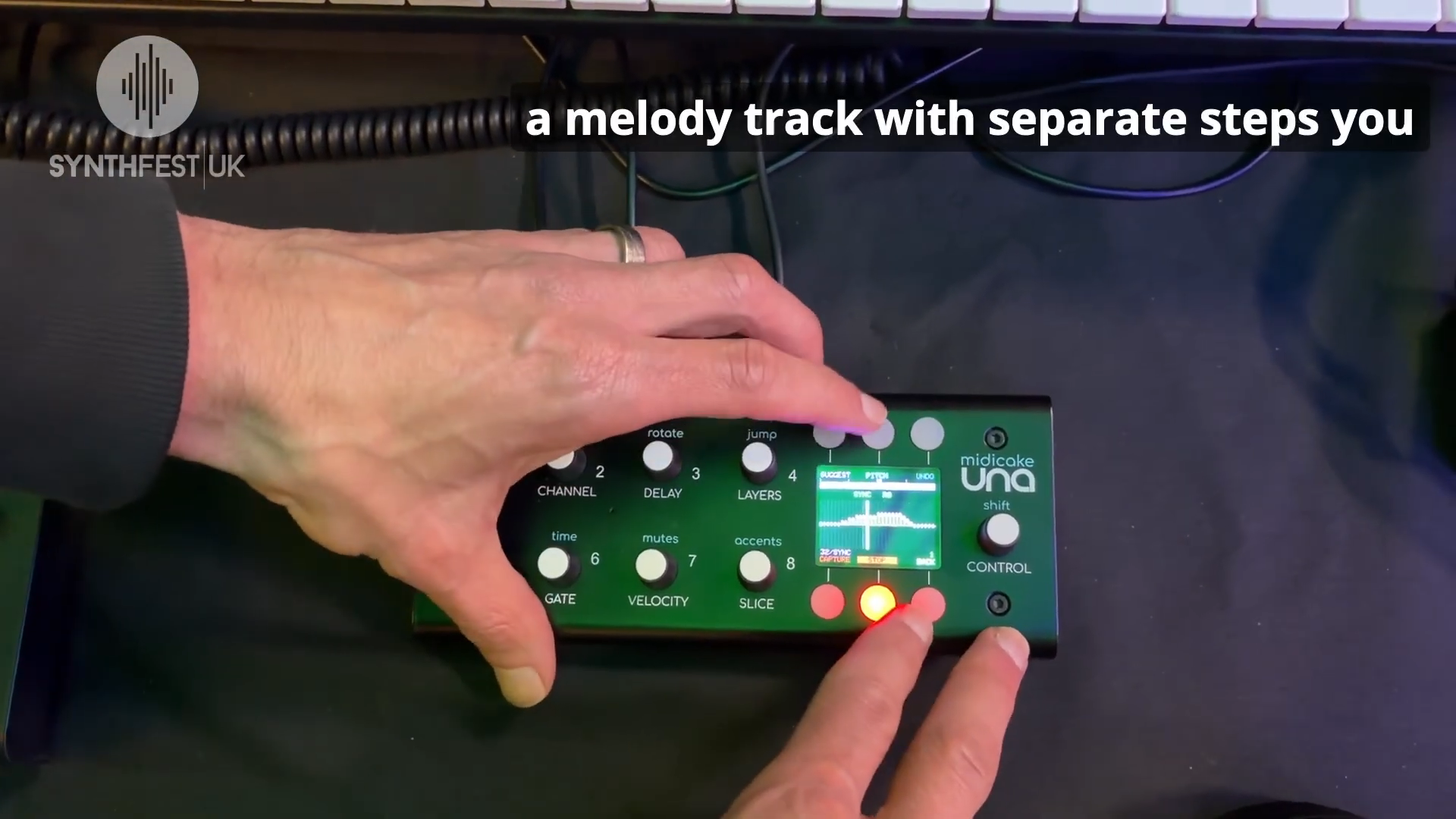
Before the backing band can start, the interview itself has to be salvaged. In his Synthfest UK feature published on November 19, 2026, Starsky Carr recounts a microphone mishap and painstakingly restored recordings. Then he hands over to Chris Brown from Midicake. His Una follows an appealing division of labor: one hand supplies chords, the device organizes the accompaniment, leaving space above for soloing. The musical input still comes from the keys—not from a pre-made backing track.
Harmonically Tame? Only If You Want
© Screenshot: Starsky Carr (YouTube)
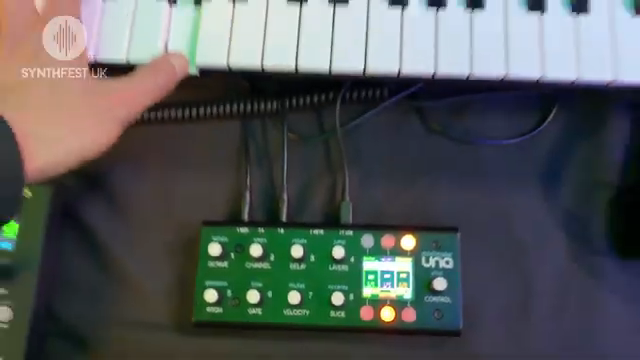
“you're always in sync with yourself.”
© Quote: Starsky Carr (YouTube)
Brown describes three tasks: rhythm or chords, melody, and bass. Played notes or a scale derived from them serve as the basis for the sequences. Not all three tracks have to run at all times; accompaniment can also consist of just one or two.
According to Brown, the solo played over the top can also be pitch-quantized if desired. He pokes fun at his own keyboard skills and sums up the benefit in a catchy phrase. What’s meant here is mainly harmonic cohesion, not a measured timing advantage. The key word is optional: if you want to play a dissonance, you don’t have to give up that freedom.
midicake Una – Amazon keyword search
Search for this product on Amazon →
This link opens an Amazon keyword search. Depending on availability, other results may be shown.
Advertising – affiliate link. If you buy through this link, we may earn a commission – at no extra cost to you.
Reliable Doesn’t Mean Rigid
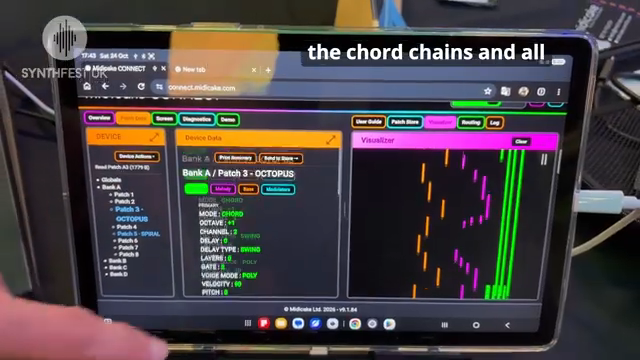
Brown first explains the mechanics behind this using the related ARP: you define rules for the behavior of individual tracks instead of specifying every note. He emphasizes the repeatability of this rule-based approach. Stopping and restarting should always yield the same result.
But Una is by no means a randomness-free zone. In the SonicLAB presentation published by sonicstate on October 15, 2026, Brown demonstrates probability for pitch and velocity in the bass. Small dots indicate where changes occur. This is a crucial difference from mere chord-following: harmonic adherence and variation within that framework are not mutually exclusive.
© Screenshot: Starsky Carr (YouTube)
“And with that rule set, it kind of runs, but it's deterministic, so it always does the same thing.”
© Quote: Starsky Carr (YouTube)
Recording Here Isn’t Just Capturing MIDI
© Screenshot: sonicstate (YouTube)
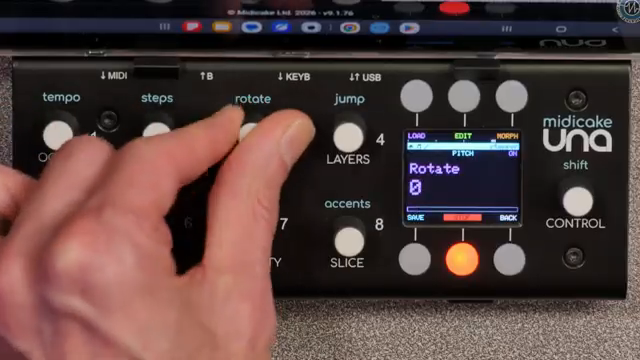
“But you decide what the auto part is”
© Quote: sonicstate (YouTube)
The longer sonicstate demonstration is especially revealing when Brown first records a chord rhythm and then a melody. He explains that this doesn’t create a conventional MIDI recording: input notes and timing are translated into the parametric sequence structure. Pitch, note length, and velocity can then be sequenced separately. Your own phrase thus doesn’t just become a loop, but editable source material.
The sonicstate host sums up the division of roles aptly: automatic accompaniment, yes—but the automatic part remains shapeable. Brown demonstrates more than just harmonic following. He adds swing, shifts the timing, and uses a Euclidean function to create gaps in the pattern. Paradoxically, leaving things out makes the idea more interesting than a backing machine that tries to play as much as possible.
The Melody Doesn’t Have to Stick to One Sound
The most intriguing conceptual detour comes from the sonicstate host regarding the MIDI channel: if this can be sequenced or modulated, consecutive notes could trigger different sounds. Brown confirms this possibility. This is, for now, an application discussed in the conversation, not a demonstrated sound change. But it shifts the perspective: Una doesn’t just have to replace bassist and accompanist; the rules can also break up a single melody sonically.
The one-man band story isn’t quite finished yet. In the pre-release version shown at sonicstate, the arrange function for more comprehensive workflows was explicitly not yet implemented. Carr’s later-uploaded trade show interview doesn’t clarify its current state. The features are made understandable, but these contributions don’t replace an independent hands-on test of the finished backing hub.
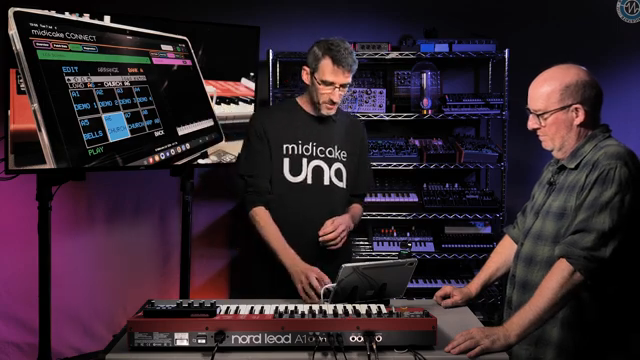
© Screenshot: sonicstate (YouTube)
“Wow, you could actually be flipping alternating notes alternating notes through different sounds as well”
© Quote: sonicstate (YouTube)
What’s convincing about Una isn’t the prospect of never hitting a wrong note again. More interesting is the ability to capture your own playing idea and let its components work against each other in new ways. A backing band that plays by your rules is practical. One whose rules you can bend while playing promises even more musically.
midicake Una – Amazon keyword search
Search for this product on Amazon →
This link opens an Amazon keyword search. Depending on availability, other results may be shown.
Advertising – affiliate link. If you buy through this link, we may earn a commission – at no extra cost to you.

