Korg’s NTS-4 steps into the spotlight as a palm-sized, steel-chassis mixer aimed at the hardware synth and live performance crowd. In this official walkthrough, Fess Grandiose demonstrates the NTS-4’s six-channel architecture, dual stereo FX engines, and USB-C integration, all packed into a DIY kit format. With Eurorack-compatible mono inputs, cue and mute controls, and direct-to-device USB audio, the NTS-4 is pitched as a flexible hub for contemporary DAWless, modular, and groovebox setups. We take a close look at what’s actually delivered—and what questions remain.
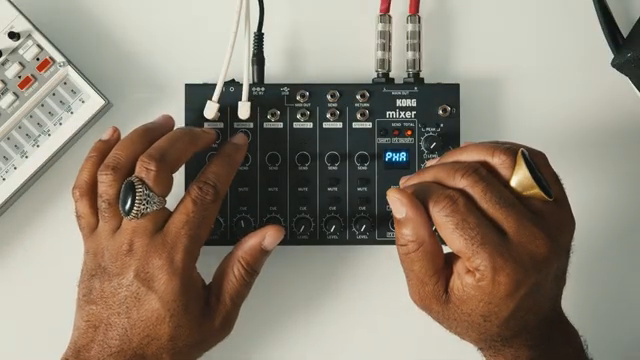
Compact Powerhouse: NTS-4 Unveiled
Korg positions the NTS-4 as a compact, palm-sized performance mixer, specifically designed for modern hardware setups. Despite its small footprint, the video is quick to dispel any concerns about durability, highlighting a steel chassis and robust build. The device is shown to be highly portable yet sturdy enough to withstand travel, on-the-road knocks, and even the occasional drop from a table.
Assembly is a core part of the NTS-4’s identity, continuing Korg’s Nu:Tekt DIY lineage. The kit is presented as straightforward to assemble, with the promise that it only takes minutes rather than hours. Once constructed, the hardware aims to deliver the reliability required for both studio and live use, making it suitable for users who want a long-term addition to their rig.
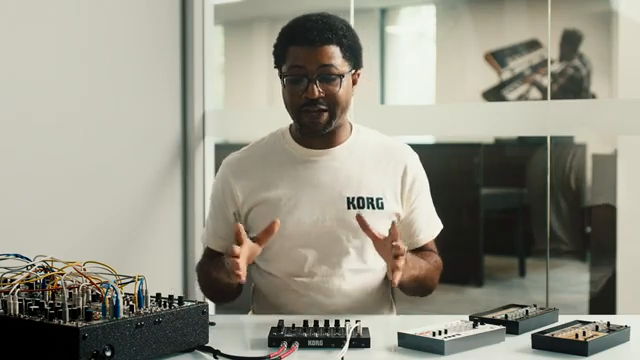
"This isn't a toy. It's steel chassis, and it's strong knobs and build."
© Screenshot/Quote: Korgofficial (YouTube)
Channels, Eurorack Inputs & Effects: Under the Hood
"These two mono channel inputs on channel one and two are Eurorack compatible."
© Screenshot/Quote: Korgofficial (YouTube)
The NTS-4 offers a total of six input channels—two mono and four stereo—all on 3.5mm jacks, making it inherently compatible with volcas, other NTS devices, and modular gear. Of particular interest are the two mono channels, which include internal jumpers for switching between line and modular levels. This enables direct Eurorack integration without the need for external interfacing, a feature explicitly highlighted as a boon for hybrid setups. Main outputs are standard quarter-inch, allowing for direct PA connection or sub-mixer roles in larger chains.
A stereo send/return loop is also present, supporting external FX integration via mini jacks. Performance features take center stage: every channel sports dedicated cue and mute buttons. The cue system enables headphone monitoring before signals hit the main mix, while mute buttons allow for live transitions, cuts, and drops—tools that are essential for hands-on, DJ-style performance scenarios.
USB-C Audio & MIDI: Bridging Analog and Digital
USB-C connectivity is a major pillar of the NTS-4’s hybrid ambitions. The mixer can deliver 24-bit, 48kHz audio directly to a computer, phone, or tablet, enabling direct recording or live streaming without the need for an additional interface. This workflow is demoed as plug-and-play, supporting a range of modern devices.
MIDI is also handled via USB, with the mixer able to receive MIDI from a DAW and route it through its MIDI output to external hardware. This closes the loop between analog and digital gear, allowing for integrated control and signal routing in a single, consolidated mixer. Korg’s approach here is clearly aimed at users wanting seamless transitions between standalone and computer-based workflows.
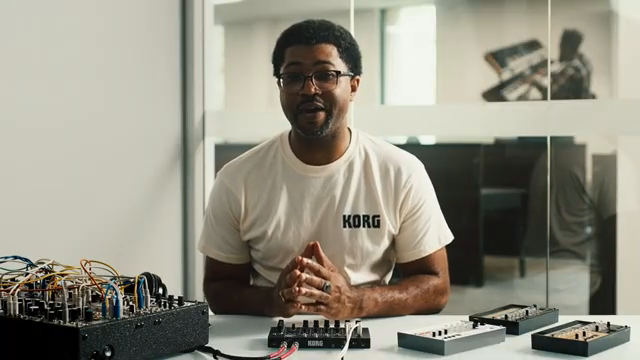
"You can get 24 bit audio at 48 kilohertz directly to your computer, your phone, or your tablet."
© Screenshot/Quote: Korgofficial (YouTube)
Performance Workflow: Hands-On Control for Modern Rigs
The NTS-4’s hands-on controls are positioned as central to its creative workflow. Level knobs, cue, and mute buttons across all channels empower performers to shape their mix in real time, whether for live sets, studio jams, or hybrid rigs. The dual stereo FX engines—one for send effects per channel and one for total mix processing—offer a menu of delays, reverbs, modulation, drive, and dynamics, all accessible from the hardware interface.
Korg emphasizes the NTS-4’s role as a central hub: it can pull together a variety of hardware devices, manage live transitions, and serve as the nerve center for both DAWless and computer-connected setups. While the video demonstrates surface-level workflow and features, further details on menu navigation and deeper configuration are left for the user to explore.
This article is also available in German. Read it here: https://synthmagazin.at/korg-nts-4-kompakter-performance-mixer-mit-modernem-hybrid-ansatz/
Watch on YouTube:
Latest articles
Watch on YouTube:
Visit the channel:
https://www.youtube.com/KorgOfficial
https://www.youtube.com/KorgOfficial
Links from KorgOfficial:
website: https://www.korg.com
facebook: https://www.facebook.com/KORGusa
twitter: https://twitter.com/KorgUSA
instagram: https://instagram.com/korgofficial
soundcloud: https://soundcloud.com/korg
Sponsored links:
If you purchase via these links, we may earn a small commission – at no extra cost to you. The link opens an Amazon keyword search, and results may vary depending on availability.
Korg NTS-4
🔗 Check price on Amazon
🔗 Check price on Amazon