Isla Instruments, renowned for their S2400 sampler’s blend of vintage grit and modern workflow, now ups the ante with a dedicated DSP card upgrade. This official video dives into the architecture, workflow, and sonic capabilities of the new card, which brings industry-standard plug-in support, real-time effects, and a digital mixing console to the S2400. We break down how Isla’s approach goes beyond the typical afterthought FX, focusing on integration, flexibility, and performance. If you’re curious about how a hardware sampler can morph into a plug-in powerhouse without losing its character, this is essential viewing.
20. April 2024
LYRA
Isla Instruments S2400 DSP Card: Plug-in Power and Digital Mixing for a Classic Sampler
Plug-ins in the Box: S2400’s DSP Leap
The S2400 DSP card upgrade marks a significant evolution for Isla Instruments’ flagship sampler, transforming it from a classic groove machine into a modern effects powerhouse. Responding to one of the most requested features since launch, Isla Instruments has integrated support for industry-standard plug-in formats—VST, LV2, and CLAP—directly into the S2400’s workflow. This isn’t just a token gesture: the card is designed to make plug-in management and installation as frictionless as possible, supporting both third-party and commercial effects without tying users to Isla’s own ecosystem.
Crucially, this upgrade isn’t a mere software patch. The DSP card is a dedicated hardware add-on, developed to avoid the underwhelming, “afterthought” effects that often plague hardware samplers. By offloading audio processing to a new platform, Isla ensures that the S2400’s signature sound remains uncompromised while opening the door to a new world of creative processing. The result is a sampler that can now host a wide palette of effects, from subtle coloration to full-blown sound design tools, all within the box.
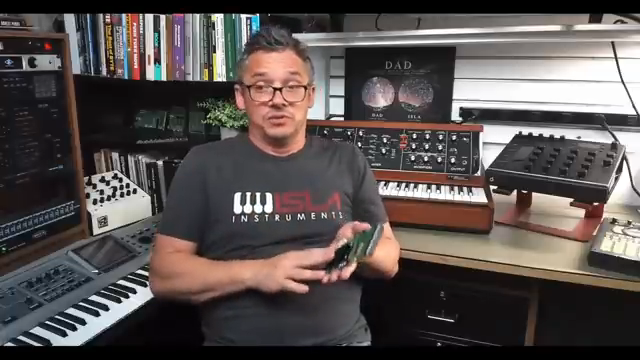
"If we were going to do something for the S2400 it was going to be special."
© Screenshot/Quote: Islainstruments (YouTube)
ARM Power: Real-Time Processing Without Compromise
"It's a Linux distribution that we've spent over a year developing ourselves, which is really tailored towards real-time audio application, low-latency audio application stuff."
© Screenshot/Quote: Islainstruments (YouTube)
At the heart of the DSP card is a robust ARM-based Linux computer, purpose-built for real-time audio. Sporting a quad-core 1.5 GHz processor, 4 GB of RAM, and 16 GB of flash storage, the card is engineered to handle multiple buses and plug-in chains without breaking a sweat. This architecture allows the S2400 to process complex effects chains in real time, sidestepping the limitations of the sampler’s original CPU.
Importantly, all processing happens in the digital domain before the audio reaches the S2400’s analog circuitry. This means users get the full benefit of advanced effects and mixing capabilities while preserving the machine’s analog character. The DSP card is not just a spec bump—it’s a thoughtful expansion that respects the S2400’s sonic identity while enabling modern workflows.
Eight-Bus Digital Console: Mixing, Inserts, and Aux Sends
The DSP card introduces a full eight-bus digital mixing console to the S2400, fundamentally changing how users can route and process audio. Each of the eight buses can host multiple insert plug-ins, allowing for detailed sound shaping on individual groups or tracks. In addition, every bus features two auxiliary sends, making it easy to set up group reverbs, delays, or parallel processing chains.
Return buses are equally flexible, with their own plug-in chains for effects like group reverbs or delays. The main mix bus can also be loaded with mastering plug-ins—compressors, limiters, stereo enhancers—providing a complete in-the-box solution for finalizing tracks. All of this happens before the analog output stage, ensuring the S2400’s classic punch is preserved while giving users a modern, DAW-like mixing environment.
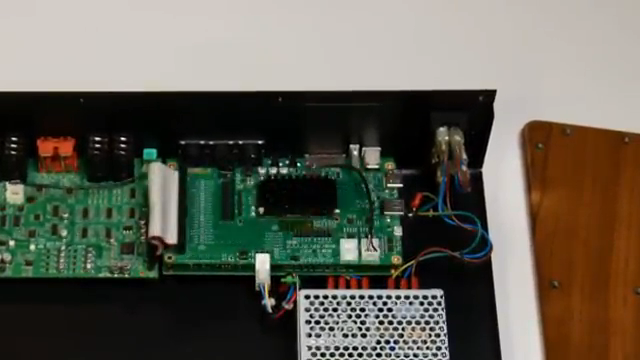
"When the DSP card is installed, it hijacks the digital audio streams before they reach those outputs, essentially creating an eight bus digital mixing console."
© Screenshot/Quote: Islainstruments (YouTube)
Workflow Enhancements: Plug-in Management, Presets, and Live Input Mode
"The DSP card has been quite a labour of love and has been in the works for some time now so I'm glad to see that the project is starting to come to maturity."
© Screenshot/Quote: Islainstruments (YouTube)
Isla Instruments has paid close attention to workflow, making plug-in management intuitive and flexible. Users can add plug-ins via SD card, rearrange their order within chains, and even name buses for easy recall. The system supports multiple layers of saving and recalling configurations: from entire console states to individual bus setups and plug-in presets. This means users can quickly reapply favorite chains or recall complex setups across projects without repetitive menu diving.
A standout feature is the new live input mode, which allows the S2400 to function as a real-time effects processor for external instruments. By routing live audio through the DSP buses, users can apply plug-ins and auxiliary sends on the fly—turning the S2400 into a flexible stompbox or live performance tool. The video demonstrates this with a guitar, showcasing how bitcrushers, EQs, and reverbs can be stacked and tweaked in real time.
Performance control is also addressed: parameters from plug-ins can be mapped to the S2400’s faders and pots, enabling hands-on manipulation without diving into menus. There’s even a forthcoming live effects mode, where each pad can trigger and control different master bus effects—think stutters, filter sweeps, and more—making the S2400 a powerful centerpiece for both studio and stage.
Pre-Order Window: Early Bird for the DSP-Driven Future
With the hardware now ready for manufacturing, Isla Instruments has opened pre-orders for the S2400 DSP card upgrade. Early adopters can take advantage of a special early bird discount, positioning themselves at the forefront of this major expansion to the S2400 ecosystem.
This article is also available in German. Read it here: https://synthmagazin.at/isla-instruments-s2400-dsp-card-plug-in-power-und-digitalmischung-fuer-einen-klassiker/
Watch on YouTube:
Latest articles
Watch on YouTube:
Visit the channel:
https://www.youtube.com/ISLAInstruments
https://www.youtube.com/ISLAInstruments
Links from ISLAInstruments:
website: https://www.islainstruments.com
instagram: https://www.instagram.com/islainstruments
facebook: https://www.facebook.com/islainstruments
Sponsored links:
If you purchase via these links, we may earn a small commission – at no extra cost to you. The link opens an Amazon keyword search, and results may vary depending on availability.
S2400
🔗 Check price on Amazon
🔗 Check price on Amazon
S2400 DSP Card
🔗 Check price on Amazon
🔗 Check price on Amazon