Intellijel dives headfirst into the world of Eurorack techno with a hands-on rumble patch, showing off Plonk, Sealegs and Swells as a core trio for sculpting that classic pounding low end. The video walks through clocking, ducking, delay and reverb tricks, then layers in Multigrain stabs, Flurry hi-hats and a folded bassline for a full club-ready groove. True to Intellijel’s practical style, each module is patched for maximum fun and sonic character—never just for show.
27. August 2026
MILES
Intellijel’s Techno Rumble: Swells, Plonk and Modular Mayhem
Aux Mix 1U, Bifold, Flurry, FSR 1U, Multigrain, Palette Case 4U x 104HP, Plonk, PLPG 1U, Sealegs, Steppy 1U, Stereo I/O 1U, Swells, Tangrams
Kick, Rumble and the Modular Bedrock
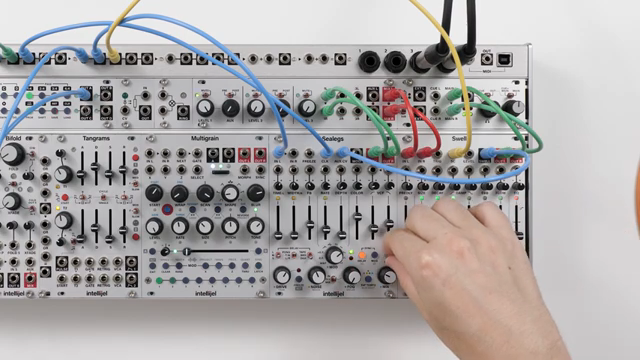
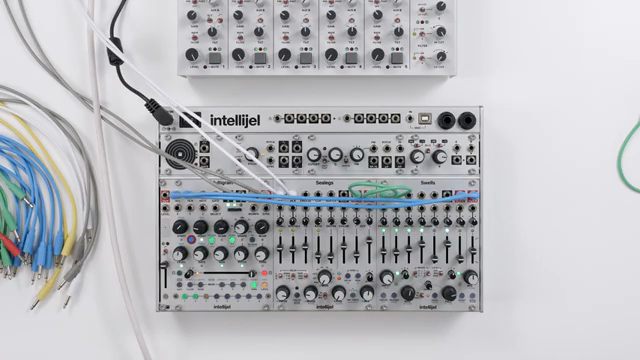
The patch kicks off with Plonk serving as the rhythmic anchor, its output shaped and distributed through a careful web of clock and trigger signals. Intellijel’s approach is pure modular pragmatism: clock pulses start at Flurry, get split via a case mult, and land everywhere from Steppy to Sealegs for tight, in-sync processing. Plonk’s kick feeds directly into Sealegs for a hit of drive and rolling delay, while a parallel split routes the same kick to Swells’ sidechain input, setting the stage for reverb ducking. This initial routing lays down the essential ingredients for a classic techno rumble—punchy low end, saturated delay, and the potential for atmospherics to bloom around the beat.
Ducking, Saturation and Delay: Swells Meets Sealegs
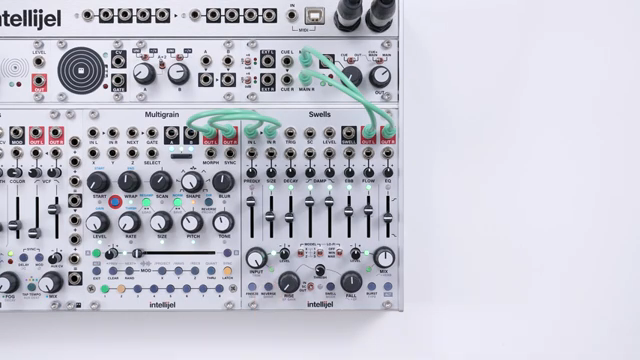
Swells steps up as the rumble’s texture engine, with its model set to ‘Velvet’ (Y1) for resonance and a built-in compressor switched on for extra punch. The reverb’s EQ and high damping are dialled back for a darker, more enveloping sound, and the sidechain from Plonk ensures the kick stays clear while the tails duck out of the way. Adjusting the attenuverter on Swells’ level CV fine-tunes the dry/wet blend, letting the user find that elusive balance between reverb wash and percussive clarity.
Sealegs comes into play for both saturation and delay duties. The delay is clock-synced and set to digital mode for a cleaner tail, with feedback and colour controls used to inject just enough noise and grit. Ducking isn’t confined to Swells: the Swells output is patched into Sealegs’ aux CV input (set to ‘mix’ mode) so the delay ducks in response to the same kick-sidechain logic, ensuring both reverb and delay pulse around the rhythm. The result is a noisy, characterful rumble where kick, reverb and delay all carve out space for each other—a textbook modular techno move.
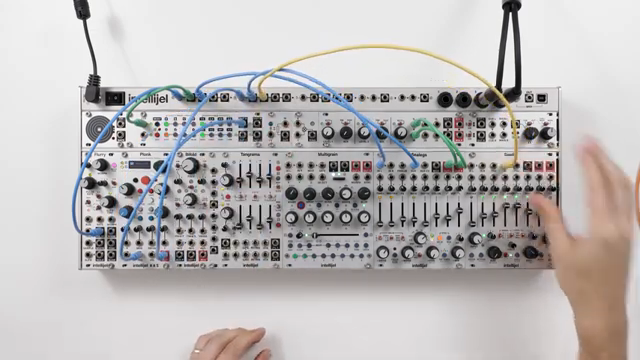
"I'm also going to take one of those kick signals and put it into the side chain of swells so that we get a clean input to duck the reverb using swell."
© Screenshot/Quote: Intellijel (YouTube)
Building the Beat: Multigrain Stabs, Flurry Hats, Bifold Bass
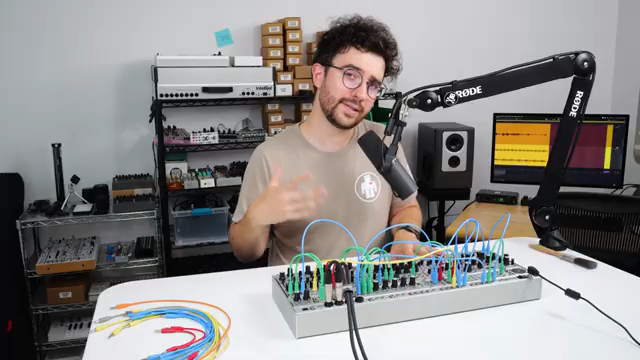
"Maybe we could take the output of the kick and shape it into some sort of bassline to go along with this."
© Screenshot/Quote: Intellijel (YouTube)
With the core rumble in place, the patch expands into a full techno groove. Multigrain provides the chord stabs, sequenced via Steppy’s channel B and blended through the mixer. The video highlights how Multigrain’s start points and blur amount can be scanned and adjusted in real time, letting the user morph between atmospheric and dry textures with a twist of the controls. The demonstration shows both individual and simultaneous changes to the stabs, making it easy to shift the timbral landscape mid-pattern.
Flurry steps in for hi-hat duties, with its magenta noise output sent through the 1U Passive LPG, pinged by Steppy’s channel C. This creates a snappy, chaotic hi-hat layer that balances randomness and rhythm. The bassline is sculpted by sending the kick through Bifold for wavefolding, then shaped with Tangrams envelopes and sequenced by Steppy’s last channel. Clever mixer chaining—using Multigrain’s through mode and envelope modulation of Bifold’s fold input—keeps the patch compact while still offering dynamic movement in the low end. The result is a cohesive, evolving beat where each modular element has a distinct sonic role.
FSR Macro: Hands-On Performance Control
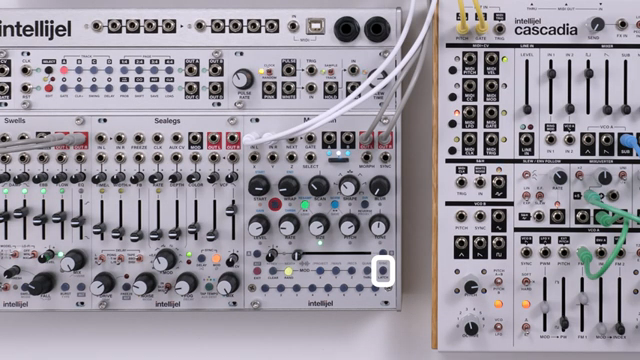
The final touch is the FSR 1U Drop Macro, turning the patch into a dynamic performance instrument. By routing the FSR’s CV to multiple destinations—Plonk’s decay, Swells’ EQ, and Multigrain’s morph input—the user can simultaneously shorten the kick, brighten the reverb, and morph the stabs with a single gesture. Fine-tuning the attenuverters ensures each parameter moves musically, without losing the essential low end. The macro also opens up live filtering on the Sealegs delay, letting the entire texture shift with the performer’s touch. This kind of macro control is classic Intellijel: practical, tactile, and immediately useful for drops, transitions or spontaneous sonic mayhem in a live set.
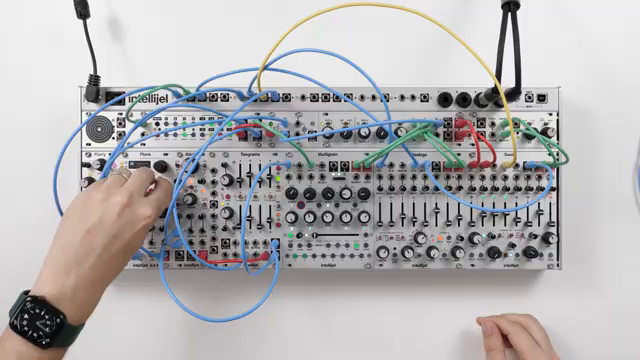
"We could also have it so the reverb brightens I suppose at the same time."
© Screenshot/Quote: Intellijel (YouTube)
This article is also available in German. Read it here: https://synthmagazin.at/intellijels-techno-rumble-swells-plonk-und-modular-chaos/
More articles about these products:
 Patch Alchemy: Intellijel Brews Dub in Eurorack
 Intellijel Multigrain: Granular Resampling Mayhem in Eurorack
 Intellijel Multigrain: Granular Delay Tactics in a Modular Playground
 Intellijel Swells: Momentary FX, TRIG Magic and Routing Revelations
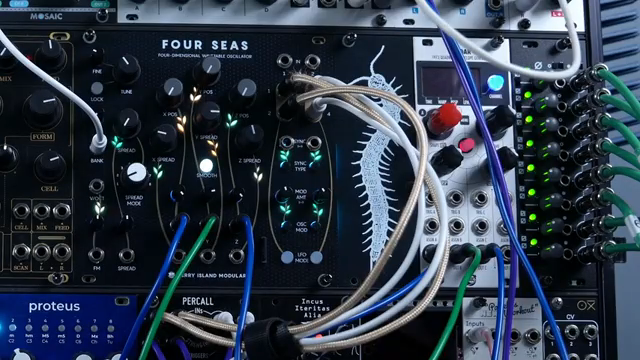 Metamyther Unleashes the Four Seas: Wavetable Mayhem from Ferry Island Modular
Watch on YouTube:
Latest articles
Watch on YouTube:
Visit the channel:
https://www.youtube.com/intellijel
https://www.youtube.com/intellijel
Links from intellijel:
website: https://intellijel.com
forum: https://forum.intellijel.com
instagram: https://instagram.com/intellijel
facebook: https://www.facebook.com/intellijel
Sponsored links:
If you purchase via these links, we may earn a small commission – at no extra cost to you. The link opens an Amazon keyword search, and results may vary depending on availability.
Aux Mix 1U
🔗 Check price on Amazon
🔗 Check price on Amazon
Bifold
🔗 Check price on Amazon
🔗 Check price on Amazon
Flurry
🔗 Check price on Amazon
🔗 Check price on Amazon
FSR 1U
🔗 Check price on Amazon
🔗 Check price on Amazon
Multigrain
🔗 Check price on Amazon
🔗 Check price on Amazon
Palette Case 4U x 104HP
🔗 Check price on Amazon
🔗 Check price on Amazon
Plonk
🔗 Check price on Amazon
🔗 Check price on Amazon
PLPG 1U
🔗 Check price on Amazon
🔗 Check price on Amazon
Sealegs
🔗 Check price on Amazon
🔗 Check price on Amazon
Steppy 1U
🔗 Check price on Amazon
🔗 Check price on Amazon
Stereo I/O 1U
🔗 Check price on Amazon
🔗 Check price on Amazon
Swells
🔗 Check price on Amazon
🔗 Check price on Amazon
Tangrams
🔗 Check price on Amazon
🔗 Check price on Amazon