Intellijel’s latest patch video dives deep into the Multigrain module, revealing how feedback and real-time manipulation transform it into a granular delay powerhouse. In classic Intellijel style, the video is a true patcher’s delight: clear signal flow, hands-on parameter tweaks, and a modular rig that’s anything but minimal. Expect a thorough look at pitch, size, rate and even some clever clocking tricks, all crowned with a cameo from Swells and Jellymix for lush, evolving atmospheres. This is granular delay not as a studio afterthought, but as a central, performative effect in a Eurorack setup.
12. June 2026
MILES
Intellijel Multigrain: Granular Delay Tactics in a Modular Playground
Cascadia, Jellymix, Metropolix Solo, Multigrain, Steppy 1U, Swells
Setting the Stage: Multigrain as Granular Delay
The video opens with a classic modular foundation: Cascadia generates the source signal, sequenced simply by Metropolix Solo, and routed through channel 1 of the Jellymix mixer. Multigrain occupies Aux A in a send/return loop, poised to reshape the audio into a granular playground. The setup is practical and direct, with Intellijel’s own patch cables ensuring everything interfaces cleanly—a small but appreciated detail for anyone who’s ever fought with mismatched jacks.
To morph Multigrain into a delay, the presenter captures a live sound, latches it, and dials in pre-fader sends. Initial parameters are set for a slow rate and large grain size, creating long, ambient repeats. The start parameter is rotated to reduce the lag between input and grains, shrinking the delay time, while feedback is dialed in through the mixer’s return path. The result is a granular delay that decays naturally, with level and feedback settings allowing everything from subtle echoes to self-oscillating chaos.
Pitch, Size & Rate: Sculpting Granular Textures
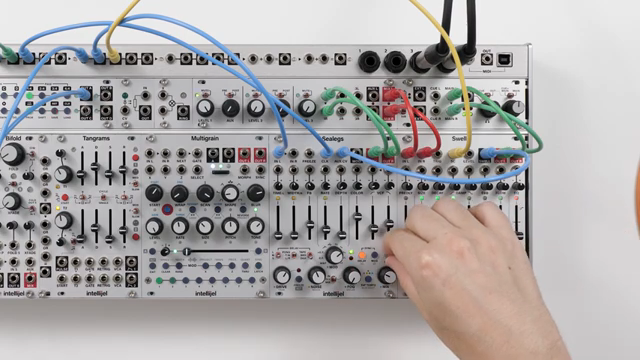
With the delay in motion, attention turns to Multigrain’s pitch control. Unquantised pitch sweeps send repeats spiralling up or down, and octave jumps create more predictable transpositions, all while the core delay function remains intact. The option to reverse playback adds further dimension, turning feedback loops into evolving, shifting textures.
Granular character is pushed further by dramatically shrinking grain size and increasing rate. This decouples pitch from delay time: even as grains climb or descend in pitch, the temporal spacing remains steady. Shape selection—like switching to ‘bell’—smooths transitions, while adjustments to rate and size provide instant access to everything from glitchy stutters to lush, smeared trails. The flexibility here is classic Intellijel: deep, but always accessible from the front panel.
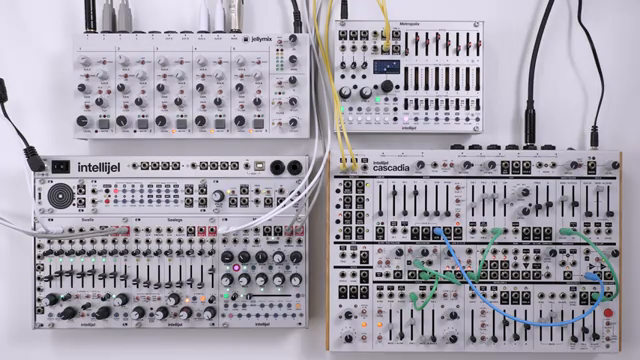
"Well for a start perhaps we could play around with the pitch."
© Screenshot/Quote: Intellijel (YouTube)
Sync, Gates & Rhythms: Modular Performance Tools
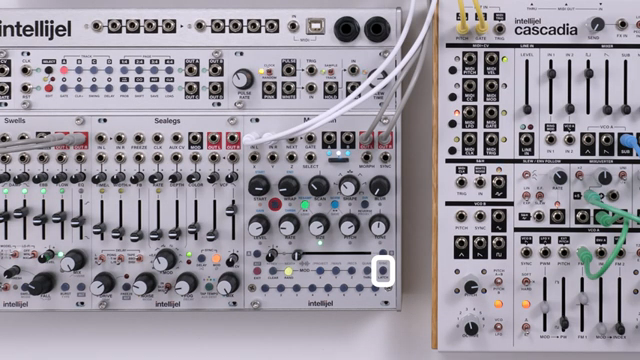
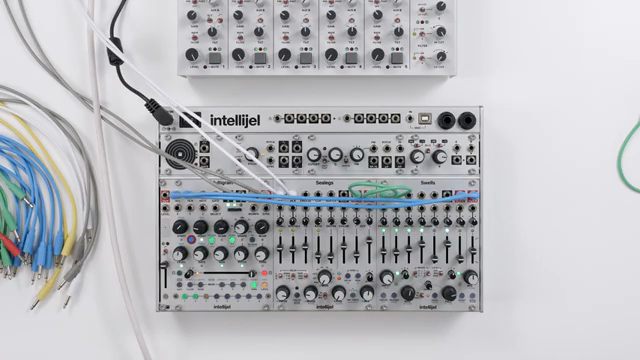
"The latch button switches the function of next from the next sound to a reset when it receives a trigger."
© Screenshot/Quote: Intellijel (YouTube)
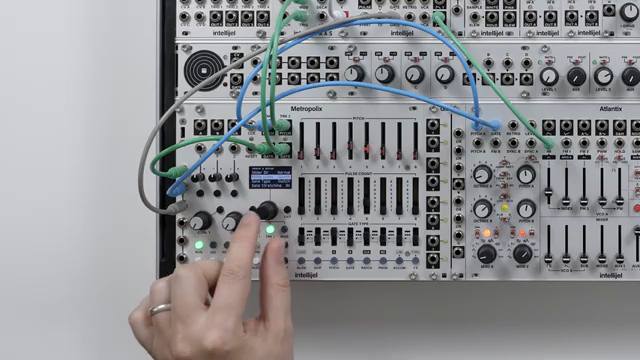
Next, the video explores performance controls by introducing scan and wrap modulation, with the ‘next’ input repurposed as a reset trigger. Feeding it a divided clock from Metropolix Solo, the user resets the buffer every bar, creating evolving patterns within the delay. Adjusting wrap area and scan direction yields everything from linear sweeps to abrupt, choppy textures—a granular delay that’s as much about rhythm as it is about ambience.
Syncing the grains to the sequencer clock brings the delay back into rhythmic lockstep, a boon for tight techno or IDM patches. Steppy 1U enters the mix, providing a gate pattern that shapes the density and timing of grains. By varying grain size, the feedback loop dances between crisp, defined patterns and more diffuse, organic rhythms. It’s a clear demonstration of Multigrain’s strength as a live performance tool, not just a studio effect.
Creative Workflows: Swells, Jellymix and Beyond
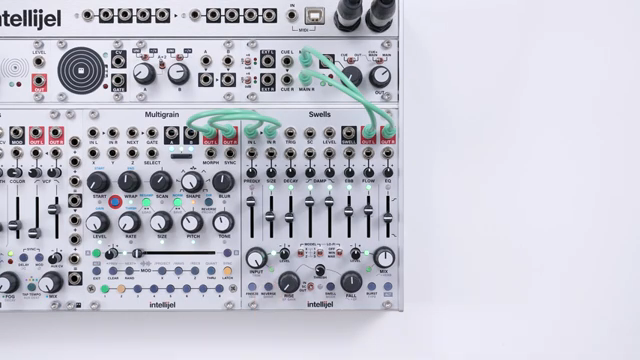
The final act introduces Swells on Aux B, bringing reverb into the signal path. By routing both the dry Cascadia signal and grains from Multigrain through Swells, the patch becomes a textural soundscape, with the option to send reverb back into the granular delay for feedback-laden wash. Muting and unmuting Swells demonstrates how these layers interact—sometimes the reverb is prominent, sometimes it’s more about the recycled, gated grains.
As the jam unfolds, the presenter tweaks parameters live, showing how the combination of Multigrain, Swells and Jellymix makes for a deeply interactive environment. Feedback recycling, shape modulation, and rhythmic gating all combine to create evolving, unpredictable textures. It’s a testament to Intellijel’s design philosophy: modules that don’t just sound good on paper, but beg to be patched, repatched and pushed into new territory.
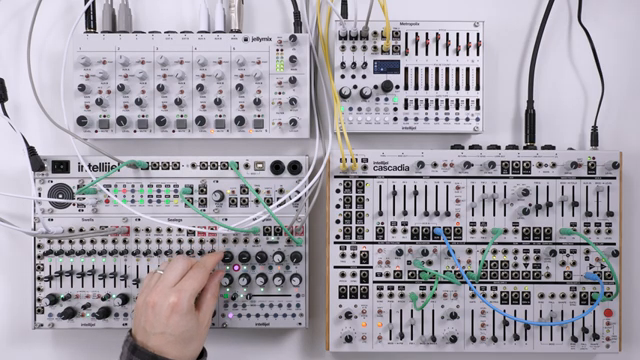
"Let's try muting swells and hearing how it sounds coming through multigrain."
© Screenshot/Quote: Intellijel (YouTube)
This article is also available in German. Read it here: https://synthmagazin.at/intellijel-multigrain-granulare-delay-taktiken-im-modular-setup/
More articles about these products:
Watch on YouTube:
Latest articles
Watch on YouTube:
Visit the channel:
https://www.youtube.com/intellijel
https://www.youtube.com/intellijel
Links from intellijel:
website: https://intellijel.com
forum: https://forum.intellijel.com
instagram: https://instagram.com/intellijel
facebook: https://www.facebook.com/intellijel
Sponsored links:
If you purchase via these links, we may earn a small commission – at no extra cost to you. The link opens an Amazon keyword search, and results may vary depending on availability.
Cascadia
🔗 Check price on Amazon
🔗 Check price on Amazon
Jellymix
🔗 Check price on Amazon
🔗 Check price on Amazon
Metropolix Solo
🔗 Check price on Amazon
🔗 Check price on Amazon
Multigrain
🔗 Check price on Amazon
🔗 Check price on Amazon
Steppy 1U
🔗 Check price on Amazon
🔗 Check price on Amazon
Swells
🔗 Check price on Amazon
🔗 Check price on Amazon