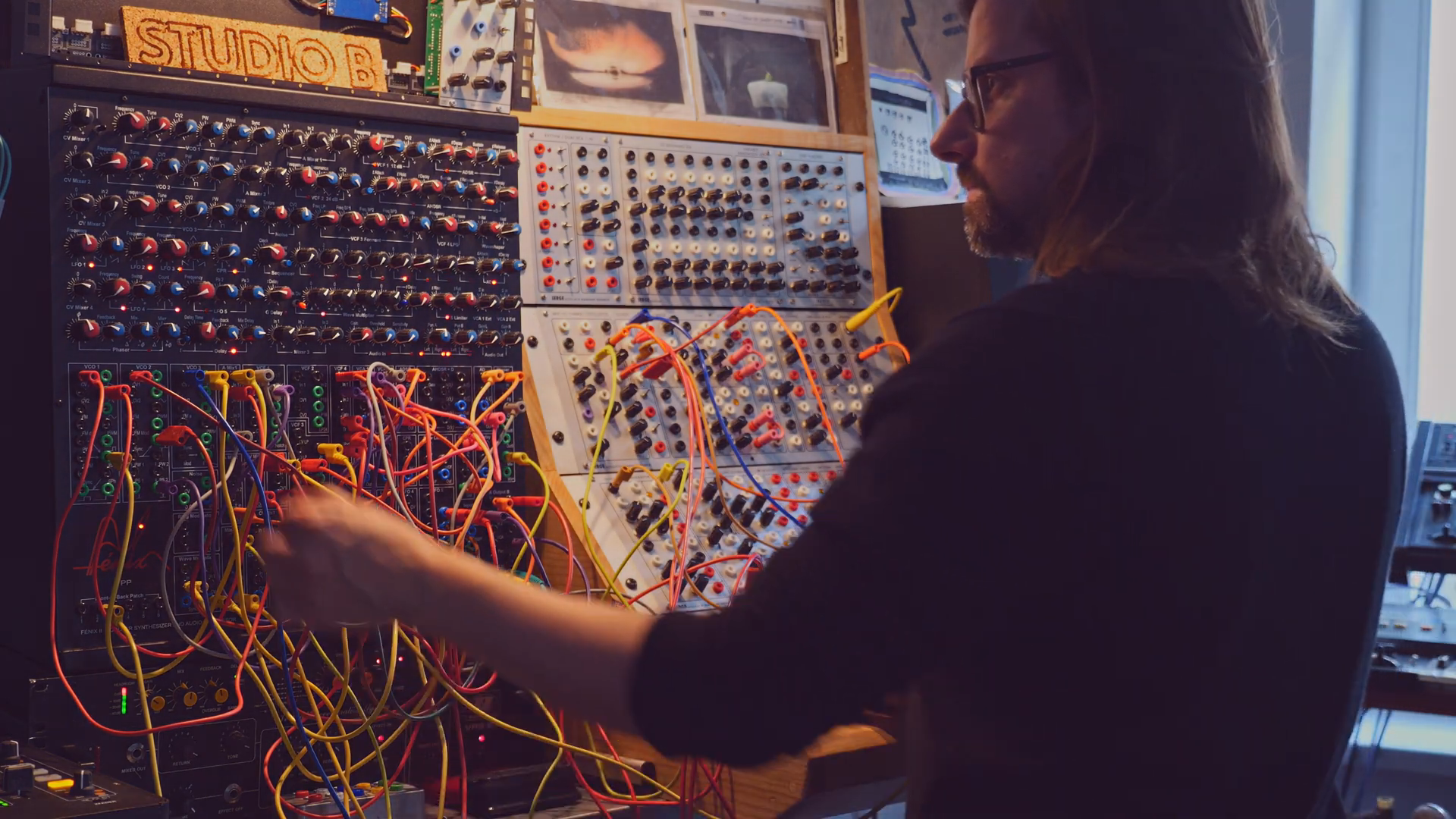
A night out, a synthesizer auction, and a well-intentioned tip to a friend: according to HAINBACH, that’s how the Fenix reissue around Patchpoint began. In his video published on November 25, 2026, he presents the Fenix 2PP—and explains why its sober surface works musically for him. He’s been playing the instrument for years. His unit from the first production run was given to him for feedback; he openly states he’s not being paid for the video.
First Find, Then Play

© Screenshot: HAINBACH (YouTube)
“then perform it your hands are free of spaghetti.”
© Quote: HAINBACH (YouTube)
Hainbach does not gloss over the initial hurdle. Where other modular systems have controls and their associated jacks right next to each other, on the Fenix you have to translate between two areas. He explains this using the LFOs: the controls are in a different place than their patch points. This requires orientation before the first connection becomes second nature. And when the patch bay is densely populated, some jacks remain hard to reach.
The benefit comes afterwards, for him. If you prepare a patch and then play using the controls, you don’t have to reach through cables. Hainbach describes this as a separation of score and performance. His most succinct comment on this:
TINRS Fenix – Amazon keyword search
Search for this product on Amazon →
This link opens an Amazon keyword search. Depending on availability, other results may be shown.
Advertising – affiliate link. If you buy through this link, we may earn a commission – at no extra cost to you.
330 Connections Demand Orientation
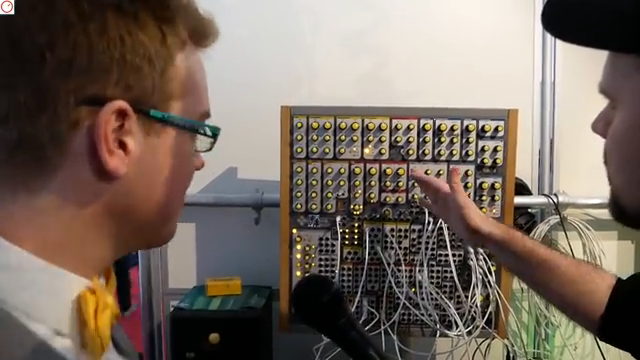
How much design goes into this seemingly simple division can be seen in SYNTH ANATOMY’s Superbooth report from May 9, 2019. There, the focus is on the Fenix IV from TINRS, then an early prototype—not Hainbach’s 2PP. The interviewer, faced with the extensive patch bay, asks about the number of connections. His counterpart names 330.
But the number alone says little about usability. More interesting is how the developer explains the assignment: function groups get colors, and their arrangement is roughly repeated in the lower patch area. The jacks also have color and shape codes. During the walkthrough, SYNTH ANATOMY notes a crucial observation:
© Screenshot: SYNTH ANATOMY (YouTube)
“And each module has its own section here on the bottom. Also nicely colored.”
© Quote: SYNTH ANATOMY (YouTube)
The Unspectacular Work on the Instrument
© Screenshot: SYNTH ANATOMY (YouTube)
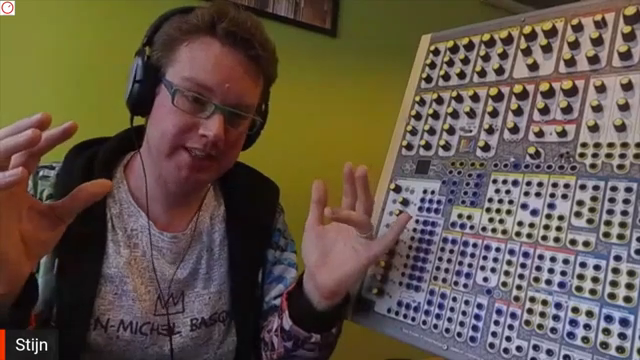
“It's not exactly the sound, it's the way of being pulled into places that you didn't expect.”
© Quote: SYNTH ANATOMY (YouTube)
In a follow-up conversation for the Superbooth Home Edition, published May 5, 2020, SYNTH ANATOMY explicitly asks about changes to the interface. The answer from the TINRS team is less about spectacular innovations and more about consistency: connections should be arranged according to recurring rules; even small inconsistencies have to be reconsidered.
The developer also explains the now color-differentiated jack rings: blue marks gate, yellow audio, and gray CV signals. These are not just decorative details. In a separated patch bay, such orientation aids have to replace some of the proximity that elsewhere exists between control and jack.
At the same time, the TINRS spokesperson defends the fully assembled system as an invitation to explore. Mixers, VCAs, and other utility modules are already present, instead of being added with the next expansion. When asked about the special Fenix sound, he replies:
A Module Can Change Its Profession
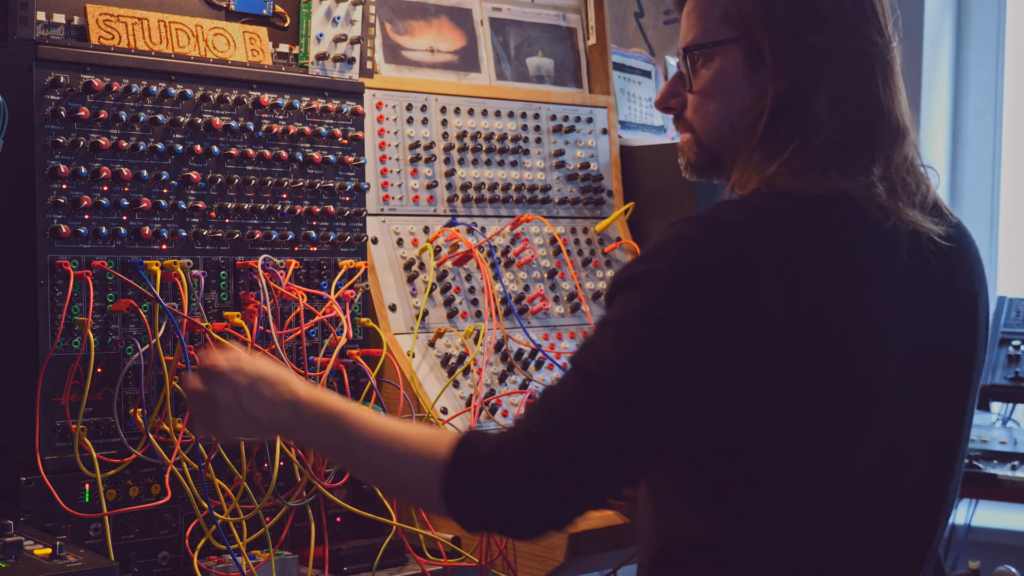
What can musically emerge from such a range of functions is shown by Hainbach with the Wave Multiplier of his Fenix. He uses it as an additional step sequencer, creating harmonies alongside the main sequencer, with different timing divisions. In conversation, it turns out that developer Bert had a completely different application in mind: a VOSIM-inspired form of voice synthesis.
This very moment makes the video interesting. Hainbach doesn’t just demonstrate an intended function, but a use he discovered through his own work. He explains:
© Screenshot: HAINBACH (YouTube)
“I thought of it more as a step sequencer and I keep on using it in this video as such. It enabled me to create harmonies alongside the main sequencer at different timing divisions”
© Quote: HAINBACH (YouTube)
So the Fenix doesn’t become more playable for every purpose just because of the separation. Hainbach explicitly admits that it gets cramped below if you prefer to play with the cables themselves. But if you prepare connections and then use the controls for performance, you gain freedom of movement. Good instrument design here doesn’t eliminate complexity. It decides where complexity gets in the way of making music—and where it doesn’t.
TINRS Fenix – Amazon keyword search
Search for this product on Amazon →
This link opens an Amazon keyword search. Depending on availability, other results may be shown.
Advertising – affiliate link. If you buy through this link, we may earn a commission – at no extra cost to you.


