Expert Sleepers’ Disting NT has always been a multifaceted Swiss Army knife for the Eurorack crowd, but firmware v1.16 takes things further with a notable upgrade to the Temporal Freeze algorithm. Layering is now in the spotlight, allowing users to stack audio within a single voice and sculpt textures that range from subtle to dense. This official video walks through the new features, from fade parameters to pedal-style control, giving us a glimpse at how these additions might shape real-world modular setups. As ever, it’s a typically practical and cleverly understated move from the Expert Sleepers team.

12. September 2026
MILES
Expert Sleepers Disting NT: Layering Evolves with Temporal Freeze
Temporal Freeze Gets a Layered Upgrade
Expert Sleepers have given the Disting NT’s Temporal Freeze algorithm a fresh coat of paint with firmware 1.16, introducing layering to its already versatile feature set. Previously, users could freeze multiple sounds by allocating each to a separate voice, which required careful voice management and patching. The video begins by recapping this method, showing how each voice could independently capture and hold audio snippets.
With layering, however, there’s a new twist: you can now add multiple audio layers into a single voice without needing to tap into additional voices. This means more sonic complexity without the usual voice juggling, and it immediately broadens the module’s creative potential in both simple and elaborate patches.
Layering Within One Voice: More Texture, Less Hassle
The main advantage of the new layering function is that it allows users to stack audio events within a single voice, sidestepping the need to use up precious extra voices for each new frozen sound. In the video, this is demonstrated by repeatedly adding notes—all within the same voice—until the resulting texture becomes quite thick.
This approach means you can build up complex, evolving soundscapes or drones without running out of voices, which is particularly handy in smaller racks or when you want to keep resources available for other duties. It’s a practical solution for those who want more out of a single module slot.

"With layering you can basically add audio into a single voice without having to use a new voice."
© Screenshot/Quote: Expertsleepersltd (YouTube)
Tweaking Layer Settings: Fade and Time Controls
"At 0db nothing fades out it just builds up and up and up and eventually it's going to saturate."
© Screenshot/Quote: Expertsleepersltd (YouTube)
To keep things under control as layers accumulate, the Disting NT introduces two key parameters: layer fade and layer time. Layer time sets how quickly a new audio layer fades in, allowing for anything from sharp, immediate additions to gradual, swelling overlays. Layer fade, on the other hand, determines how much of the previous material fades out as new layers are added.
Set the layer fade to 0 dB and nothing fades—everything piles up, which can lead to saturation and dense sonic walls. Turn it all the way down and each new layer wipes out what came before, giving you a clean slate each time. Find a middle ground and older layers gently recede while new ones enter, letting you shape the balance between persistence and renewal in your textures. These controls open up a nuanced world of sound management, especially for live performance or ambient patching.
Pedal Control: One Input to Rule Them All
Managing both freeze and layer controls separately could get unwieldy in practice, so Expert Sleepers have added a new ‘Pedal’ control mechanism for each voice. This gives users a single CV or MIDI input to toggle freeze, add layers, and clear the buffer, much like the operation of a guitar stomp box with one foot.
The pedal input can be configured for either a long hold or a double-tap to clear layers, offering flexibility for performance scenarios. Whether you’re controlling from a footswitch, MIDI controller, or a simple button, this approach simplifies live operation and makes it easier to stay focused on the music rather than the interface. It’s a nod to real-world usability—a quality often found in Expert Sleepers’ design philosophy.

"It gives you a single cv input or midi input or you know a single point of control to do all this in one thing."
© Screenshot/Quote: Expertsleepersltd (YouTube)
Sixteen Voices, Endless Layers

"Even up to the maximum which is I believe oh apparently 16 so yeah 16 voices all of which could be doing this layering business."
© Screenshot/Quote: Expertsleepersltd (YouTube)
A highlight towards the end of the demo is the revelation that the Disting NT can handle up to 16 voices at once, each capable of layering independently. That’s a serious amount of polyphony for a module of this size, opening the door to vast, multi-layered textures—if you have the patch cables and imagination to match.
Of course, things can get out of hand quickly with that much layering, but the flexibility to scale back to a single voice with all resources dedicated to one evolving layer stack is just as valuable. The video closes by emphasizing the creative range this brings to the Temporal Freeze algorithm, making it a powerful tool whether you want subtle ambient washes or dense, saturated sound masses.
This article is also available in German. Read it here: https://synthmagazin.at/expert-sleepers-disting-nt-layering-entwickelt-sich-mit-temporal-freeze-weiter/
More articles about these products:
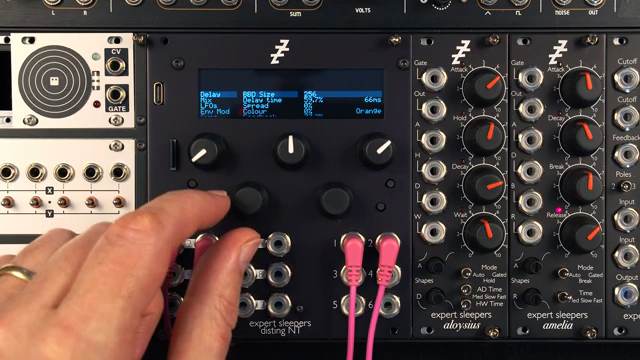 Expert Sleepers Disting NT: Little Spacey BBD Delay Lands in Firmware 1.16
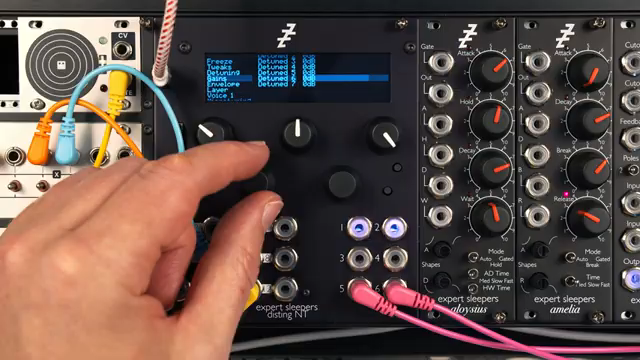 Expert Sleepers disting NT: Detuning and Microtonal Power with Temporal Freeze
 Expert Sleepers’ disting NT: The Swiss Army Knife at the Heart of Simon Kirby’s Modular Rig
 Expert Sleepers’ disting NT: A Swiss Army Knife for the Modular Age
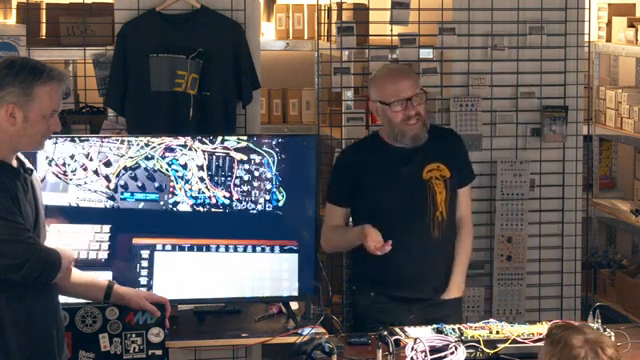 Expert Sleepers disting NT: At the Heart of Simon Kirby’s Modular Mindset
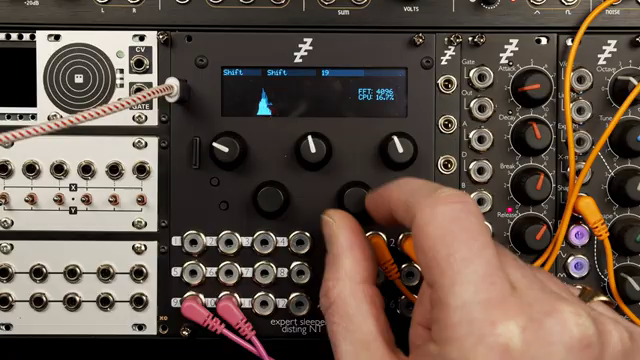 Expert Sleepers Disting NT: Spectral Conquest – FFT Mayhem in Modular
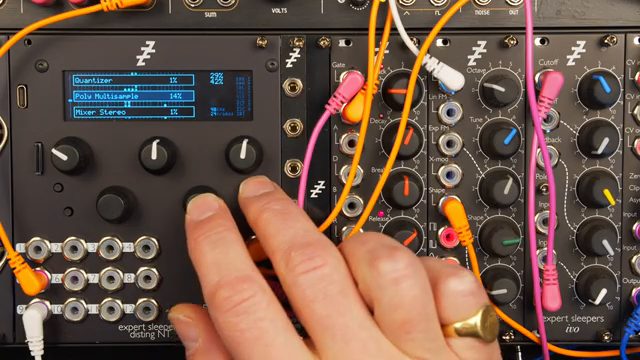 Expert Sleepers Disting NT: Continuous Calibration for Drifty VCOs
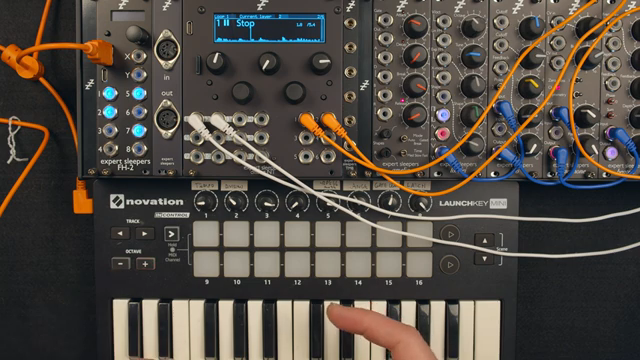 Expert Sleepers Disting NT: Looping in Layers, Modular Style
 Expert Sleepers Disting NT: Modular Freedom in a Single Module
 Expert Sleepers disting NT: Mapping Mayhem in the Modular Realm
Watch on YouTube:
Latest articles
Watch on YouTube:
Visit the channel:
https://www.youtube.com/ExpertSleepersLtd
https://www.youtube.com/ExpertSleepersLtd
Links from ExpertSleepersLtd:
Sponsored links:
If you purchase via these links, we may earn a small commission – at no extra cost to you. The link opens an Amazon keyword search, and results may vary depending on availability.
Expert Sleepers disting NT
🔗 Check price on Amazon
🔗 Check price on Amazon