In this deep-dive masterclass from Signal Sounds, Simon Kirby puts Expert Sleepers’ disting NT through its paces as the central brain of his modular setup. With everything from sound generation to effects handled by a single module, Kirby methodically demonstrates just how pivotal the disting NT can be for compact Eurorack rigs and sophisticated live performance. This isn’t just a showcase; it’s a practical exploration of patching, performance workflows, and the subtle design choices that make the disting NT a modular chameleon. If you’re keen on understanding how a single module can anchor a whole system—while still leaving room for creative surprises—this is essential viewing.
5. August 2026
MILES
Expert Sleepers’ disting NT: The Swiss Army Knife at the Heart of Simon Kirby’s Modular Rig
Expert Sleepers disting NT, Happy Nerding FX Aid, LinnStrument, Make Noise Mimeophon, Mannequins Just Friends, Monome Teletype, Mutable Instruments Plaits
A Modular Nucleus: disting NT at the Core
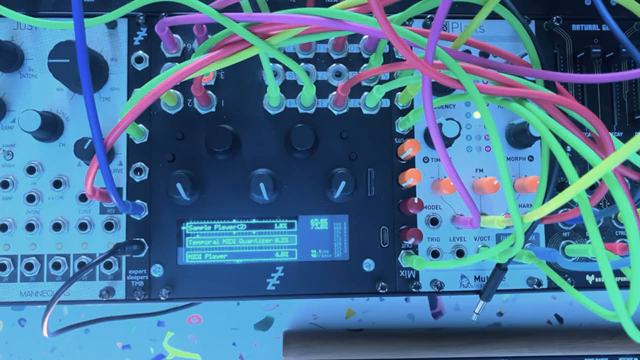
Simon Kirby’s setup might be modest in size—just a single 104 HP row—but the disting NT sits centre stage, pulling more than its weight. Kirby opens by describing how, despite the small footprint, the module enables a wide breadth of sounds, handling the majority of voices in his performance. Supporting modules like Mutable Instruments Plaits and Mannequins Just Friends make cameo appearances, but it’s clear most of the sonic heavy lifting is done by the disting NT.
Beyond sound generation, Kirby emphasises the module’s role in effects processing. Delay duties are handled externally via the Make Noise Mimeophon and reverb via the FX Aid, but virtually every other effect and routing task falls to the NT. Its integration is so tight that Kirby describes the whole performance as “manageable”—an achievement most modular users will appreciate. The disting NT’s expanders further increase the available I/O, making it a flexible command centre even for compact rigs.
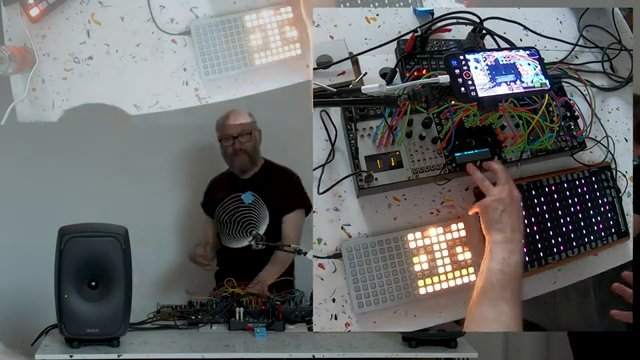
"All of that was possible because of the Disting NT being in the system, and it's doing a lot in there."
© Screenshot/Quote: Expertsleepersltd (YouTube)
Algorithmic Playground: More Than Just Presets
"There's one of the algorithms in here is MIDI temporal quantizer."
© Screenshot/Quote: Expertsleepersltd (YouTube)
What sets the disting NT apart from run-of-the-mill multi-function modules is its stack of algorithms, each running in parallel and communicating internally via audio and CV. Kirby details how these algorithms can be chained and mapped to various parameters, with MIDI and MPE (via the LinnStrument) feeding rich modulation data into the module. The result is a system that adapts to playing style, offering expressive sound shaping that’s tactile and direct.
Kirby demonstrates this with both utilitarian and outlandish patches. The performance page allows key parameters from different algorithms to be surfaced for immediate tweaking, while MIDI temporal quantisation lets him lock notes precisely to a clock—a boon for the rhythmically challenged or those who simply crave tight synchronisation. The Carbonator algorithm, for instance, probabilistically slices and replays audio, introducing both random and repeatable textures that can be mutated live. These are not just technical features—they’re creative catalysts that expand the sonic vocabulary of a modular patch.
Performance Tools and Patch Fluency
Kirby doesn’t just talk theory—he shows how the disting NT fits into real-world performance. The module’s performance page is configured so only essential controls are surfaced, minimising menu-diving mid-set. With three knobs mapped to key parameters at any given time, Kirby can morph sounds, trigger effects, and re-route signals with minimal fuss, making the disting NT as immediate as a dedicated performance instrument.
What’s striking is the module’s adaptability. MIDI players, internal sequencers, and CV mapping all work in tandem, allowing Kirby to create fluid transitions between pieces or even within a single patch. The ability to recall and tweak presets on the fly means that live improvisation doesn’t come at the expense of control. For those who worry about CPU limits or patch complexity, Kirby’s approach—switching voices and effects on and off as needed—demonstrates a pragmatic path to manageable modular performance.
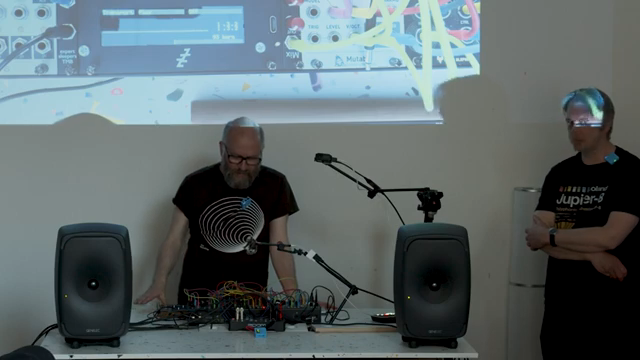
"Once you get the hang of the kind of internal signal flow, it's a really elegant system."
© Screenshot/Quote: Expertsleepersltd (YouTube)
Community Feedback, Future Paths, and the Live Experience
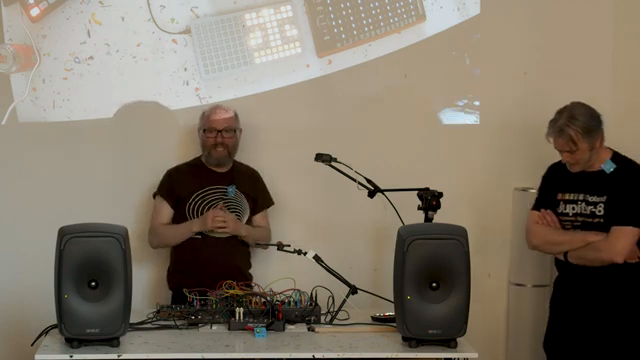
"If I think to myself, can the disting do something, the answer is nearly always yes."
© Screenshot/Quote: Expertsleepersltd (YouTube)
The Q&A segment pulls back the curtain on the disting NT’s evolution, highlighting how much of its current feature set is informed by user suggestions and real-world needs. Both Simon Kirby and ‘Os’ (Andrew Ostler) discuss the merits and quirks of mounting the module upside down—a small but telling detail about modular ergonomics. Whether it’s flipping the screen, adapting to cable routing, or simply giving the audience a better view of the chaos, these are the practical considerations that distinguish real design from marketing gloss.
Questions about MIDI quantisation, plugin development, and even the language used for NT algorithms reveal a system that’s as open-ended as the community wants it to be. Kirby and Ostler reflect on the integration of user-contributed plugins, the potential for “favourite” algorithm sets, and the surprising directions the module has taken thanks to feedback from the Discord community. There’s a sense that the disting NT is as much a platform as a product—a playground for collaborative exploration.
The discussion closes on hardware design and future features. From the feel of the knobs to the density of I/O, every detail is grounded in hands-on experience and user feedback. The modular world thrives on such iterative evolution, and the disting NT stands as a testament to what can emerge when a manufacturer listens closely to its user base, always ready to implement the next idea—if it makes musical sense.
This article is also available in German. Read it here: https://synthmagazin.at/expert-sleepers-disting-nt-das-schweizer-taschenmesser-im-zentrum-von-simon-kirbys-modular-setup/
More articles about these products:
 Expert Sleepers Disting NT: Little Spacey BBD Delay Lands in Firmware 1.16
 Expert Sleepers disting NT: Detuning and Microtonal Power with Temporal Freeze
 Expert Sleepers Disting NT: Layering Evolves with Temporal Freeze
 From Blank Slate to Banger: The Unperson’s Modular Mayhem
 Synth Diy Guy Unleashes the Perkons Voice: One Module, Full Rave
 DivKid’s Flow 3 Demo: Joranalogue’s Filter Becomes a Street Weapon
 The Unperson Hacks Plaits: Plaits Palette Turns Firmware into a Playground
 Nebula in a Case: The Unperson’s Eurorack Ambient Machine
 O’Flynn’s Sonic Gymnastics: MusicRadar Tech Gets Messy with Modulars and Beatstep
 Metamyther Throws Down: Mimeophon vs. Cosmic Debris vs. Supermassive – Hardware vs. Plugin Rumble
 The Unperson’s Modular Drum Safari: Kicking Writer’s Block in the Teeth
 The Unperson Unleashes the Instruo Neoni: Triangle Core Mayhem in Eurorack
Watch on YouTube:
Latest articles
Watch on YouTube:
Visit the channel:
https://www.youtube.com/ExpertSleepersLtd
https://www.youtube.com/ExpertSleepersLtd
Links from ExpertSleepersLtd:
Sponsored links:
If you purchase via these links, we may earn a small commission – at no extra cost to you. The link opens an Amazon keyword search, and results may vary depending on availability.
Expert Sleepers disting NT
🔗 Check price on Amazon
🔗 Check price on Amazon
Happy Nerding FX Aid
🔗 Check price on Amazon
🔗 Check price on Amazon
LinnStrument
🔗 Check price on Amazon
🔗 Check price on Amazon
Make Noise Mimeophon
🔗 Check price on Amazon
🔗 Check price on Amazon
Mannequins Just Friends
🔗 Check price on Amazon
🔗 Check price on Amazon
Monome Teletype
🔗 Check price on Amazon
🔗 Check price on Amazon
Mutable Instruments Plaits
🔗 Check price on Amazon
🔗 Check price on Amazon