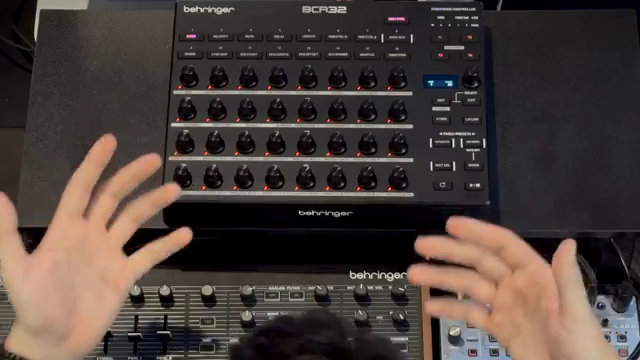
Behringer’s BCR32 isn’t just a MIDI controller—it’s a tactile sequencing hub designed to anchor your studio or live rig. With its 32 encoders and integrated Zaquencer, the BCR32 bridges classic hands-on control with modern multi-track step sequencing. In this deep-dive, we follow Behringer’s official walkthrough, covering how the BCR32’s architecture lets you shape melodies, chords, basslines, and drums without ever reaching for a mouse. The video’s focus is on workflow: direct, visual, and immediate, with real-world MIDI and modular integration always in view.
29. September 2026
LYRA
Behringer BCR32: Zaquencer Brings Hands-On Sequencing to the Forefront
Behringer BCR32, Behringer BMX, Behringer CZ1 Mini, Behringer UB1 Micro
From Controller to Sequencer: BCR32’s Dual Identity
The Behringer BCR32 enters the scene as more than just a densely populated MIDI controller. With 32 rotary encoders—each flanked by its own LED ring and push function—the BCR32 invites immediate, hands-on interaction. At first glance, it borrows the classic approach of the original BCR2000, but the modern twist is quickly revealed.
The real architectural leap comes with the integrated Zaquencer, a hardware sequencer built directly into the BCR32. This move echoes the legacy of the alternative Zaquencer firmware that once revitalized the BCR2000, now reincarnated as a core feature rather than an afterthought. The device’s dual function as both controller and sequencer is a clear nod to the needs of contemporary electronic musicians who crave both parameter control and performance-focused sequencing.
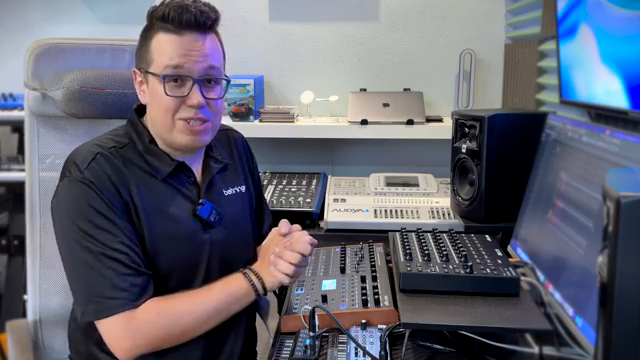
"The BC-R32 combines 32 rotary encoders with a built-in 4-track hardware sequencer called Zaquencer."
© Screenshot/Quote: Behringer (YouTube)
Zaquencer Mode: Sequence Everything
"Instead of looking at the sequence on a computer screen, we can actually build and manipulate it with our hands."
© Screenshot/Quote: Behringer (YouTube)
Switching into Zaquencer mode, the BCR32 enables direct, physical construction of musical patterns. Instead of programming on a screen, users turn the encoders themselves into the steps of a sequence—each knob representing a step whose value is displayed by its LED ring. This workflow is demonstrated as the presenter builds basslines, melodies, and chords, emphasizing the immediate tactile feedback.
The Zaquencer supports more than just note input: sequence direction can be set to forward, backward, or random, and steps can be muted or adjusted in length without leaving the hardware interface. Chord mode is available for harmonically rich patterns, and the video showcases rapid transitions from melodic to percussive sequencing, highlighting the Zaquencer’s range across electronic genres.
Flexible Encoders: Parameter Mapping and Step Control
Each of the BCR32’s 32 encoders can be freely assigned to MIDI parameters—filters, resonance, envelopes, effects, and beyond. The hardware’s design encourages both traditional MIDI mapping duties and step-wise sequencing, with physical controls doubling as performance tools and composers’ sketchpads. The integration of push functionality further expands the potential for real-time manipulation and muting of steps, giving users a streamlined interface for both live tweaking and studio programming.
The Hub of Hybrid Setups: MIDI and Modular Integration
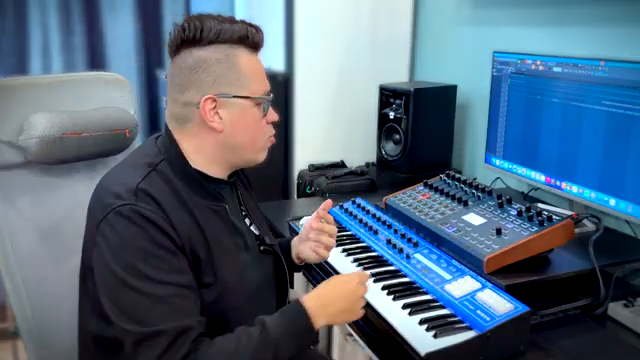
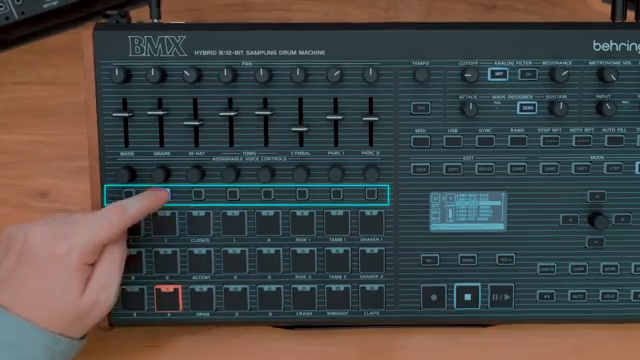
The BCR32 is shown controlling multiple synthesizers simultaneously: Behringer UB1 Micro, CZ1 Mini, and BMX serve as examples of how the sequencer can drive basslines, melodies, chords, and drum tracks across different gear. The workflow remains hardware-centric, with the video demonstrating how MIDI channels and note assignments are managed directly from the front panel.
Crucially, the BCR32 isn’t limited to classic MIDI connections. The presence of gate and CV sockets enables integration with modular synthesizer systems, transforming the unit from a mere controller into a central sequencing brain for hybrid setups. Whether in a DAWless live rig or a more traditional studio, the flexibility of routing and device assignment is a highlight of the video’s demonstration.
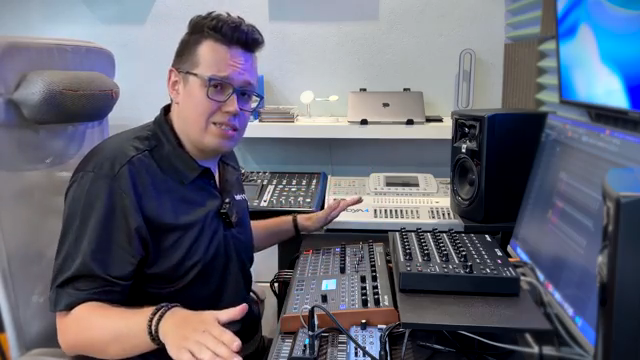
"It can be a brain for your synthesizer setup in your studio, on our stage, as you wish."
© Screenshot/Quote: Behringer (YouTube)
Tactile Creativity: Sequencing Without Screens
Behringer positions the BCR32 as a solution for musicians who prefer hands-on interaction over software-based sequencing. The video’s closing message returns to the immediacy of turning physical knobs to shape musical ideas—no screens, no distractions, just direct control. For users who want their hardware to serve as both the creative engine and the control surface, the BCR32 is pitched as a compelling and workflow-friendly tool.
This article is also available in German. Read it here: https://synthmagazin.at/behringer-bcr32-zaquencer-bringt-hands-on-sequencing-in-den-mittelpunkt/
More articles about these products:
Watch on YouTube:
Latest articles
Watch on YouTube:
Visit the channel:
https://www.youtube.com/behringer
https://www.youtube.com/behringer
Links from behringer:
website: https://www.behringer.com
facebook: https://www.facebook.com/Behringer
twitter: https://twitter.com/BEHRINGER
instagram: https://instagram.com/Behringer
Sponsored links:
If you purchase via these links, we may earn a small commission – at no extra cost to you. The link opens an Amazon keyword search, and results may vary depending on availability.
Behringer BCR32
🔗 Check price on Amazon
🔗 Check price on Amazon
Behringer BMX
🔗 Check price on Amazon
🔗 Check price on Amazon
Behringer CZ1 Mini
🔗 Check price on Amazon
🔗 Check price on Amazon
Behringer UB1 Micro
🔗 Check price on Amazon
🔗 Check price on Amazon