Voltage Labs are back at Superbooth, and this time they’ve brought out the big guns from Xaoc Devices: Budapeszt and Skopje. Forget polite filter sweeps—these modules are here to twist your rack into a playground of spectral chaos and microtonal mayhem. Voltage Labs’ signature style—gear knowledge with a side of cultural context—means you’re not just getting a spec sheet, you’re getting the story behind the sound. If you’re after modules that can turn a modular jam into a rave bunker meltdown or a microtonal dreamscape, keep reading. The devil’s in the interference patterns, and the fun’s in the demo.

17. May 2026
SPARKY
Voltage Labs Unleash Xaoc Devices Budapeszt & Skopje: Superbooth 2026’s Sonic Street Weapons
Superbooth Drop: Xaoc’s Double Trouble
Xaoc Devices have crashed Superbooth 2026 with two fresh modules: Budapeszt and Skopje. One’s still a prototype, the other’s already rolling off the production line, but both are aimed squarely at the kind of modular heads who want more than just another filter or quantizer. Voltage Labs, true to form, set the scene with their usual blend of gear nerdery and cultural context—no dry spec rundown here, just the promise of new tricks for your rack. If you thought Xaoc were done pushing boundaries, think again.
Skopje: Quantizer Gone Rogue
Skopje isn’t just a dual quantizer—it’s a compositional Swiss Army knife. Each channel is fully independent, with its own controls, inputs, and outputs, and the navigation is gloriously menu-free. You get a Game of Life-inspired screen, a chunky encoder, and a button that lets you flick between channels, scales, and parameters like glide and CV assignment. No deep dives, no headaches—just tactile control and instant feedback.
Where Skopje really flexes is in its scale programming. You can load up to 100 banks, each with 100 scales (if you’re mad enough), using simple text files or Scala files for microtonal action. Mixing and matching is a breeze, and everything lives on a humble micro SD card. The assign input is the secret sauce: use it to switch scales, transpose, or even add vibrato—all in real time. Skopje isn’t just quantizing; it’s sequencing, modulating, and opening up wild microtonal territory. Voltage Labs make it clear: this isn’t just for keeping your pitch in line—it’s for bending the rules entirely.
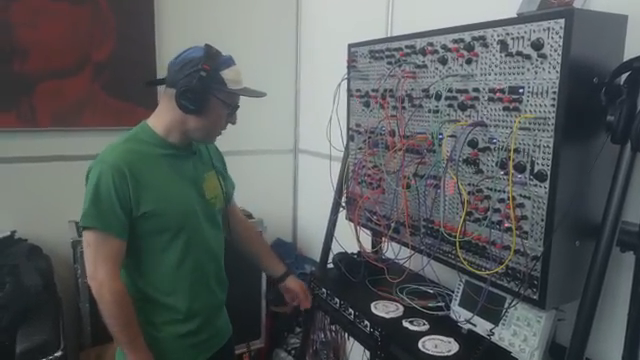
"We wouldn't be ourselves if it didn't have any tricks up its sleeve."
© Screenshot/Quote: Voltage Labs (YouTube)
Budapeszt: Spectral Lattice Mayhem

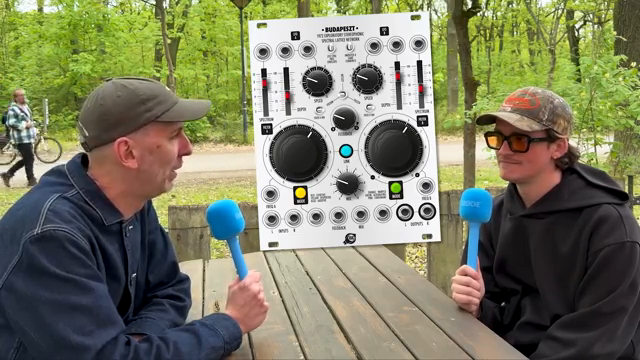
"It contains two stereo comb filters and the fun is not in the output of either one of those but in the interference of the grid."
© Screenshot/Quote: Voltage Labs (YouTube)
Budapeszt is still a prototype, but it’s already sounding like a future classic. It’s a dual spectral lattice network—translation: two stereo comb filters that don’t just process, they collide. The magic isn’t in the individual outputs, but in the interference patterns and resonant chaos that emerge when the grids overlap. Voltage Labs’ demo makes it clear—this isn’t your average filter box; it’s a playground for spectral weirdness.
Each comb filter has its own set of controls: frequency, feedback, internal triangle LFOs, and a mysterious spectrum parameter that changes its function depending on the mode. There are six modes planned (eight in the prototype), each with its own flavour—delay lines, ALPOS arrays, bumper filters, and more. You can link or detune the filters, mess with feedback routing, and flip phase for even more mayhem. The result? A module that can turn a polite sequence into a wall of spectral bliss or a snarling, detuned monster. If you want to hear what this thing really does, you’ll need to watch the video—words barely scratch the surface.
Hands-On: Performance Tricks and Sonic Firepower
Voltage Labs don’t just talk—they patch. Skopje gets put through its paces with everything from custom chord progressions to microtonal Persian scales, showing off its ability to sequence, glide, and modulate on the fly. Assign inputs get a workout, switching scales and toggling glide mid-performance, while trigger ins and outs make Skopje play nice with sequencers and LFOs. It’s not just a quantizer—it’s a live performance tool that can keep up with your weirdest ideas.
Budapeszt, meanwhile, gets the full spectral treatment. Sequences run through its dual comb filters morph from clean to chaotic, with mode switches and spectrum tweaks transforming the sound in ways that are impossible to describe without a speaker in front of you. Voltage Labs’ demo is a reminder: some modules have to be heard to be believed. If you want to know how Budapeszt turns a basic patch into a rave bunker meltdown, hit play on the video.
Who’s It For? Everyone Who Dares
Budapeszt and Skopje aren’t just for the avant-garde. Sure, experimental sound designers will be drooling, but traditional musicians looking for new textures will find plenty to love. Whether you’re chasing microtonal melodies, spectral interference, or just want your modular to sound like it’s fighting itself in a toaster, these modules deliver. Xaoc and Voltage Labs have cooked up something for anyone who wants to push their rack into uncharted territory.
This article is also available in German. Read it here: https://synthmagazin.at/voltage-labs-entfesselt-xaoc-devices-budapeszt-skopje-superbooth-2026s-neue-klangwaffen/
More articles about these products:
Watch on YouTube:
Latest articles
Watch on YouTube:
Visit the channel:
https://www.youtube.com/voltage_labs
https://www.youtube.com/voltage_labs
Links from voltage_labs:
instagram: https://www.instagram.com/voltage.labs
Sponsored links:
If you purchase via these links, we may earn a small commission – at no extra cost to you. The link opens an Amazon keyword search, and results may vary depending on availability.
Xaoc Devices Budapeszt
🔗 Check price on Amazon
🔗 Check price on Amazon
Xaoc Devices Skopje
🔗 Check price on Amazon
🔗 Check price on Amazon