The C25 from Nonlinear Labs is not a synthesizer for preset tourists – it’s an instrument for sound architects who love the unpredictable. SequencerTalk takes us through Stephan Schmitt’s latest creation at Superbooth 2026: a compact digital performance synth uncompromisingly focused on expression, playability, and direct control. With innovative sensor technology, haptic feedback, and an open platform philosophy, the C25 invites you to explore sonic spaces rather than just consume them. Those with patience and a keen ear for machine ethics will be rewarded with a new dimension of musical interaction.
13. May 2026
RAUMKLANG
SequencerTalk Meets Nonlinear Labs C25: Digital Sound Architecture for the Stage
From C15 to C25: Evolution, Not Revolution
With the C25, Nonlinear Labs presents a digital synthesizer that builds on the foundation of the C15 and takes it a step further. The idea: a more compact, stage-ready instrument that still preserves the sonic depth and experimental spirit of its predecessor. Instead of a classic bread-and-butter synth, this is an invitation to explore and play – a device meant to be experienced, not just operated.
The developers have opted for evolutionary advancement: proven concepts like the refined sound engine remain, while the case and interface have been reimagined. Accessibility and visualization are now in the spotlight, ensuring that sound designers with a penchant for patch geometry will get their money’s worth. The C25 is less a successor and more an organic growth of the Nonlinear Labs ecosystem.
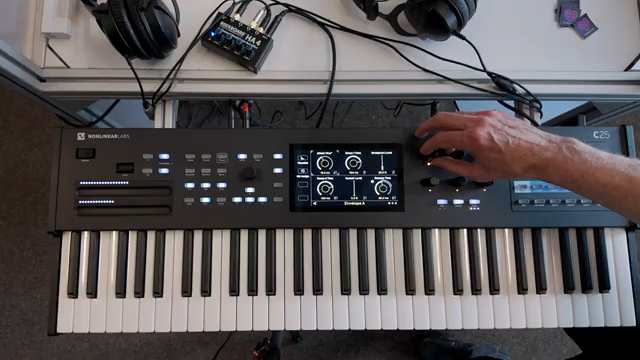
"More accessible means we have an interface that invites you to work with it, visualizes more, shows more, and is more attractive."
("Zugänglicher heißt, wir haben eine Edino-Urfläche, die mehr einlädt, irgendwie damit zu arbeiten und die mehr visualisiert und zeigt und attraktiver ist.")© Screenshot/Quote: Sequencertalk (YouTube)
Haptics, Sensors, and Macro Architecture: The New Playing Surface
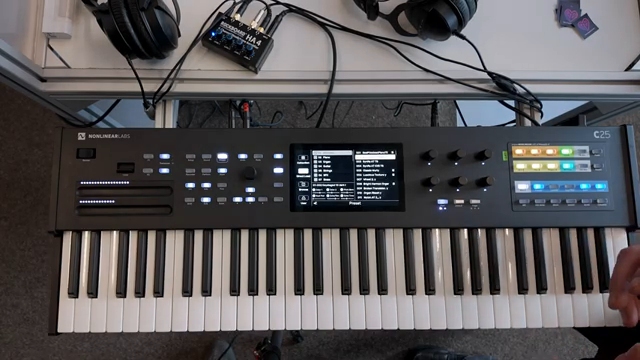
"That's the idea: we have high-resolution endless potentiometers, we have high-resolution graphics, so it feels very analog."
("Das ist ein Gedanke, also zu sagen, okay, wir haben ein hochauflösende Endless-Potensiometer, wir haben eine hochauflösende Grafik, also das fühlt sich sehr analog an quasi.")© Screenshot/Quote: Sequencertalk (YouTube)
The C25’s surface is a statement against sterile menu jungles: six high-resolution endless encoders with haptic feedback and a large, clearly structured display form the heart of interaction. Here, you don’t just turn – you feel – machine ethics you can touch. The encoders provide tactile markers for parameter limits or center positions, which is especially helpful in live contexts.
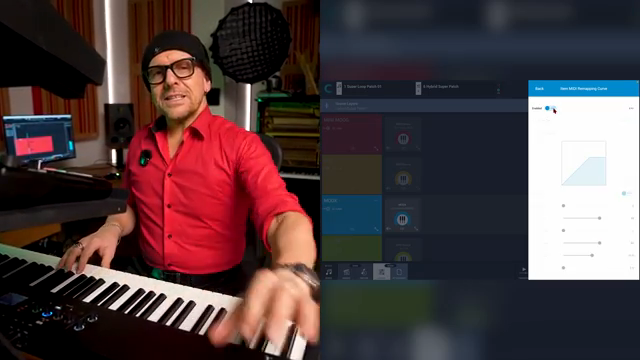
This setup is complemented by a Fatar TP/8S keyboard with additional sensors that transform velocity, pressure, and movement into modulation. Two ribbon controllers, a proven bender, the new lever, and up to four pedals offer a wealth of modulation sources that can be flexibly assigned to macros. This makes the C25 an instrument for expressive performances, where fingers, feet, and even the playing feel itself become sound architects. To truly grasp the depth of this control, you should check out the live demonstration in the video – text alone can hardly convey the dynamism.
Phase-22: Sonic Spaces Between Modulation and Modeling
Inside, the C25 continues to use the Phase-22 concept, merging phase modulation, waveshaping, and physical modeling into an organically responsive sound architecture. The engine offers up to 48 voices of polyphony and, despite the more compact hardware, makes no compromises in expressive power. Layering, feedback fades, and flexible filter structures allow sounds to fold like origami out of tension and noise.
Despite its depth, the operation remains accessible: direct access to parameters, page switching for less-used functions, and visual representations of signal flow and filter morphing make exploring these sonic spaces intuitive. You won’t find vintage emulations here – the C25 sounds as it sounds: independent, modern, and full of possibilities for chaos aesthetes. If you want to know how this synthesis actually sounds, you shouldn’t miss the sound examples in the video.
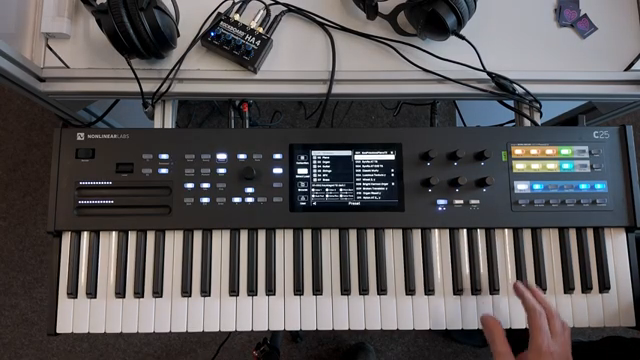
"And if we look at the signal flow, we have the same components inside: oscillator 1 and 2, or H and B, two filters, especially this comb filter is very important, and with it, we have the same sound shaping possibilities as with the C15, a rather unusual engine with feedback fade."
("Und wenn wir, ja, wenn wir den Signalfluss uns anschauen, dann haben wir die gleichen Komponenten da drin, also Oszillator 1 und 2 oder H und B, zwei Filter, vor allem dieses Kammfilter ist sehr wichtig und wir haben damit so eine, also ja, diese Klangestaltungsmöglichkeit wie beim C15, eine ziemlich ungewöhnliche engine feedback-Fade enthält.")© Screenshot/Quote: Sequencertalk (YouTube)
Open Platform: Future-Proofing Through Modularity
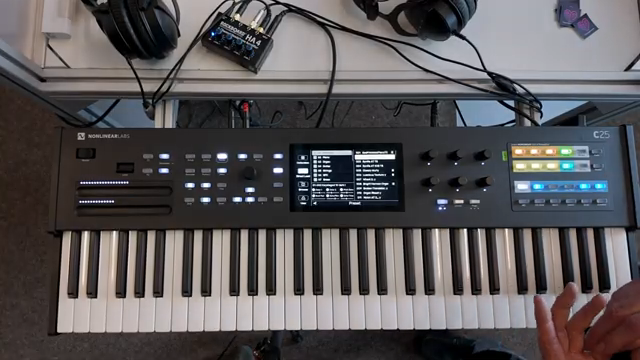
"The platform concept is important for us, and it will be further expanded."
("Der Plattform-Gedanke ist wichtig für uns, da wird es noch mal so weiter ausgebaut.")© Screenshot/Quote: Sequencertalk (YouTube)
The C25 sees itself not as a closed system, but as a platform for future developments. Via a removable panel with NFC chip, the device recognizes different overlays and can thus load various synthesis or effect engines – even from third parties. This platform concept opens up space for long-term development and makes the C25 an instrument that can grow with its users.
The openness to third-party engines is more than just a marketing gimmick: it allows new sound concepts and workflows to be integrated without replacing the base device. This makes the C25 a kind of modular hub for digital sound research – an approach particularly exciting for experimental sound designers and developers. The details of this architecture are intentionally only touched upon in the video – it’s worth a closer look for anyone interested in the interface between hardware and software.
Patience and Anticipation: The C25 Remains Music of the Future
Anyone already tapping their fingers on the softcase will need a little more patience: the C25 is expected to be available in 2027 at the earliest. Until then, there’s room for further optimization, community feedback, and perhaps a few surprises in the final version. For sound explorers with a long-term perspective, that’s a promise – not a drawback.
Translated from German. Read the original here: https://synthmagazin.at/sequencertalk-trifft-nonlinear-labs-c25-digitale-klangarchitektur-fuer-die-buehne/
More articles about these products:
Watch on YouTube:
Latest articles
Watch on YouTube:
Visit the channel:
https://www.youtube.com/SequencerTalk
https://www.youtube.com/SequencerTalk
Links from SequencerTalk:
SequencerTalk Supporte uns!: https://sequencertalk.synthesizers.de
Instagram: https://instagram.com/sequencertalk
Links Moogulator: https://linktr.ee/moogulator
Links Dean: https://linktr.ee/deanfreud
Impressum: https://moogulator.com/moogulator/about
Sponsored links:
If you purchase via these links, we may earn a small commission – at no extra cost to you. The link opens an Amazon keyword search, and results may vary depending on availability.
Nonlinear Labs C15
🔗 Check price on Amazon
🔗 Check price on Amazon
Nonlinear Labs C25
🔗 Check price on Amazon
🔗 Check price on Amazon