What happens when you catapult Soviet sound DNA into the present? SequencerTalk takes us on an analytical journey through the POLIVOKS-8 by Elta Music – an eight-voice beast that fuses the raw charm of the original with modern hybrid technology, dual filter architecture, and innovative modulation options. In conversation with developer Vladi Salnikov, a machine ethos unfolds between nostalgia and future vision. If you want to know how patch geometry and sound spaces are rearranged in the POLIVOKS-8, this interview is a must. The details are complex – and some sonic foldings are simply better heard than described.
18. May 2026
RAUMKLANG
SequencerTalk Deconstructs the POLIVOKS-8: Soviet Character in the Polyphonic Machine Room
Soviet DNA in Polyphonic Garb
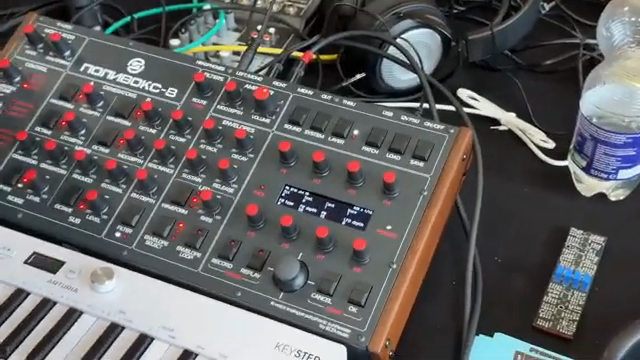
The POLIVOKS-8 is no ordinary clone, but a radical reinterpretation of the legendary Soviet Polivoks. While the original haunted the sound spaces as a duophonic paraphonic instrument, Elta Music elevates the concept to eight voices, bringing a new dimension to patch geometry. The developers didn’t settle for a simple copy, but extracted the essence of the original and translated it into a modern machine ethos.
The challenge was to pour the characteristic, unruly sound of the Polivoks into an instrument that meets today’s demands for polyphony and control. The analog oscillators, complemented by digital control, ensure stable tuning and flexible modulation. Even in its prototype state, you can already sense how the sound unfolds like origami from tension and noise – not for workflow fetishists, but a dream for chaos aesthetes.
Dual Filters and Modulation Architecture: Shifting Sound Spaces
In the POLIVOKS-8, two filter worlds collide: the classic Polivoks filter, notorious for its aggressive resonance, is complemented by a ladder-style filter that gives the sound a rounder facet. Both filters can be routed in series, parallel, or mixed – a paradise for those who see sound architecture as a field of experimentation. The filter section remains true to the Soviet original, at least for the first filter: the circuit was adopted almost 1:1, albeit with modern SMD components and digital control.
The modulation options are equally versatile: in addition to classic LFOs and three envelopes per voice, there is ring modulation, FM (both linear and exponential), and a sub-oscillator. Particularly exciting is the fact that each voice has its own voice LFOs – a luxury the original never knew. This creates a modular complexity that goes far beyond what the historical Polivoks ever offered.
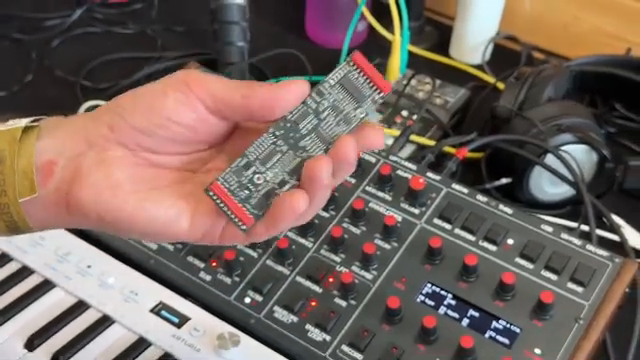
"You could say that filter 1 is absolutely identical to the original Polivoks, but under digital control."
("Man kann sagen, dass Filter 1 absolut identisch zu originalem Polyvox, aber unter digitaler Kontrollen.")© Screenshot/Quote: Sequencertalk (YouTube)
Joystick, MPE and Patch Performance: Machine Ethics Reloaded
"And you can also record this joystick in the digital domain and use it in the mod matrix to modulate something."
("Und dieser Joystick kann man im digitalen Domain auch aufnehmen und in Mod Matrix zu nutzen, um was zu modulieren.")© Screenshot/Quote: Sequencertalk (YouTube)
The POLIVOKS-8 leaves the beaten path of classic control concepts and relies on innovative operation: an analog joystick is not only used for real-time modulation, but can also record movements and store them as a modulation source in the mod matrix. This functionality opens up new patch geometries – joystick movements become storable LFO waveforms, retrievable per layer and patch. Anyone who prefers to paint sound spaces rather than program them will find an unusual playground here.
Added to this is support for MPE (MIDI Polyphonic Expression), which finally catapults the POLIVOKS-8 into the present. Layer modes, flexible voice allocation, and a performance memory per patch make the instrument a creative platform for expressive playing styles. The control surface relies on high-quality endless potentiometers and robust buttons – machine ethics that also convince haptically.
Between Prototype and Vision: The Philosophy Behind the POLIVOKS-8
The interview with SequencerTalk makes it clear how much tinkering and ideology has gone into the development of the POLIVOKS-8. The developers had to make compromises to unite the raw character of the original with modern reliability and digital control. Especially the integration of the analog filters under digital control and the selection of high-quality components were central challenges. The philosophy: machines should inspire, not limit – so emphasis was placed on durable potentiometers, reliable buttons, and flexible connections.
Even in terms of price, the POLIVOKS-8 remains surprisingly down-to-earth, which is remarkable given the technology on offer. The developers are already thinking about editor software and further features, while the prototype is causing a stir at Superbooth 2026. Those who bring patience and an ear for the unpredictable will be rewarded with an instrument that oscillates between Soviet nostalgia and modern sound research.
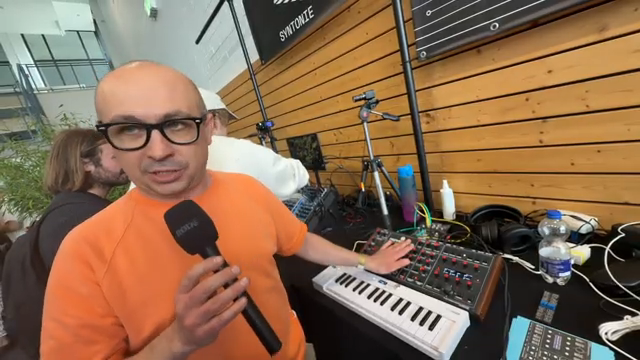
"The price was the main deciding factor, that's the quality of the components."
("Das Preis war ja Hauptentscheidungsfaktor, das ist Qualität der Komponenten.")© Screenshot/Quote: Sequencertalk (YouTube)
Sound Examples: The Dirt Lives!
The sound examples in the video impressively show how the POLIVOKS-8 moves between raw aggression and subtle modulation. Filter sweeps, layer sounds, and modulation tricks hint at the potential of this synthesizer. Especially the interplay of the two filter types and the storable modulations whet the appetite for more. If you want to experience the full machine character, you shouldn’t miss the live demonstrations in the video – some sonic foldings are simply better heard than described.
Translated from German. Read the original here: https://synthmagazin.at/sequencertalk-dekonstruiert-den-polivoks-8-sowjet-charakter-im-polyphonen-maschinenraum/
More articles about these products:
Watch on YouTube:
Latest articles
Watch on YouTube:
Visit the channel:
https://www.youtube.com/SequencerTalk
https://www.youtube.com/SequencerTalk
Links from SequencerTalk:
SequencerTalk Supporte uns!: https://sequencertalk.synthesizers.de
Instagram: https://instagram.com/sequencertalk
Links Moogulator: https://linktr.ee/moogulator
Links Dean: https://linktr.ee/deanfreud
Impressum: https://moogulator.com/moogulator/about
Sponsored links:
If you purchase via these links, we may earn a small commission – at no extra cost to you. The link opens an Amazon keyword search, and results may vary depending on availability.
Elta Music Polivoks-8
🔗 Check price on Amazon
🔗 Check price on Amazon