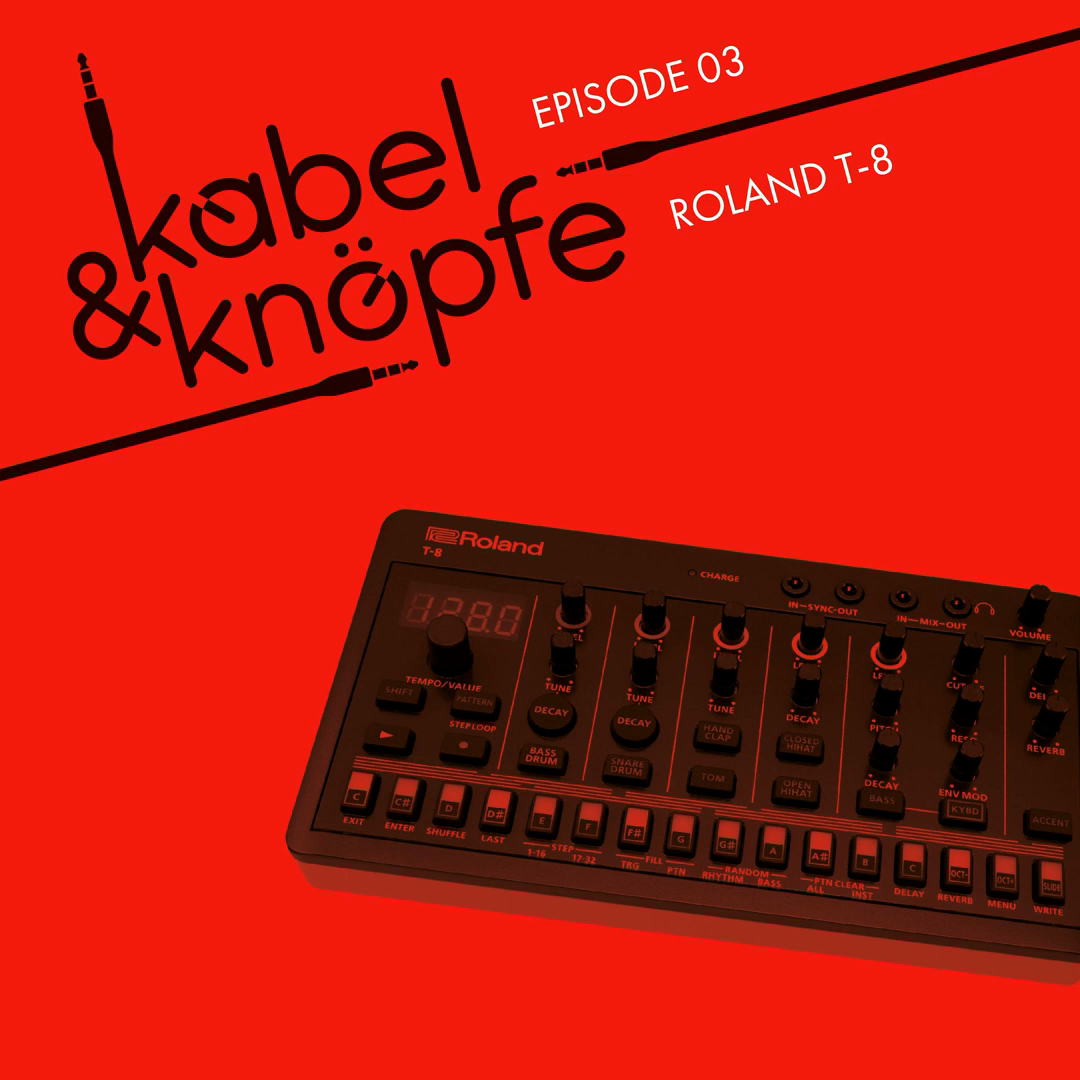
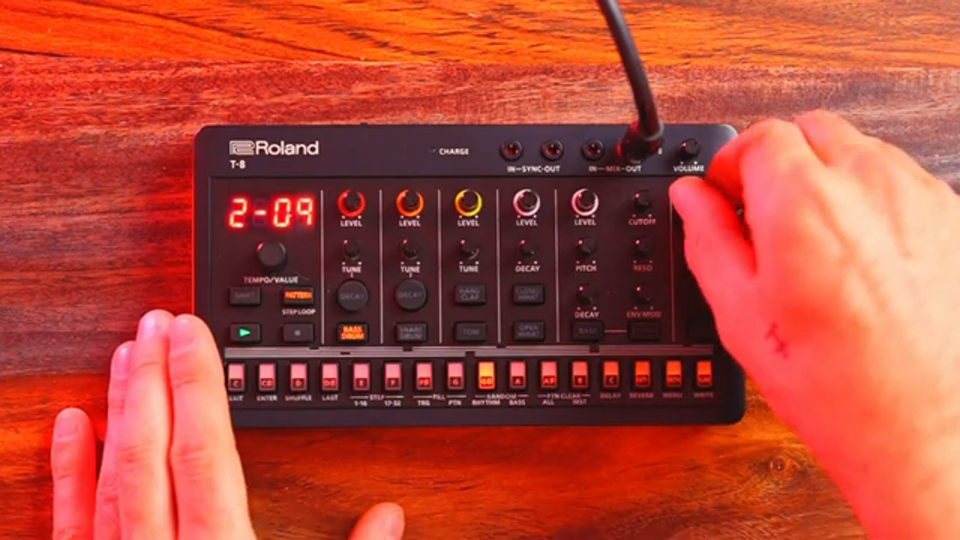
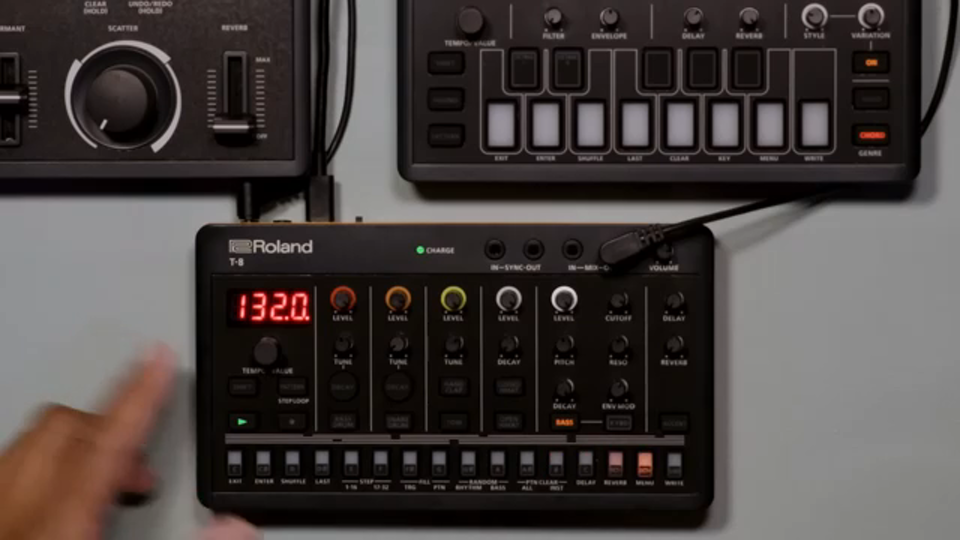
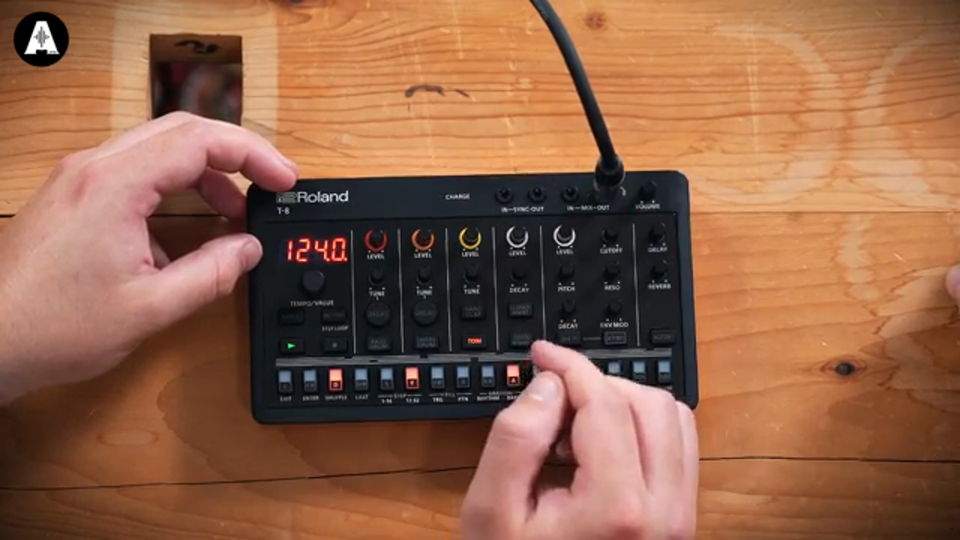
The Roland T-8 is a compact beat machine in Roland’s AIRA Compact range. Creators describe random bass-pattern generation as a source of ideas, and a channel that can handle either its associated sound or handclaps. They also report a crowded layout and controls that often require menu navigation.
Anyone expecting to find every function at a glance may need patience: Stefan Gubatz describes the menus and shortcuts as far from self-explanatory.
Stefan Gubatz
„Ich war wirklich entsetzt, wie wenig intuitiv sich das Gerät bedienen ließ. Man muss tatsächlich für viele Dinge durch Menüs steppen, um dorthin zu gelangen, wo man hinwill. Sicher gibt es einige Shortcuts, aber auch da ist nicht alles so ganz ersichtlich, wie man sich das manchmal wünschen würde.“
ich war wirklich entsetzt, wie wenig intuitiv das Gerät zu bedienen war. Also man muss hier tatsächlich für viele Dinge durch Menü steppen, um da hinzukommen, wo man hin will. Es gibt sicherlich einige Shortcuts, aber auch da, naja es ist nicht alles so ganz so ersichtlich, wie man sich das manchmal gerne wünschen würde.
Roland T-8: From laptop pattern sketches to complete arrangements
An independent desktop editor combines drum and bass editing with generators and song chains. Computer playback makes sketches audible without a connected T-8.
+
A bass phrase takes shape on a laptop while the Roland T-8 stays in the rehearsal room: wcmCloud's independent editor enables that workflow. Its computer playback uses drum samples and a simple bass synthesizer for trying ideas. Later, edited patterns can be auditioned over USB MIDI using the T-8's sounds. A sketch made away from the hardware becomes material for the instrument.
The interesting step is turning a loop into a structure. Rhythm and bass generators provide starting material; the song view connects patterns with repeats and fill transitions. For an acid sketch, a recurring bass phrase could hold several rhythmic variations together. The arrangement can also be exported as MIDI notes or pattern changes for the T-8.
Recent progress supports that experimentation: a shared undo history reverses edits, while external MIDI clock connects playback to a DAW. The computer sounds support composition; the connected T-8 provides the final sonic comparison.
Compatibility and limitations
For Roland AIRA Compact T-8. Packages for macOS, Windows and Linux, each in x64 and ARM64 builds. Hardware audition uses USB MIDI; pattern transfer uses PRM backups in USB drive mode. No documented mapping to hardware revisions.
Write to T-8 replaces all 64 patterns; save existing material separately first. MIDI is unavailable in USB drive mode. Computer playback is not a definitive reproduction of the T-8 sound. Independent project without Roland endorsement; no hardware tests performed by us.
Liam Killen finds the layout too cramped for mixing and muting parts. Despite the punch he says the unit delivers for its size, working on the small surface becomes harder.
„In terms of like performance/music production, I believe that there is such a thing as being too small. And despite how much punch this thing packs for its size, it is pretty tough to like get in there and, you know, mix or even just like mute parts. It's small. There's like a lot going on in such a small area. So yeah, that could definitely be considered a downfall.“
The speakers at Andertons Synths, Keys and Tech describe the channel as able to provide either its associated sound or handclaps; the other option can be muted.
Read the full statement
„This mode here also acts as a hand clap, so you have two options under one channel. - Oh. - Which is quite cool. - Is it either/or, can they both be? - Yeah, you can turn one on or mute the other one.“
ElektronautsThe hi-hats stay together in the recording
The Digitakt is meant to direct the T-8, but one owner prefers to record its finished sequences instead. With external control, they miss the hi-hats cutting each other off. That interplay is precisely what they enjoy. So the groove moves on as audio.
+
In an August 2024 discussion, users consider sequencing individual T-8 voices from the Digitakt. One owner of both devices has tried this, but chooses another approach: sampling the T-8’s sequences into the Digitakt. The reason is the hi-hats. In their experience, the hats do not cut each other off when controlled externally. That interplay is exactly what they find compelling about the machine.
A specific alternative follows: could the Digitakt play only the bass while the drums stay on the T-8’s internal sequencer? The experienced owner thinks this is possible, but no completed test is documented. They also suggest sampling individual hats onto a Digitakt track. Their own practice remains recording complete sequences to preserve how the parts work together.
A T-8 runs through the Bastl Kastle 2 FX Wizard. Most of its drums get buried in the resulting jam, so extra drum parts from the DAW take over. The original tracks remain faintly in the background. Only the kick comes entirely from the processed T-8 signal.
+
For a WeeklyBeats post, a musician connects the T-8 to the Bastl Kastle 2 FX Wizard. The session is productive, but most of the T-8 drums are overwhelmed in the result. They therefore add further drum parts in the DAW. The original drums are not removed completely: by their account, they remain in the background as part of the mix’s colour.
One voice, however, retains a leading role. The kick comes entirely from the T-8 and runs through the Wizard. The drums thus take on two different jobs in the same recording: the processed kick stays up front, while other T-8 drums contribute only a trace of their original shape. One response specifically praises the contrast between a crunchy bass and prominent percussion. The musician does not describe which additional drums were used or how the effect parameters were set.
The thing that's interesting about the T8 and the entire series is that they're geared towards beginners in a way, like on the surface they're very easy to use. But when you dive in, there's a lot there.
From: Aira Compact T-8 Deep Dive // Yes it has side chain
The T8 has some depth in it's advanced programming and effects capabilities, such as effect sends per instrument, velocity, shuffle and more. In this pattern I've added shuffle to swing the beat, sub step for trailing the hats, and probability to randomize playback. Last step allows you to create interesting loop points and keep the sequence fresh.