Make Noise 0-CTRL: Two rows become one longer journey
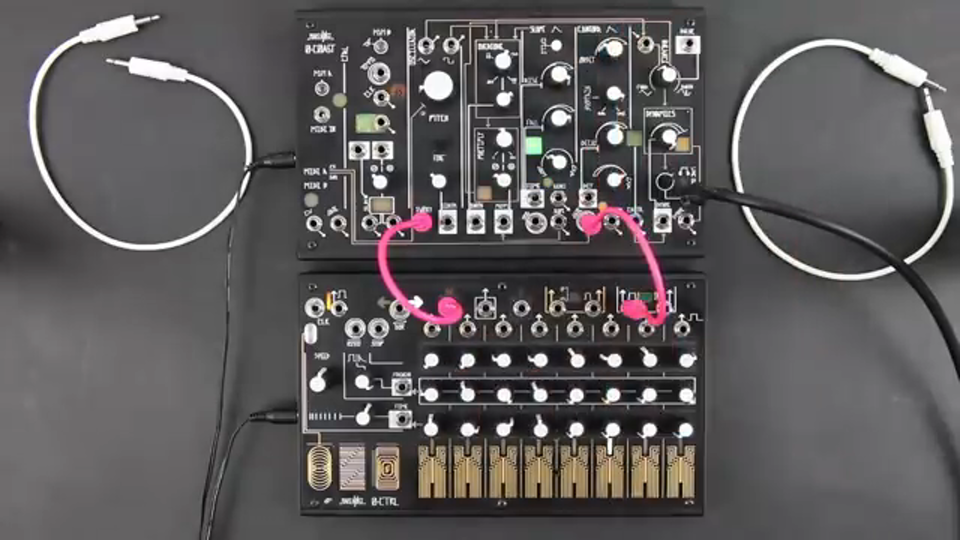
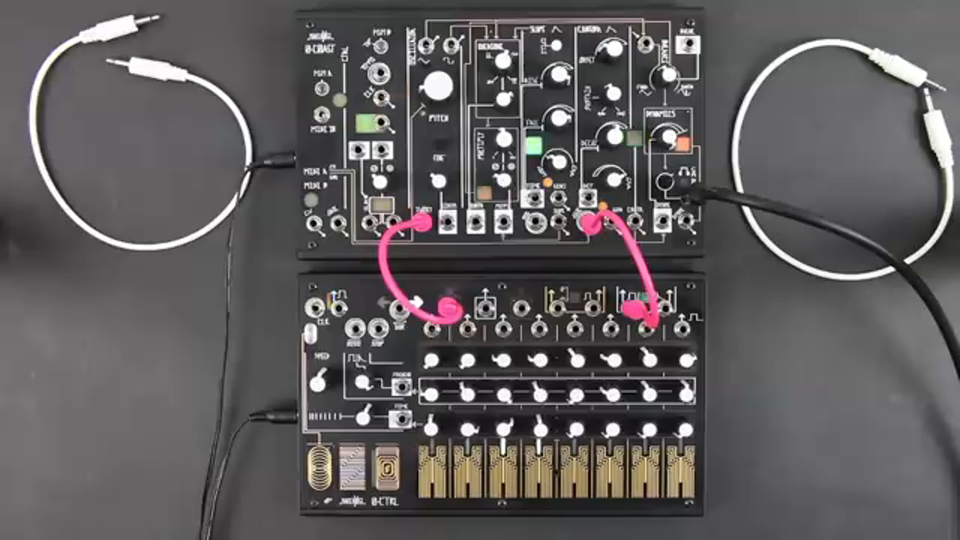
The Make Noise 0-CTRL is a standalone, touch-controlled controller and sequencer for modular synthesizers. It has eight steps with touch plates and knobs, plus gate, CV and contour connections for patching.
A sequential switch turns two short rows into a more mobile sequence. The example shows how a patch can extend a sequence rather than merely play it.
Perfect Circuit
„And now what we can do, we can use a sequential switch to switch between the sequences and create a longer sequence with more variation and more movement.“
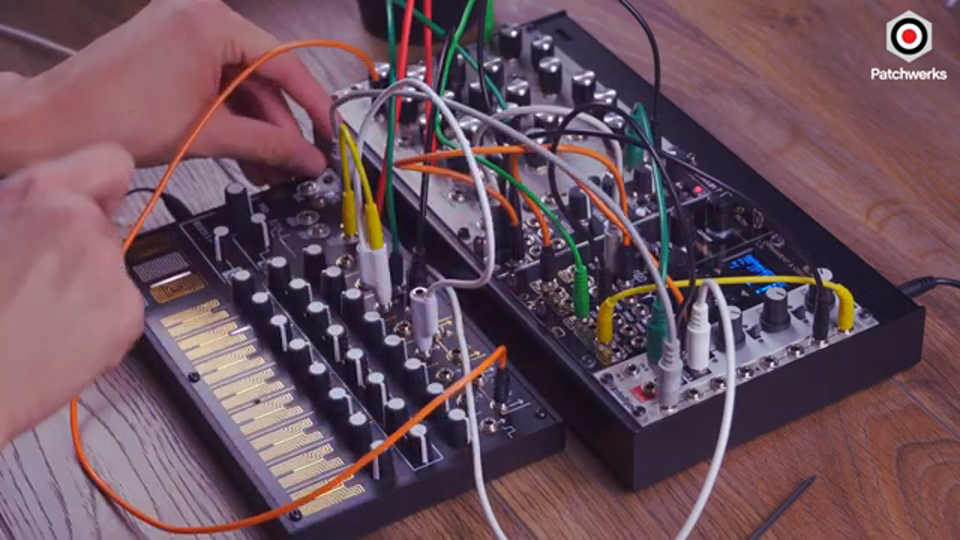
Patchwerks points to the separate form factor as useful when making changes directly on the controller while working with an existing patch.
„it's all about having the power in your hands to change between things without really having to reach into the rack where there may be a lot of different cables or you know it's standalone design and really lends itself to this sort of kind of adding to a pre-existing patch“
According to MAKEN0ISE, gate level at the contour input can affect the sustain phase. In the described patch, the creator uses the dynamic gate output to sequence contours of varying strength.
„The sustain phase of the contour circuit can be modulated by changing the gate's level at the gate input up to a maximum level set by the sustain knob. Because of this, we can use the dynamic gate output to sequence contours of varying strength throughout our melody.“
MAKEN0ISE describes variable gate strength as uncommon, since many gate inputs, according to the creator, do not respond to its level.
Read the full statement
„If you are familiar with modular synths, then you probably know that variable strength gate outputs are uncommon because most gate inputs, by definition, do not care how strong a gate is.“
Eight steps, two grooves: on Reddit, one user connects step outputs 1 and 5 to the direction input. This creates two different pendulum patterns that can be switched between by touch. One figure remains as an anchor while the other is developed by ear.
+
Two sequences do not have to occupy two separate memory slots on the 0-CTRL. One user connects the gate outputs of steps 1 and 5 to the direction input with a stack cable. With the clock running, this creates two paths through the same eight positions: 1–2–3–4–5–4–3–2 and 5–6–7–8–1–8–7–6. Touch lets the user switch between them.
The key is the pendulum behavior: the turning points are not played twice, and the run can reach beyond the end of the step sequence. Asked whether this works like an analogue scene change, the user describes their approach. First, they develop a suitable figure, copy the knob settings by eye to the other section, then continue changing them there. After that, they return to the first. The groove grows alternately on both sides, while a usable version remains as a point to return to: room to keep building without losing your footing.
A little-used 0-CTRL prompts a Reddit user to look for other tasks. One reply turns it into a sound source: a square wave drives the clock in the audio range, while reset limits the cycle. Touch changes its length and selects lower divided tones for a droning bass line.
+
The starting point is a 0-CTRL that is not getting much use, prompting a search for tasks beyond conventional sequencing. One reply describes a bass application in which the device itself generates periodic voltages in the audio range. A fast square wave is sent to the clock input; the user also suggests the 0-Coast's Slope circuit as a possible source.
A step output is connected to reset. Touching different step plates changes the length of the repeating cycle and therefore the division of the incoming frequency. A row with one step turned up and the others turned down provides the repeating pattern. In response to a follow-up, the user explains the wiring in more detail and describes it as their most common use: a droning bass line whose steps explore different subharmonics. They assign positions to intervals including a fifth, minor third, seventh and octaves. Step selection becomes pitch selection.