Think your patch game is strong? Monotrail Tech Talk begs to differ, unleashing the polarizer as a wild card for serious modulation mischief. Forget boring static LFOs and vanilla envelopes – this deep-dive video turns a humble utility into a rave bunker’s Swiss Army knife. Expect inverted saws, mangled clocks, and enough creative voltage abuse to make your sequencer blush. If you’re not twisting polarities by the end, you’re missing the party.
21. October 2026
SPARKY
Monotrail Tech Talk: Polarizer – The Secret Sauce Your Modular’s Missing
Polarity on Parade: Why the Polarizer Rocks
Let’s be real: some modules are workhorses, others are straight-up party starters. The polarizer sits somewhere chaotically in-between – rarely the centre of attention, but the backbone of modular mischief. Monotrail Tech Talk kicks off by putting the polarizer on the table as a tool you keep coming back to, whether you’re after modulation shenanigans, audio-rate weirdness, or clock signal vandalism.
This unassuming utility turns boring modulation signals into dynamic club weapons. Run your LFOs, envelopes, or even humble gates through it and suddenly everything’s got more depth and twist. It’s the sort of module that lurks in the shadows but makes other modules actually earn their keep. No hype – if you want to drag your patches out of the beige zone, start here.

"Polarizers can be used to add interest to modulation signals like LFOs, envelopes and sequences but also for audio rate signal manipulation and wave shaping and even mangled time-based signals like gates, clocks and patterns."
© Screenshot/Quote: Monotrailtechtalk (YouTube)
Signal Flipping: Inversion and Control
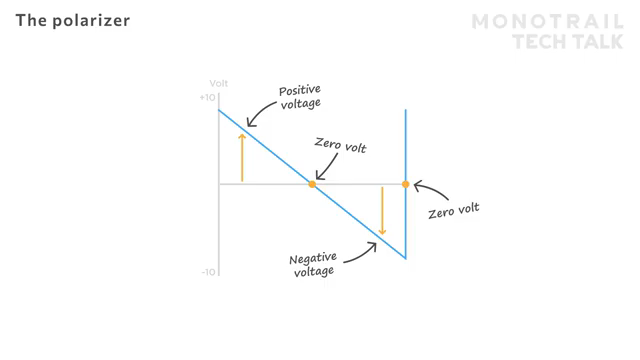
"A polarizer can smoothly transition any signal from regular to a version of that signal with inverted polarity."
© Screenshot/Quote: Monotrailtechtalk (YouTube)
Here’s where things get spicy: the polarizer doesn’t just flip your signals upside down, it lets you CV how much you flip. Turn the knob, and your saw wave LFO fades out, then comes back upside down, morphing from rise to fall. Suddenly, your filter modulations get personality disorders on command.
Unlike a plain attenuverter, the polarizer dishes out full CV control over that inversion. Want a sine LFO to swing your saw from regular to inverted and back? Sorted. Throw in envelopes or even bipolar LFOs, and you’re crossfading between alternate realities in real time. It’s not just about signal reversal – it’s about voltage-morphing on a dancefloor schedule.
Practical Patches: From Boring to Bonkers
Monotrail Tech Talk doesn’t waste your time – straight into patch examples that show why the polarizer’s a sleeper hit. Audio gets warped, envelopes become unpredictable, and even your clock patterns start swinging with new groove. A basic drone turns into a moving landscape when a polarizer modulates filter cutoffs, with LFOs morphing from rising to falling shapes on the fly.
You get classic tricks like plucky envelopes flipping filter behaviour, ring mod effects with dual oscillators, and clock mangling that makes your four-on-the-floor beat stutter like a broken toaster. The best bits? When the polarizer gets modulated itself, you end up with shifting accents and evolving patterns – pure modular magic you have to hear to believe. Honestly, trying to explain all these patches in text is like describing a sunrise in grayscale – just watch the video for the full colour chaos.
DIY Danger: Patch Your Own Polarizer
Don’t have a polarizer module? Stop whining and patch your own. Monotrail shows a classic hack: two VCAs, a couple of inverters or attenuverters, and a mixer. Feed your signal straight into one VCA, through an inverter into the other, and blend them at the output. Modulate the VCAs with opposing voltages, and bam – you’ve got polarizer action without dropping extra cash.
It’s scrappy, but it works. If you’re the sort who’s always looking for an excuse to squeeze more out of your rack (and who isn’t?), this is peak modular attitude. Sure, it’s not as slick as a dedicated module, but it’ll get you flipping signals and wrecking patterns in no time.

"You can patch one yourself if you have two VCAs and two attenuverters or regular inverters."
© Screenshot/Quote: Monotrailtechtalk (YouTube)
Test Lab: Voltage Mayhem and Happy Accidents

"The module stays interesting because it lends itself for experimentation."
© Screenshot/Quote: Monotrailtechtalk (YouTube)
The real fun starts when you ditch the manuals and just jam. Monotrail admits the polarizer shines brightest when you throw random CVs, envelopes, and LFOs at it and see what comes out. Mix up your modulators before hitting the polarizer and you’ll discover wild new shapes, unexpected wobbles, and filter modulations that sound like a robot learning to dance.
This is the kind of module that rewards curiosity. Every time you patch it differently, it spits out something fresh – from filter tweaks to resonance freakouts. It’s a proper voltage playground, and if you’re not getting weird with it, you’re missing the whole point of modular. Go experiment, break your usual habits, and let the polarizer show you some new tricks.
This article is also available in German. Read it here: https://synthmagazin.at/monotrail-tech-talk-polarizer-das-geheime-modul-das-deinem-modular-fehlt/
More articles about these products:


Watch on YouTube:
Latest articles
Watch on YouTube:
Visit the channel:
https://www.youtube.com/MonotrailTechTalk
https://www.youtube.com/MonotrailTechTalk
Links from MonotrailTechTalk:
Patreon: https://patreon.com/monotrail
Instagram: https://instagram.com/monotrail/
Sponsored links:
If you purchase via these links, we may earn a small commission – at no extra cost to you. The link opens an Amazon keyword search, and results may vary depending on availability.
Attenuverter
🔗 Check price on Amazon
🔗 Check price on Amazon
Döpfer Dual Polarizer
🔗 Check price on Amazon
🔗 Check price on Amazon
Maastrom Archon
🔗 Check price on Amazon
🔗 Check price on Amazon