Make Noise, the Asheville-based maestros of modular mischief, return with a deep-dive into the GTE—a module designed to extract, mutate and re-route rhythmic and melodic content in a Eurorack setup. In this video, the GTE is put through its paces alongside René and Jumbler, demonstrating how gates can be conjured from CV sequences and then twisted into new creative forms. Expect a blend of technical patching, hands-on modulation, and a performance that fuses visual art with modular synthesis. If you’re after inspiration for dynamic sequencing and generative patchwork, this is a prime slice of Make Noise’s exploratory ethos.
16. April 2026
MILES
Make Noise GTE: Rhythmic Alchemy and Modular Gatecraft
Make Noise GTE, Make Noise Jumbler, Make Noise Multi-Mod, Make Noise Rene
GTE in the Modular Spotlight
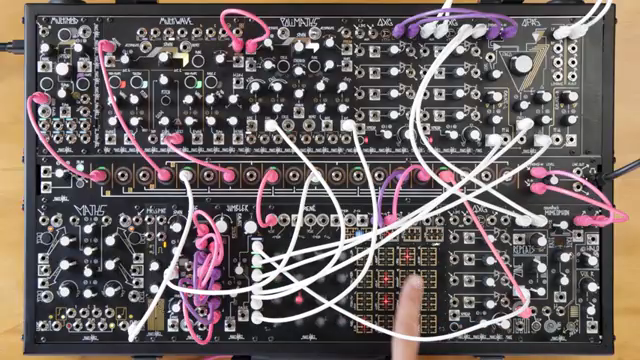
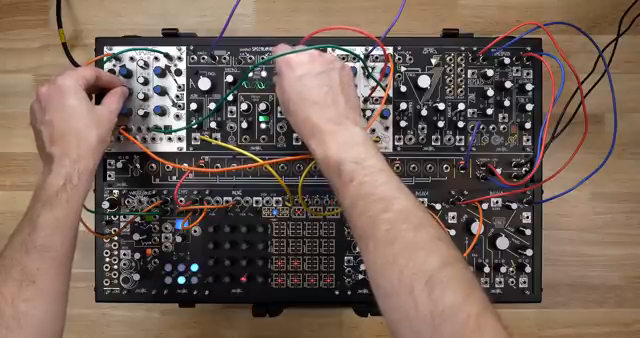
The video opens with Make Noise setting the stage for the GTE module as a central player in rhythmic and melodic generation within a modular system. The demonstration is rooted in a patch that links René’s sequencer output directly into the GTE, immediately highlighting the latter’s ability to interact with complex CV streams. This isn’t just about triggering envelopes or simple gates—it’s about extracting meaningful rhythmic information from melodic sequences, a trick that becomes the backbone of the patch.
From the outset, the GTE is shown as more than a utility; it’s a creative tool for sculpting the timing and structure of a patch. The workflow feels organic, with the GTE’s channels mapped to different destinations, setting up a playground for evolving patterns. The approach is typical of Make Noise’s exploratory style, inviting the viewer to think beyond straightforward sequencing and consider how rhythmic content can be derived and transformed on the fly.
Gate Extraction and Modulation Mastery
A key feature on display is the GTE’s ability to extract gates from the CV output of a sequencer—here, René’s pitch sequence is multed both to a sound source and to the GTE’s span input. This dual routing allows the GTE to generate gates based on pitch information, effectively translating melodic contours into rhythmic triggers. The controls are set to ensure the full range of the sequence is available to the GTE, maximising its responsiveness.
The demonstration goes further, showing how external modulation sources, such as Multi-Mod, can be used to automate and manipulate the GTE’s outputs. By adjusting the output range of René, the patcher can control which notes trigger certain GTE channels, resulting in intricate, evolving patterns. The interplay between pitch, gates, and modulation is at the heart of the patch, offering a glimpse into the kind of nuanced control that modular aficionados crave.

"In the GTE intro video, we briefly touched on extracting gates from the CV out of a sequence."
© Screenshot/Quote: Maken0Isemusic (YouTube)
Dynamic Sequencing: Patch and Play
"When I set it to the three or four octave range, they're more likely to get these longer ring outs on the highest notes."
© Screenshot/Quote: Maken0Isemusic (YouTube)
The workflow highlighted in the video is all about dynamic manipulation—patching and repatching to keep the sequence alive and unpredictable. By routing the first six GTE channels through the Jumbler, the patcher sets up a system where outputs can be rerouted in real time, either manually or via modulation. This approach encourages experimentation, as the destinations of rhythmic triggers can be changed on the fly.
The video demonstrates how adjusting parameters like fall time and oscillation can yield different results depending on which GTE channels are active. The patcher uses the highest notes to trigger longer ring-outs, and by tweaking the sequence range, can fine-tune which events get emphasised. This section underscores the GTE’s role as a tool for hands-on, gestural sequencing—ideal for those who like their modular rigs to surprise them.
Jumbler: The Chaos Conductor
The integration of the Jumbler module is a highlight, showcasing its ability to reroute GTE outputs and add another layer of unpredictability. By clocking Multi-Mod to the same pulse as the main sequence, the patcher uses a square wave to toggle between different Jumbler rotations. This simple automation yields complex results, as the routing of gates shifts in time with the sequence, creating evolving patterns without manual intervention.
Turning up the Radiate parameter allows for blending of outputs, further enriching the patch’s texture. The video also explores using GTE’s even and odd outputs to modulate René’s behaviour—switching locations or sequence directions based on gate activity. This interplay between modules exemplifies Make Noise’s philosophy of open-ended, patch-based composition, where each element can influence the others in unexpected ways.

"We can automate it in a simple way, taking a square wave output from multi-mod, which is clocked by the same leading clock, we use that to toggle between two different rotations of the jumbler."
© Screenshot/Quote: Maken0Isemusic (YouTube)
Visual Scores and Modular Performance
Beyond the technical patching, the video features a performance based on a visual score by Tod Antilla, interpreted by His Wired Moves. This segment bridges the worlds of visual art and modular synthesis, using the GTE-driven patch as the sonic realisation of a graphic composition. The result is a piece where musical gestures are guided by visual cues, highlighting the expressive potential of modular systems.
The inclusion of the visual score performance reinforces the idea that modular synthesis is as much about interpretation and creativity as it is about circuitry. Make Noise’s presentation here is a reminder that modules like the GTE are not just technical tools—they’re instruments for translating abstract ideas into sound, whether those ideas come from a napkin sketch or a sequencer’s CV output.
This article is also available in German. Read it here: https://synthmagazin.at/make-noise-gte-rhythmische-alchemie-und-modulare-gatekunst/
More articles about these products:
 Signal Sounds and Chris Miller: Where Serge, Cybernetics, and Sonic Storytelling Collide
 Signal Sounds: One Year Inside the Cric’s Sonic Labyrinth
 Make Noise Jumbler: Patch Routing Gets a Shake-Up
 Make Noise XPO: Dual 1v/Oct Inputs—A Patchable Playground
 Make Noise SpectraNoise Update: James Cigler Unleashes Chaos and Noise on the Spectrophone
 Make Noise Bruxa: A Patchable Pathogen in the Modular Ecosystem
Watch on YouTube:
Latest articles
Watch on YouTube:
Visit the channel:
https://www.youtube.com/MAKEN0ISEMUSIC
https://www.youtube.com/MAKEN0ISEMUSIC
Links from MAKEN0ISEMUSIC:
website: https://www.makenoisemusic.com
instagram: https://www.instagram.com/makenoisemusic
twitter: https://twitter.com/makenoisemusic
facebook: https://www.facebook.com/makenoiseco
Sponsored links:
If you purchase via these links, we may earn a small commission – at no extra cost to you. The link opens an Amazon keyword search, and results may vary depending on availability.
Make Noise GTE
🔗 Check price on Amazon
🔗 Check price on Amazon
Make Noise Jumbler
🔗 Check price on Amazon
🔗 Check price on Amazon
Make Noise Multi-Mod
🔗 Check price on Amazon
🔗 Check price on Amazon
Make Noise Rene
🔗 Check price on Amazon
🔗 Check price on Amazon