Intellijel’s Atlantix module fuses envelope generation and voltage controlled amplification into a single, cleverly integrated Eurorack section. In this official walkthrough, the Intellijel team dives into how the envelope and VCA are normalled for instant patching, yet remain flexible enough for adventurous rerouting and external sources. Expect a practical, patch-focused demo that highlights the module’s speed ranges, drive modes, and modulation options—all with the brand’s signature clarity. If you’re after streamlined sound sculpting without sacrificing modular freedom, this guide is a must-watch.
5. July 2024
MILES
Intellijel Atlantix: Envelope & VCA Section – A Patchable Powerhouse for Modular Sound Shaping
Envelope and VCA: Modular Mates in One Panel
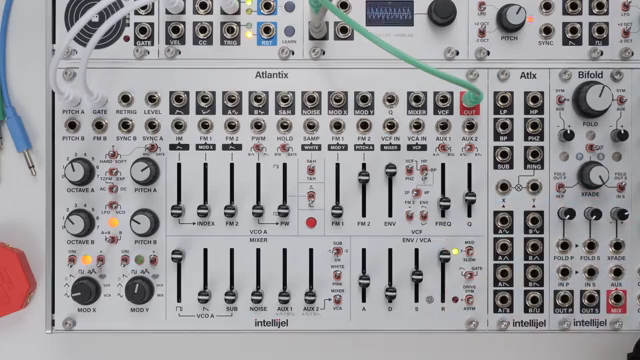
Atlantix takes the classic pairing of envelope and voltage controlled amplifier and merges them into a single, tightly integrated section. This design choice reflects the reality of most synth patches: envelopes and VCAs are rarely far apart, and their interplay is central to shaping everything from plucky basses to evolving pads. By combining these two building blocks, Intellijel aims to streamline the patching process, letting users sculpt dynamics and timbre with minimal cable spaghetti.
What stands out in this approach is the balance between immediacy and flexibility. The envelope is hardwired to the VCA for instant results, but the architecture still encourages creative rerouting. This means you can achieve classic synth voices right out of the box, or break the norm by patching the envelope or VCA independently. The result is a module that feels at home in both minimalist setups and sprawling modular rigs.

"Atlantix combines its envelope and voltage controlled amplifier into one section of the panel, as these two building blocks are often closely linked."
© Screenshot/Quote: Intellijel (YouTube)
ADSR Sliders and Triple Speed Ranges: Shaping with Precision
"There are three speed ranges for the envelope - fast, medium and slow."
© Screenshot/Quote: Intellijel (YouTube)
The envelope section sports the familiar attack, decay, sustain, and release sliders, giving users hands-on control over contour and response. These sliders are not just cosmetic: their tactile feel invites real-time tweaking, making it easy to dial in snappy percussive hits or languid, evolving swells. The linkage to the VCA means every envelope adjustment is immediately audible, reinforcing the module’s performance-oriented ethos.
Crucially, Atlantix offers three distinct speed ranges—fast, medium, and slow—accessible via a dedicated switch. This isn’t just about tempo; it’s about the maximum time available for each stage of the envelope. Whether you’re after razor-sharp transients or slow-motion filter sweeps, the module accommodates a wide spectrum of modulation needs. The video demonstrates how these ranges affect the envelope’s behaviour, underscoring the module’s adaptability.
Normalled Connections and Patchable Outputs: Modulation Without Limits
Intellijel has wired the envelope not only to the VCA, but also to key modulation destinations like FM index, PWM, and the filter section. This means you can animate multiple parameters straight away, without reaching for a patch cable. For those who prefer to chart their own signal paths, a dedicated envelope output is provided, allowing the envelope to be routed anywhere in your system.
An additional inverse output delivers negative control voltage—handy for inverting modulation or creating more complex dynamic effects. This duality of normalled convenience and patchable freedom is a hallmark of Intellijel’s design philosophy, and the video makes it clear that Atlantix is as much about creative possibility as it is about workflow efficiency.
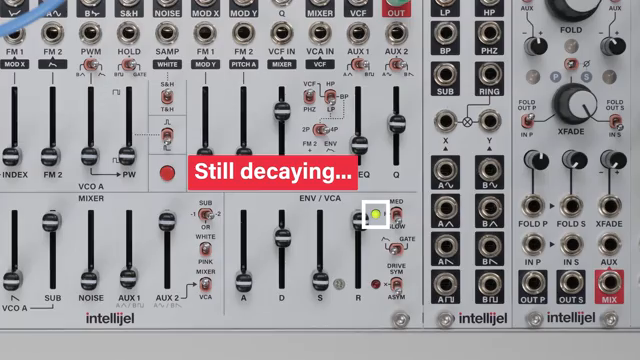
"As well as the envelope's linked to the VCA, it's also normal to the FM index modulator, FM2, PWM and the VCF section."
© Screenshot/Quote: Intellijel (YouTube)
Envelope or Gate: VCA Control on Your Terms
While the envelope is the default modulator for the VCA, Atlantix lets you flip a switch and assign the VCA level to respond directly to gate input instead. This is especially useful for scenarios where you want the VCA to remain open for the entire duration of a held note, while still using a short envelope to modulate other parameters like the filter. The video demonstrates this flexibility, showing how a consistent VCA level can be maintained even as the envelope shapes other aspects of the sound.
This approach is ideal for patches where articulation and sustain need to be decoupled, such as when layering percussive and sustained elements. The ability to quickly toggle between envelope and gate control adds another layer of versatility, making Atlantix a strong candidate for both traditional and experimental workflows.
Drive Modes and External Inputs: Expanding the Sonic Palette
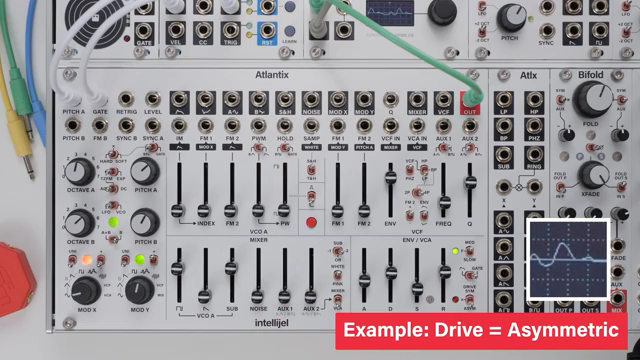
"In contrast, we have SYM or symmetric drive, where both positive and negative parts of the signal are clipped evenly."
© Screenshot/Quote: Intellijel (YouTube)
Atlantix isn’t just about clean envelopes and VCAs—it also features a drive circuit with three modes: bypass (X), asymmetric (ASYM), and symmetric (SYM). Asymmetric drive clips the positive and negative halves of the signal unevenly, introducing subtle harmonic coloration, while symmetric drive clips both sides evenly and adds a noticeable volume boost. The video encourages users to experiment with these modes, particularly in combination with the mixer and filter sections, to unlock a range of saturated and characterful tones.
Beyond internal routing, the VCA section accepts external sources, allowing you to process other oscillators or signals through Atlantix’s envelope and drive stages. Additional controls for retriggering the envelope, adjusting envelope level (useful for accents or velocity), and a manual gate trigger round out the feature set. These options make the module not just a core voice shaper, but a flexible processing hub for any modular setup.
This article is also available in German. Read it here: https://synthmagazin.at/intellijel-atlantix-envelope-vca-sektion-patchbare-klangformung-fuer-modular-fans/
Watch on YouTube:
Latest articles
Watch on YouTube:
Visit the channel:
https://www.youtube.com/intellijel
https://www.youtube.com/intellijel
Links from intellijel:
website: https://intellijel.com
forum: https://forum.intellijel.com
instagram: https://instagram.com/intellijel
facebook: https://www.facebook.com/intellijel
Sponsored links:
If you purchase via these links, we may earn a small commission – at no extra cost to you. The link opens an Amazon keyword search, and results may vary depending on availability.
Intellijel Atlantix
🔗 Check price on Amazon
🔗 Check price on Amazon