What if sound could be caught not by air, but by light? In this luminous exploration, HAINBACH guides us through the Rare Waves Photophone OCM-2—a microphone that listens with photons, not pressure. His poetic curiosity turns everyday objects into shimmering soundscapes, revealing textures that shimmer and slide like spectral ghosts. This is not just a review; it’s an immersion into a new way of hearing, where cheese graters, tape machines, and kalimbas become portals to otherworldly resonance. Prepare to drift into a world where stereo movement bends reality, and the boundaries of recording dissolve into light.
8. April 2026
LUMINA
HAINBACH Illuminates Sound: The Rare Waves Photophone OCM-2 as Sonic Prism
Listening With Light: The Photophone’s Unorthodox Vision
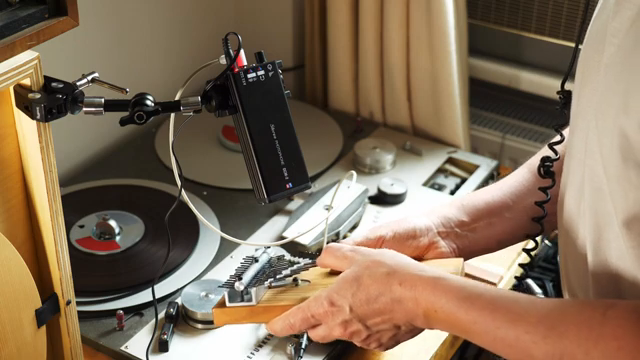
The Rare Waves Photophone OCM-2 doesn’t simply record—it translates the shimmer of light into sound, capturing vibrations from reflective surfaces in a way that feels almost alchemical. Instead of air, it reads the dance of photons, rendering stereo images that seem to hover in space. HAINBACH introduces this device with a sense of awe, describing it as one of the most intriguing microphones he’s encountered in years.
This approach is more than technical novelty; it’s a reimagining of what it means to listen. The Photophone’s hyper-focused pick-up pattern allows for glissandi and stereo movements that defy the limitations of traditional microphones. Each note and gesture is refracted through a prism of light, resulting in tones that are subtly surreal—like hearing the echo of a dream through a glass wall.
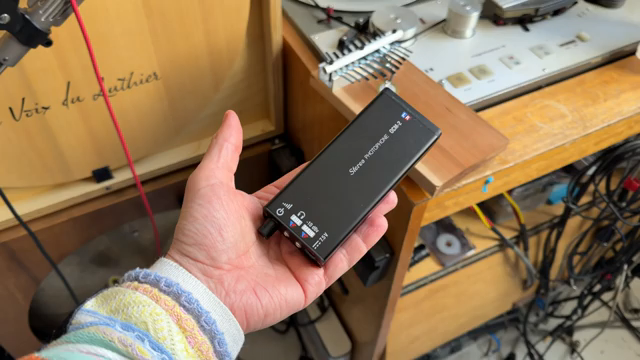
"This is one of the coolest microphones I've encountered in a long time."
© Screenshot/Quote: Hainbach (YouTube)
From Cheese Graters to Tape Machines: Everyday Objects, Unveiled
HAINBACH’s journey with the Photophone is a tactile adventure, where the mundane becomes magical. He begins with percussion, exploring cymbals and springs, discovering that the microphone’s sensitivity to reflective surfaces transforms even the simplest strike into a blooming stereo event. The edge of a cymbal sweeps sound in and out, while duller surfaces challenge the Photophone’s appetite for resonance.
The kitchen becomes a laboratory of sonic possibility. A cheese grater, with its constellation of holes, produces a cascade of unexpected timbres. But the true revelation arrives with tape machines—their rotating parts and reflective backsides become playgrounds for the Photophone, yielding results that are as haunting as they are beautiful. Here, tape is not just a medium but an instrument, plucked and bowed by light itself.
Surreal Stereo: The Photophone’s Sonic Mirage
"Due to its hyper-focused pick-up pattern, the Photophone makes it possible to create glissandi and stereo movements that would be impossible to record with a normal mic."
© Screenshot/Quote: Hainbach (YouTube)
What emerges from the Photophone is not merely a recording, but a spatial hallucination. Its hyper-focused pattern sculpts sound with surgical precision, allowing for stereo movements that swirl and glide across the field. Glissandi become liquid, and the stereo image stretches wide, as if the room itself is breathing.
There is an uncanny quality to the tones—slightly unreal, as if the source has been filtered through a thin veil of fog. HAINBACH notes that these textures are impossible to capture with conventional microphones, inviting listeners to don headphones and lose themselves in the immersive, shifting landscape. The Photophone doesn’t just document; it transforms, bending reality into a new sonic geometry.
Tangles and Haze: The Practical Shadows
Yet, every prism casts a shadow. The Photophone’s innovative design brings with it a set of practical challenges. Depending on the source, noise can creep in—sometimes a gentle haze, sometimes a more persistent presence. HAINBACH reassures us that most of this can be tamed with EQ or clever filtering, but it remains a factor to consider for the perfectionist ear.
Cable management becomes its own performance art. With two cables—one for stereo output, one for power—and often a third for headphones, tangling is almost inevitable unless meticulous preparation is made. This complexity can make the otherwise elegant device feel unwieldy, especially outside the studio. Still, the payoff is a sound that is both intimate and otherworldly, a fair trade for those willing to navigate the labyrinth.

"Depending on the source it can be pretty noisy but that's not such a big problem because that's easily filtered out either with eq or with a fingerprint math."
© Screenshot/Quote: Hainbach (YouTube)
For the Explorers: Where the Photophone Belongs
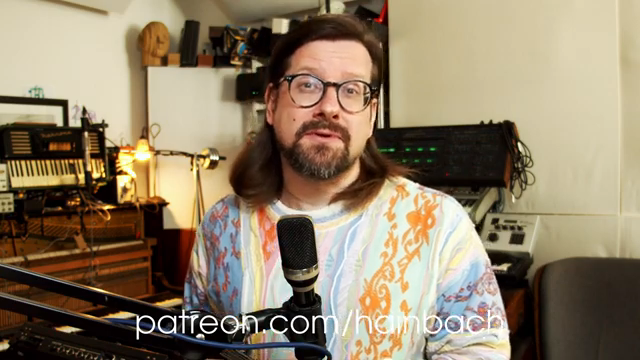
"In my opinion the photophone won't replace a regular mic or even a contact mic it's something else all together and you're going to employ this in different spots in different places."
© Screenshot/Quote: Hainbach (YouTube)
The Photophone is not here to replace your trusty condenser or contact mic. Instead, it opens a portal for those who seek new textures and uncharted spaces. HAINBACH sees it as a must-have for sound designers and experimentalists—those who want to capture the world’s hidden resonances, to build installations where audience noise disappears and only the pure reflection of vibration remains.
For percussionists, noise artists, and anyone drawn to the fringes of sonic possibility, the Photophone is a tool for discovery. Its ability to isolate, to avoid feedback, and to reveal the secret life of surfaces makes it uniquely suited for installations and fieldwork. The true magic, however, is best experienced in the video itself, where each sound blooms and dissolves before our eyes and ears—a reminder that some mysteries are meant to be heard, not just described.
This article is also available in German. Read it here: https://synthmagazin.at/hainbach-beleuchtet-klang-das-rare-waves-photophone-ocm-2-als-klangprisma/
Watch on YouTube:
Latest articles
Watch on YouTube:
Visit the channel:
https://www.youtube.com/Hainbach
https://www.youtube.com/Hainbach
Links from Hainbach:
Bandcamp: https://hainbach.bandcamp.com
Instagram: https://instagram.com/hainbach101
Homepage: https://hainbachmusik.com
Sponsored links:
If you purchase via these links, we may earn a small commission – at no extra cost to you. The link opens an Amazon keyword search, and results may vary depending on availability.
Rare Waves Photophone OCM-2
🔗 Check price on Amazon
🔗 Check price on Amazon