If you’re stuck using LFOs as mere vibrato machines, Frap Tools has a few ideas to shake up your modulation patchbook. In a brisk but detail-rich video, Giovanni from Frap Tools demonstrates three less-travelled LFO techniques: from envelope-driven pitch jumps to cross-modulated wobbles and polyphonic, voice-bouncing sweeps. Each trick is grounded in Eurorack logic, with clear signal flow and practical patch tips—no marketing fluff, just real-world modulation. A nerdy, patch-oriented look at how to get more from your LFOs, straight from the Italian design obsessives at Frap Tools.
26. August 2026
MILES
Frap Tools: Three LFO Tricks to Elevate Your Modular Patches
LFOs Beyond Cheap Vibrato: The Setup
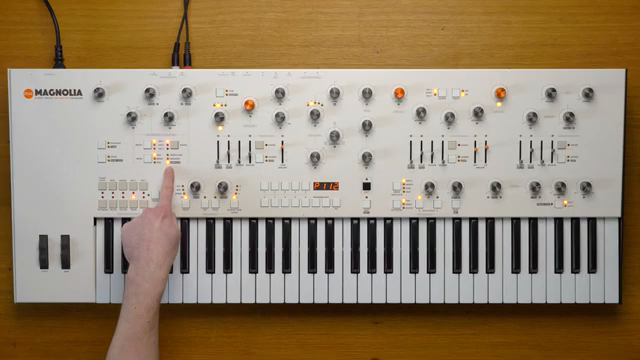
The video kicks off with Giovanni from Frap Tools laying out the premise: LFOs can do far more than pedestrian vibrato. As he succinctly puts it, the aim is to show three advanced yet accessible LFO tricks. The initial context is a modular patch with oscillators set to a sorted wave and their levels balanced, laying a clean foundation for modulation exploration. There’s a clear focus on practical, patch-based experimentation—no menu diving, just immediate results. This sets the tone for a video rooted in the realities of modular signal flow, not theory or feature lists.
One-Shot Envelopes for Dynamic Pitch Jumps
The first technique transforms a basic LFO into a one-shot, pitch-shifting envelope. Giovanni switches LFO 1 into envelope mode, making it unipolar and ensuring the output only rises above zero. He then sets it to a square wave so it toggles between just two voltage levels. Routing this LFO to oscillator pitch, he demonstrates that the modulation depth determines the pitch jump: a value of 50 sends the pitch up two octaves, while 25 yields a one-octave hop.
Fine-tuning the rate time creates a quick attack that pushes the pitch higher before it drops back, effectively mimicking a classic monosynth pitch envelope. To keep things musically lively, he tweaks the tuning and adds delay, resulting in a snappy, dynamic patch that’s as immediate as it is effective. This is a textbook example of using modular tools for more than their names suggest—an LFO as an envelope, doing melodic work.
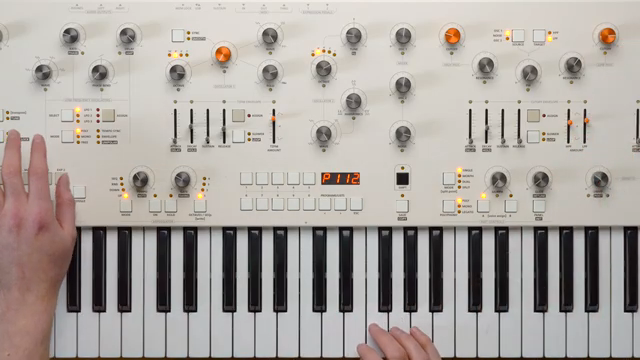
"We will set LFO number one to envelope mode, which will make it unipolar instantly."
© Screenshot/Quote: Fraptools (YouTube)
Cross-Modulated LFOs: Nested Modulation and Sync
"Now this technique is possible only with the square LFO, because if I used any other waveform, I would have had a very annoying sound."
© Screenshot/Quote: Fraptools (YouTube)
Next, the focus shifts to cross-modulation, using two LFOs to control one another for layered complexity. The patch is reset—delay off, key tracking added to the filter for extra brightness. The first LFO stays unipolar but is taken out of envelope mode and set to square wave, which avoids unwanted audio artifacts. The LFO can run in mono, modulating all notes in unison, or be tempo-synced for rhythmic movement—Giovanni demonstrates both eighth and quarter note divisions for the LFO rate.
To nest modulations, LFO 2 is also tempo-synced but set slower, and it modulates the rate of LFO 1. Both LFOs are in square mode, so the result is a stepped, machine-like modulation that remains musical thanks to sync. Delay is synced as well for cohesion, and the attack and release are smoothed for a less abrupt modulation shape. The outcome is a patch with evolving, clocked modulation layers—a modular answer to classic step-sequencing, but with all the flexibility of voltage control.
Sweeping-Frequency LFOs in Polyphonic Mode
The final trick dives into polyphonic LFO operation for those with multi-voice setups. Resonance is increased on the filter, and LFO 1 is set to polyphonic mode and a solid wave. Each voice now receives its own LFO instance, modulating cutoff with a snappy contour and moderate rate for movement. By applying an unused envelope to modulate the LFO rate, Giovanni creates a sweep: the LFO starts out fast and slows according to the envelope, giving each note a unique, organic motion.
Transposing everything down and closing the filter’s timbre, he highlights the effect: in polymode, the LFOs create a bouncing, ping-pong feel between voices. Monophonic LFOs are stiffer, less lively. As a final flourish, aftertouch is patched to bring the LFO rate back up, allowing expressive, real-time modulation. This technique demonstrates how voice-specific LFOs can animate a patch far beyond what global modulation achieves.
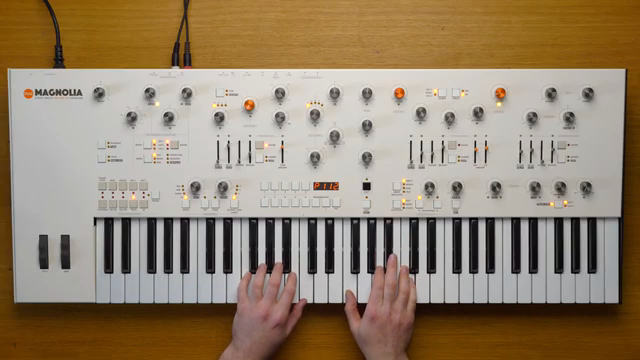
"I like to use this setting in polymode, so to have those kind of bouncing effects between one voice and another with their individual LFOs."
© Screenshot/Quote: Fraptools (YouTube)
This article is also available in German. Read it here: https://synthmagazin.at/frap-tools-drei-lfo-tricks-fuer-bessere-modular-patches/
Watch on YouTube:
Latest articles
Watch on YouTube:
Visit the channel:
https://www.youtube.com/FrapTools
https://www.youtube.com/FrapTools
Links from FrapTools:
website: https://frap.tools
instagram: https://instagram.com/fraptools
facebook: https://www.facebook.com/fraptools
twitter: https://twitter.com/fraptools
soundcloud: https://soundcloud.com/fraptools
Sponsored links:
If you purchase via these links, we may earn a small commission – at no extra cost to you. The link opens an Amazon keyword search, and results may vary depending on availability.
Frap Tools
🔗 Check price on Amazon
🔗 Check price on Amazon