Jogging House takes us deep into the architecture of his ambient track “Stenography,” crafted entirely on Elektron’s Tonverk using only kalimba samples. In this official Elektron walkthrough, we get a rare, methodical look at how a digital groovebox can be pushed for nuanced, evolving soundscapes—no granular engines, just careful looping, modulation, and effects routing. For those interested in the intersection of digital sampling, polyphonic engines, and hands-on performance, this video is a masterclass in subtlety and workflow. We break down the session, highlighting the Tonverk’s strengths and the creative decisions that shape Jogging House’s long-form compositions.
21. May 2026
LYRA
Elektron Tonverk in Action: Jogging House’s ‘Stenography’ Workflow Dissected
Setting the Scene: Kalimba, Tape, and Tonverk
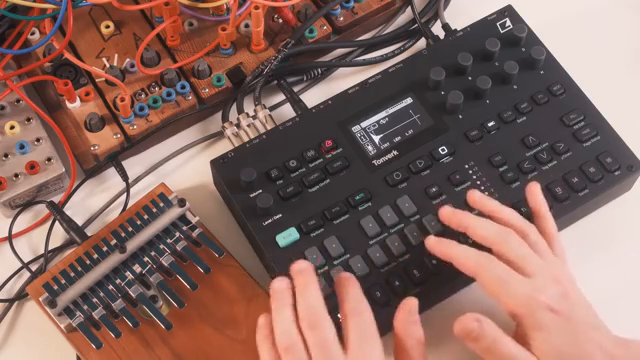
Jogging House opens the walkthrough by situating us in the sonic world of his new album “Sender,” with the track “Stenography” serving as our case study. The entire album, including this piece, was composed exclusively on the Elektron Tonverk, using only samples from his kalimba. The approach is refreshingly focused: all samples are prepared in advance, with the kalimba recorded through a Coco Quantus preamp for a touch of coloration, then sliced into 20–25 usable segments. This ritualistic sampling process is not just technical—it’s a way for Jogging House to set the creative mood before composition even begins.
He’s transparent about the production chain: what we hear in the video is the raw Tonverk output, bypassing the tape and mastering steps that shape the final album. The workflow is rooted in firmware 1.2, and Jogging House notes that any missing features are simply a matter of versioning. This context is crucial for understanding the limitations and choices in the demonstration, and it’s a reminder that firmware evolution can subtly shift an instrument’s creative landscape.
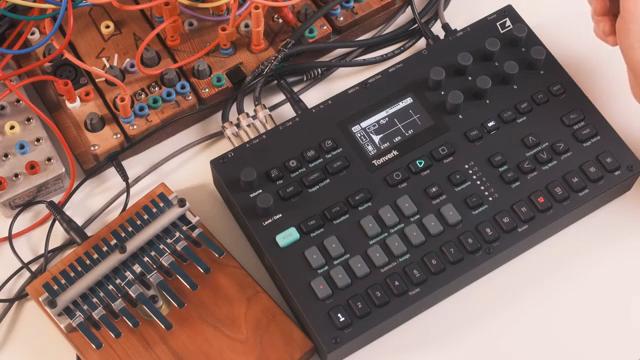
"I like to have all my samples there before I even begin composing."
© Screenshot/Quote: Weareelektron (YouTube)
Sampling, Looping, and the Architecture of Sound Design
"The reason why I'm using these subtracts is not because I'm doing as you heard any percussive work or anything like that... for me they are sort of like loop pools."
© Screenshot/Quote: Weareelektron (YouTube)
Jogging House’s workflow is built around meticulous sample preparation and looping. He uses Tonverk’s subtracts not for percussion, but as loop pools—each track loaded with a different kalimba sample, envelopes fully open, and loops set to run indefinitely. The artistry lies in finding the right loop points to avoid clicks and pops, and in dialing in loop lengths that balance presence and subtlety. Too short, and a sound becomes intrusive; too long, and it risks vanishing from the mix.
Each loop is tuned and filtered, often pitched down for warmth or left as recorded for contrast. Heavy filtering—especially with the state variable filter nudged toward bandpass—keeps the low end clean, preventing muddiness as layers accumulate. The process is iterative and deliberate, with Jogging House spending significant time adjusting loop lengths and tunings to achieve the desired mood. This is sound design as architecture: every loop and filter setting is a building block in the evolving structure of the track.
Polyphony, Modulation, and Tonverk’s Effects Matrix
Tonverk’s polyphonic engine takes center stage for tracks three through seven, each hosting a unique slice of kalimba, looped and sculpted with a suite of effects. Jogging House bypasses the granular engine entirely, focusing instead on the single-player polyphonic mode and its looping capabilities. The filter bank and chorus are used liberally, with FX LFOs modulating effect depth and speed to create a constantly moving soundbed. Effects routing is sophisticated: tracks are sent to buses loaded with fully wet delays, pitch shifters, reverbs, and distortions, each bus tailored for a specific textural role—delayed pitch-shift, distorted reverb, or wobbly reverb.
Modulation is everywhere. Each polyphonic track features subtle movement, whether it’s filter spread, panning, or pitch modulation. The single-player engine’s sample crossfade makes tight looping smooth and artifact-free, while envelopes (often attack-hold-decay, a nod to classic Elektron designs) shape the dynamics. The result is a lush, evolving pad-like layer that contrasts with the more percussive, plucky subtracts. The workflow is a testament to how digital modulation and effects can transform simple samples into a complex, immersive soundscape.
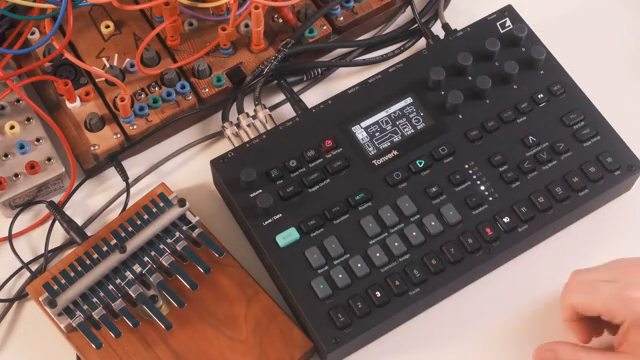
"Bus 2, it's very similar approach to the first bus but not a delay in this case—a fully wet reverb and a filter folder, which is my favorite distortion tool in the tone work so far."
© Screenshot/Quote: Weareelektron (YouTube)
Performance Meets Production: Sequencing and Sonic Interplay
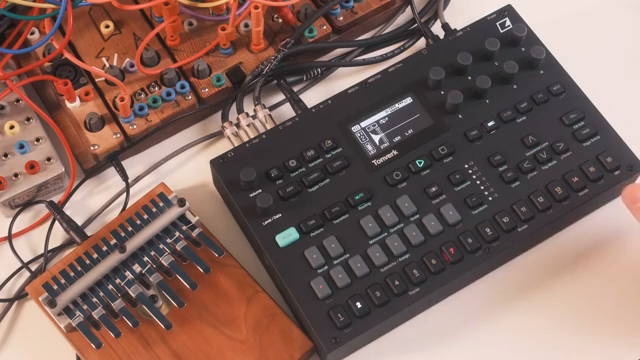
"Sometimes I'm going into the tempo and just moving it up one increment from 67.9 to 68 BPM and then later moving it down again."
© Screenshot/Quote: Weareelektron (YouTube)
The interplay between looped and sequenced elements is where Jogging House’s approach shines. The bass, always on track 8 for consistency, is a deeply pitched kalimba sample that’s sequenced rather than looped. This creates a subtle rhythmic tension with the looping subtracts, as their cycles drift in and out of sync over time. Rather than forcing perfect alignment, Jogging House embraces this phasing, occasionally nudging the tempo to realign elements and create a sense of organic movement.
He demonstrates how this technique produces a felt, rather than programmed, groove—something that would be difficult to achieve with strict sequencing alone. The performance is recorded live to tape, always within a single pattern, with sounds faded in and out or unmuted gradually. This hands-on approach blurs the line between production and live improvisation, leveraging Tonverk’s architecture for both structure and spontaneity.
Long-Form Evolution: Subtlety and Experimentation in Ambient Composition
Jogging House closes the walkthrough by reflecting on his long-form compositional process. Each track is a slow evolution, with subtle parameter changes—delay feedback, reverb filtering, chorus depth—accumulating over time to shift the sonic landscape. There are no abrupt transitions; instead, the music morphs almost imperceptibly, leading the listener to a different place by the end of the piece without ever revealing the exact moment of transformation.
This approach is enabled by Tonverk’s flexible routing and real-time control. Effects are layered, modulated, and occasionally pushed to extremes, but always with restraint. The architecture encourages experimentation: routing effects into effects, balancing dry and wet signals, and making small adjustments that add up over a ten-minute performance. It’s a workflow that rewards patience and attentive listening, and the video makes a strong case for the Tonverk as a tool for nuanced, evolving ambient music.
This article is also available in German. Read it here: https://synthmagazin.at/elektron-tonverk-im-einsatz-jogging-house-workflow-zu-stenography-seziert/
More articles about these products:
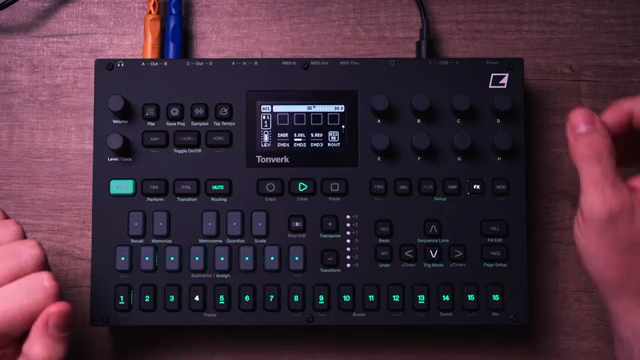 Elektron Tonverk: The Midlife Synthesist Unleashes the Groovebox Beast
 Sanjay C Dives Deep: LUNA 3.0, NOVA, and Gear That Slaps
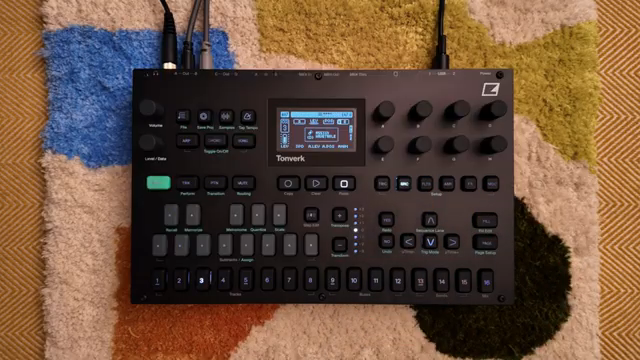 Elektron’s Wavefinder: Dual Wavetable Power for Tonverk Unleashed
 Andrew Huang’s 2025 Gear Picks: Grooveboxes, Glitch and Gearhead Gold
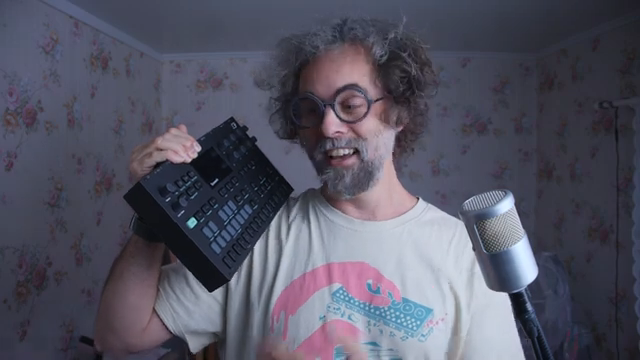 True Cuckoo Unleashes Elektron’s Tonverk: Sampling Gets Savage
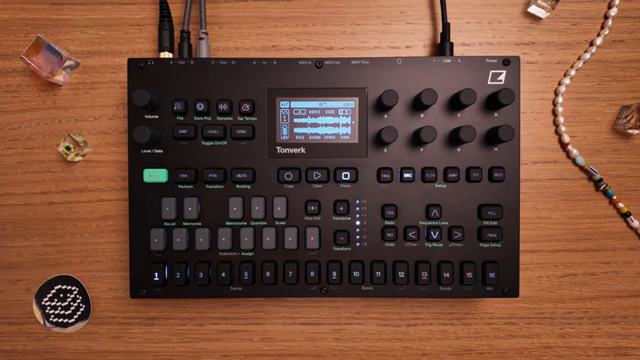 Elektron Unleashes Grainer: A Granular Playground in Tonverk OS 1.1.0
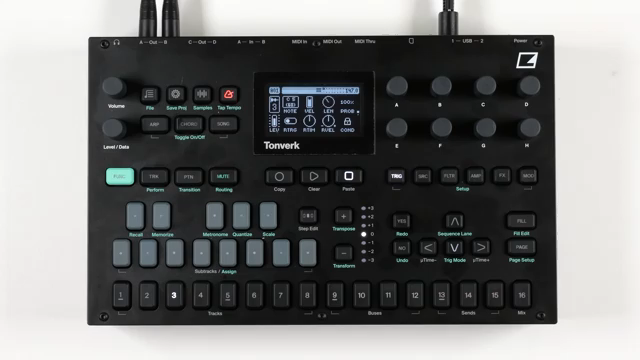 Sarah Belle Reid Unleashes the Nebulae of Elektron Tonverk
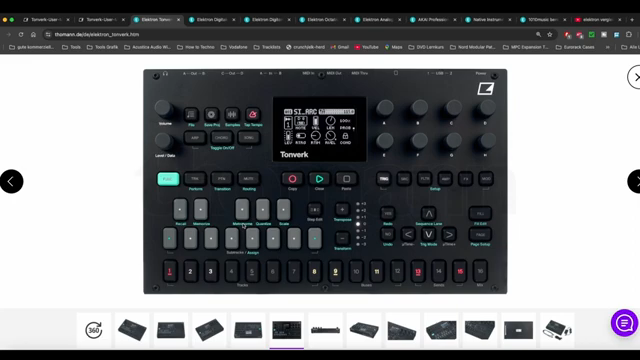 AudioTutorialExperts: The Battle of Sound Machines – Elektron Tonverk in Comparison
 AudioPilz’s Latest Dive: The RAW Truth
 Elektron’s Tonverk: Single Player & Multi Player Machines Demystified
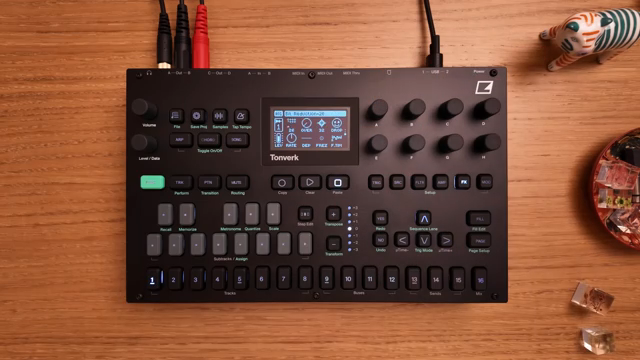 Elektron Tonverk: Deep-Dive into Tracks, Routing, and Audio Architecture
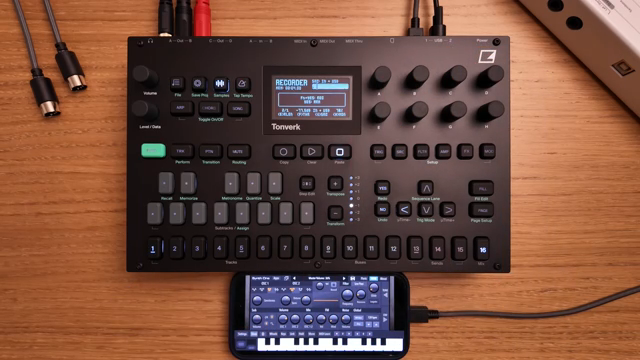 Elektron’s Tonverk Sampling: Deep Dive into Recorder and Auto Sampler Workflows
Watch on YouTube:
Latest articles
Watch on YouTube:
Visit the channel:
https://www.youtube.com/WeAreElektron
https://www.youtube.com/WeAreElektron
Links from WeAreElektron:
website: https://www.elektron.se
twitter: https://twitter.com/WeAreElektron
facebook: https://www.facebook.com/WeAreElektron
instagram: https://instagram.com/weareelektron
Sponsored links:
If you purchase via these links, we may earn a small commission – at no extra cost to you. The link opens an Amazon keyword search, and results may vary depending on availability.
Elektron Tonverk
🔗 Check price on Amazon
🔗 Check price on Amazon