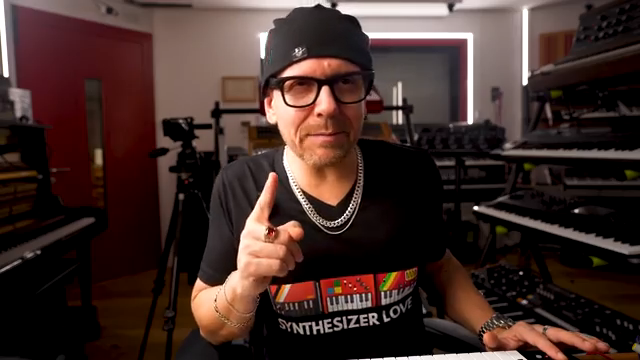
Ever wondered why vintage synths still pull us in harder than a black hole at a warehouse rave? Devin Belanger, aka Miles Away, throws himself into a love affair with the MS-20 and Prophet 10, digging into why these old machines inspire modern music-makers more than their shiny, menu-stuffed descendants. If you think you need 500 waveforms to make a tune slap, Devin’s got news for you—sometimes, it’s all about the warts. Classic gear, bold opinions, and a few hard truths: this is synth nostalgia with teeth.
27. June 2026
SPARKY
Devin Belanger’s Vintage Synth Obsession: Old Dogs, New Tricks, Zero Menus
Analog Cases XTS Performance Stand, Korg MS-20, Minimoog Model D, OBX8, Sequential Prophet-10, Third Wave
Legacy Basslines: Why Old Synths Inspire New Tunes
Devin Belanger kicks off by borrowing a Korg MS-20, expecting a quick fling but ending up head-over-heels—classic story, right? He’s not talking specs or filter curves; he’s talking legacy. When you know a synth has powered legendary tracks, you’re not just twiddling knobs—you’re plugged into a history that practically dares you to make something great.
That dopamine hit isn’t just about new gear lust, it’s about capturing a bit of the magic that made your heroes tick. Devin’s point is razor-sharp: vintage synths feel more inspiring because you’re channeling decades of musical mythology every time you hit a key. If you’ve ever felt your back straighten when playing a classic, you know exactly what he means.

"It's objectively more inspiring when you know that a synthesizer has been used for something that is awe-inspiring."
© Screenshot/Quote: Devinbelangermusic (YouTube)
Perfection? Been There, Tweaked That
"It just feels better to use than any other synth."
© Screenshot/Quote: Devinbelangermusic (YouTube)
Next, Devin lays it out: some designs just nailed it the first time. Minimoog Model D, Prophet 5—these aren’t just synths, they’re the blueprint everyone’s been copying (and complicating) for decades. He argues that their genius lies in balancing creative flow with just enough complexity, making it dead easy to go from brainwave to bassline without menu-diving.
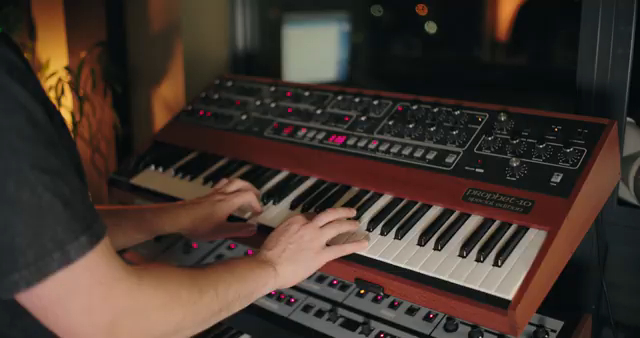
Modern attempts to one-up these classics often end in a swamp of features nobody asked for. Devin is almost sad about it—progress is great, but when you compare a Prophet 10 to the OBX8 or Third Wave, less really is more. The old guard just feels better in the hands, and that’s a design lesson most new synths could stand to learn.
Happy Accidents: When Flaws Become Features
Devin’s third theory is pure gold: imperfection isn’t a bug, it’s the secret sauce. Take the Minimoog’s filter saturation—literally a mistake that became the sound of a generation. Instead of chasing clinical perfection, these old machines left room for weirdness, grit, and character.
He draws a sharp parallel to the camera world, where people cling to flawed lenses for the same reason: character beats cleanliness. If you want every note and filter sweep to feel alive, you want a machine that’s a little unpredictable. Synths should have stories baked in, not just specs. You can almost hear the MS-20 smirking from the corner.

"Imperfection as a feature, not a bug."
© Screenshot/Quote: Devinbelangermusic (YouTube)
Menu Hell: The Modern Synth Paradox

"They have to add in so many features, menus, LFOs, quirks, systems, modulation matrixes, sequencers, ARPs."
© Screenshot/Quote: Devinbelangermusic (YouTube)
Now we hit the real meat: modern synths are drowning in features. Back when the Minimoog and MS-20 dropped, you could launch a simple design and it’d stand out. Today? Make a poly synth and you’re lost in a sea of LFOs, menus, and endless modulation options.
Devin admits he loves a flagship beast, but the more options you pile on, the more you lose what made the classics great—immediacy, focus, and that sense of owning the sound. If you’ve ever spent 20 minutes scrolling through waveforms instead of laying down a riff, you know the pain. Simplicity isn’t retro; it’s a weapon.
The Perfect Setup: Old School Meets New School
So what’s the dream rig? Devin reckons you need one heavyweight do-it-all synth—could be hardware or software—and one old-school box that just does its thing, no frills. Don’t let yourself get buried in a feature list; let one machine be your Swiss Army knife and the other your punk rock slingshot.
And here’s the kicker: maybe the reason we keep chasing vintage reissues isn’t just nostalgia, but the fact that modern synths still haven’t cracked that magic balance. Want to feel what Devin’s on about? Watch the video—some things just hit harder when you hear them, not read about them.
This article is also available in German. Read it here: https://synthmagazin.at/devin-belangers-vintage-synth-besessenheit-alte-kisten-neue-tricks-null-menues/
More articles about these products:
 A Studio of Sonic Memory: synth4ever Journeys through Devin Belanger’s Ambient Sanctuary
 Devin Belanger Unleashes Strymon Timeline MX: A Delay Pedal That Means Business
 Alex Ball vs. The Minimoog: Vintage Mojo in a Box
 Devin Belanger’s Black Sheep Synths: The Underdogs That Changed the Game
 Doctor Mix Schools Us: Gain Staging Without the Nonsense
 musotalk deconstructed: Vintage Synthesizers, Reissues and the Truth Behind the Classic Myth
 Doctor Mix Throws Down: Prophet-5 vs Prophet-10 – Analog Titans in a Street Fight
 Nu-Trix The Synth Guy Unleashes the Syntakt TwinShot: Double-Barrel Sample Mayhem
 Doctor Mix Unleashes the Prophet-10: Analog Royalty, No Apologies
 Moog Music in the Studio: Flight To London’s Analog Alchemy
 Devin Belanger’s Forever Synths: Five Keepers That Refuse to Die
 Doctor Mix Transforms the Korg MS-20 with Filterverse Magic
Watch on YouTube:
Latest articles
Watch on YouTube:
Visit the channel:
https://www.youtube.com/devinbelangermusic
https://www.youtube.com/devinbelangermusic
Links from devinbelangermusic:
Contact: https://links.devinbelangermusic.com
Miles Away: https://links.thisismilesaway.com
Instagram: https://instagram.com/devinbelangermusic
Sponsored links:
If you purchase via these links, we may earn a small commission – at no extra cost to you. The link opens an Amazon keyword search, and results may vary depending on availability.
Analog Cases XTS Performance Stand
🔗 Check price on Amazon
🔗 Check price on Amazon
Korg MS-20
🔗 Check price on Amazon
🔗 Check price on Amazon
Minimoog Model D
🔗 Check price on Amazon
🔗 Check price on Amazon
OBX8
🔗 Check price on Amazon
🔗 Check price on Amazon
Sequential Prophet-10
🔗 Check price on Amazon
🔗 Check price on Amazon
Third Wave
🔗 Check price on Amazon
🔗 Check price on Amazon